
About Arturo Alfonso Schomburg
Lived 1874 – 1938 (aged 64). Arturo Alfonso Schomburg was an American librarian, historian, bibliophile, non-fiction writer and educator.
Arturo Alfonso Schomburg (January 24, 1874 – June 10, 1938), was a Puerto Rican historian, writer, curator, Schomburg was a Puerto Rican of African and German descent. He moved to the United States in 1891, settling in New York City (at the age of 17) where he researched and raised awareness of the contributions that Afro-Latin Americans and African Americans have made to society. As a young man, Schomburg was told that Black people had no significant history. He spent his life disproving that notion, gathering evidence of Black achievement and celebrating the richness of Black life. He was an important intellectual figure in the Harlem Renaissance. Over the years, he collected literature, art, slave narratives, and other materials of African history, which were purchased to become the basis of the Schomburg Center for Research in Black Culture, named in his honor, at the New York Public Library (NYPL) branch in Harlem.
While Schomburg was in grade school, one of his teachers claimed that Black people had no history, heroes or accomplishments. Inspired to prove the teacher wrong, Schomburg determined that he would find and document the accomplishments of Africans on their own continent and in the diaspora.
Schomburg was educated at San Juan's Instituto Popular, where he learned commercial printing. At St. Thomas College on the island of St. Thomas in the Danish West Indies, he studied Negro literature.
He became a member of the "Revolutionary Committee of Puerto Rico" and became an active advocate of Puerto Rico's and Cuba's independence from Spain. In 1892, Schomburg co-founded Las Dos Antillas (The Two Islands), a political club that advocated for the independence of Cuba and Puerto Rico. The club existed from 1892 to 1898, and members discussed issues such as providing weapons, medical supplies, and financial aid to independence movements.
Marriage and family Throughout his life, Schomburg married thrice, all to women named Elizabeth. On June 30, 1895, he married Elizabeth Hatcher of Staunton, Virginia. She had come to New York as part of a wave of migration from the South that would increase in the 20th century and be known as the Great Migration. They had three sons: Máximo Gómez (named after the Dominican military leader of the Cuban struggle for independence); Arthur Alfonso Jr. and Kingsley Guarionex Schomburg (named after Guarionex, a renowned cacique of the Taíno).
Identity Schomburg consistently identified as "Afroborinqueño" (Afro-Puerto Rican), rejecting binary racial categorizations and explicitly crediting Puerto Rican intellectuals Salvador Brau and José Julián Acosta as his primary inspirations for studying Black history. Rather than abandoning his Latino identity, Schomburg persevered in seeking ways of reconciling Black diasporic belonging with Latin Pan-ethnic identification throughout his life.
Revolutionary Networks His co-founding of Las Dos Antillas (1892) with Rafael Serra and Rosendo Rodríguez created a space for Afro-Caribbean revolutionaries connected to broader Caribbean liberation movements.
The Negro Society for Historical Research In 1911, Schomburg co-founded with John Edward Bruce the Negro Society for Historical Research, to create an institute to support scholarly efforts. For the first time, it brought together African, West Indian, and Afro-American scholars. In 1914, Schomburg joined the exclusive American Negro Academy, becoming, from 1920 to 1928, the fifth and last President of the organization. Founded in Washington, D.C., in 1897, this first major African American learned society brought together scholars, editors, and activists to refute racist scholarship, promote Black claims to individual, social, and political equality, and publish the history and sociology of African American life.
This was a period of the founding of societies to encourage scholarship in African-American history. In 1915, Dr. Carter G. Woodson co-founded the Association for the Study of Negro Life and History (now called the Association for the Study of African American Life and History) and began publishing the Journal of Negro History.
Schomburg became involved in the Harlem Renaissance movement, which spread to other African-American communities in the U.S. The concentration of Black people in Harlem from across the US and Caribbean led to a flowering of arts, as well as intellectual and political movements. Schomburg co-edited the 1912 edition of Daniel Alexander Payne Murray's Encyclopedia of the Colored Race. He later became disillusioned with the Harlem Renaissance, because he felt that there were no more revolutionaries within it. He told anthologist Nancy Cunard that she should "not expect to find anything revolutionary or critical in these subjected fellows' writings.... hey have been bought and paid for by white people".
In 1916 Schomburg published the first notable bibliography of African-American poetry, A Bibliographical Checklist of American Negro Poetry.
In March 1925 Schomburg published his essay "The Negro Digs Up His Past" in an issue of Survey Graphic devoted to the intellectual life of Harlem. It had widespread distribution and influence. In "The Negro Digs Up His Past," Schomburg was trying to lay the groundwork for an intellectual refutation of racism. The autodidact historian John Henrik Clarke told of being so inspired by the essay that at the age of 17 he left home in Columbus, Georgia, to seek out Mr. Schomburg to further his studies in African history. Alain Locke included the essay in his edited collection The New Negro.
In March 1926, Schomburg visited Spain. "His mission was to research and explore centuries of Black life in Europe, including that of the painter Juan de Pareja. A notable artist in his own right, Pareja was an enslaved studio assistant to famed Spanish painter Diego Velázquez". The Metropolitan Museum of Art stated, "Schomburg was vital to the recovery of Pareja’s work". for $10,000, funded by the Carnegie Corporation in 1926. They appointed Schomburg curator of the Schomburg Collection of Negro Literature and Art, named in his honor, at the 135th Street Branch (Harlem) of the Library. It was later renamed the Arthur Schomburg Center for Research in Black Culture.
In 1929 Fisk University President Charles S. Johnson invited Schomburg to curate the Negro Collection at the library of Fisk in Nashville, Tennessee. He assisted in the architectural design contributing to the construction of a reading room and browsing space. By the end of Schomburg's tenure at Fisk he had expanded the library's collection from 106 items to 4,600. During 1932 he traveled to Cuba. While there he met various Cuban artists and writers, and acquired more material for his studies.
He was granted an honorary membership of the Men's Business Club in Yonkers, New York. He also held the position of treasurer for the Loyal Sons of Africa in New York and was elevated being the past master of Prince Hall Lodge Number 38, Free and Accepted Masons (F.A.M.) and Rising Sun Chapter Number 4, R.A.M.
Archival methodology Schomburg developed what can be termed "recovery historiography" - a systematic approach focused on gathering "vindicating evidences" to counter racist narratives and demonstrate global Black achievements. His archival philosophy emphasized recovery and transformation over traditional archival neutrality, prioritizing community access and democratic participation over institutional custody. Contemporary archival studies scholarship positions Schomburg as a foundational theorist who anticipated community archives movements and developed methodology for countering archival "symbolic annihilation" of marginalized communities.
Later years Following dental surgery, Schomburg became ill and died in Madison Park Hospital in Brooklyn on June 10, 1938. He received a private funeral on June 12 at Siloam Presbyterian Church. of Cypress Hills Cemetery.
Legacy
By the 1920s Schomburg had amassed a collection which consisted of artworks, manuscripts, rare books, slave narratives and other artifacts of Black history.
Arturo Alfonso Schomburg's work served as an inspiration to Puerto Ricans, Latinos and Afro-Americans alike. During the Harlem Renaissance, Zora Neale Hurston and others used Schomburg's materials. The power of knowing about the great contributions that Afro-Latin Americans and Afro-Americans have made to society helped advance the civil rights movement.
In 2002, scholar Molefi Kete Asante included Schomburg on his list of 100 Greatest African Americans. To honor Schomburg, Hampshire College awards a $30,000 merit-based scholarship in his name for students who "demonstrate promise in the areas of strong academic performance and leadership at Hampshire College and in the community." The College of Arts and Sciences at University at Buffalo has a fellowship named in honor of Schomburg. A residence hall at New York's Stony Brook University is named for Schomberg. In 2020, the United States Postal Service featured Schomburg on a postage stamp as part of its series on the Harlem Renaissance. In 2025, Mayor-elect Zohran Mamdani announced he would use the Schomburg Quran for his private swearing-in ceremony. Following his inauguration, the Quran will be featured in a special New York Public Library exhibit commemorating the 100th anniversary of the Schomburg Center.
Don’t just read it —
keep it.
Full-length biographies made to live with: read them, listen on the way to work, watch them tonight.
- E-book
- Audio
- Video
Instant download · yours to keep · every purchase keeps this site free
Important facts
People in Arturo Alfonso Schomburg's life
Named in this biography and alive at the same time


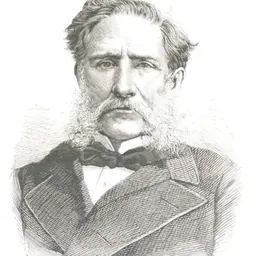

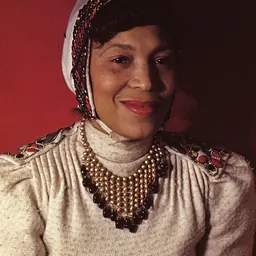
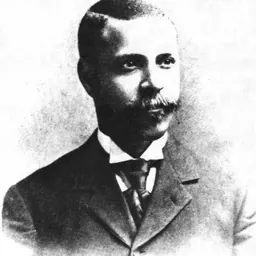

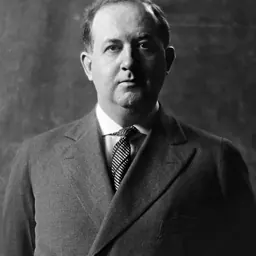
Related people
Same field, nearest in time
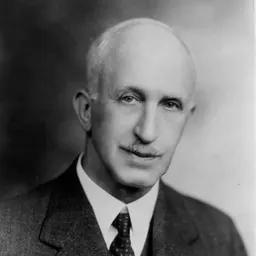


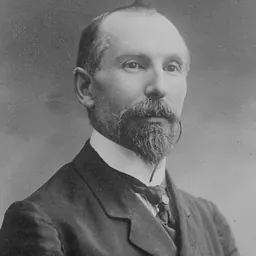
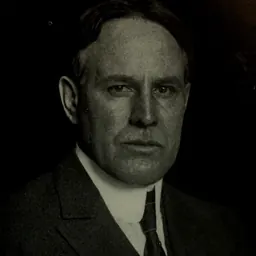
Contemporaries
People whose lives overlapped Arturo Alfonso Schomburg's
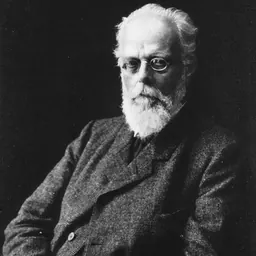

Frequently asked questions
Who was Arturo Alfonso Schomburg?
Puerto Rican historian, writer and activist (1874–1938)
When was Arturo Alfonso Schomburg born?
Arturo Alfonso Schomburg was born on 24 January 1874 in Santurce, San Juan.
When did Arturo Alfonso Schomburg die?
Arturo Alfonso Schomburg died on 10 June 1938 in Brooklyn.
What was Arturo Alfonso Schomburg's occupation?
Arturo Alfonso Schomburg was a librarian, historian, bibliophile, non-fiction writer and educator.
What nationality was Arturo Alfonso Schomburg?
Arturo Alfonso Schomburg was American.
Sources & further reading
· Wikipedia: Arturo Alfonso Schomburg
· DBpedia: Arturo Alfonso Schomburg
Cite this page
APA: Biography.guide. (2026). Arturo Alfonso Schomburg. https://biography.guide/arturo-alfonso-schomburg/
MLA: "Arturo Alfonso Schomburg." Biography.guide, https://biography.guide/arturo-alfonso-schomburg/.
Chicago: "Arturo Alfonso Schomburg." Biography.guide. https://biography.guide/arturo-alfonso-schomburg/.
Data last updated: 2026-09-26 · Spot an error? Report a correction.
Page generated 2026-09-27 05:14 UTC