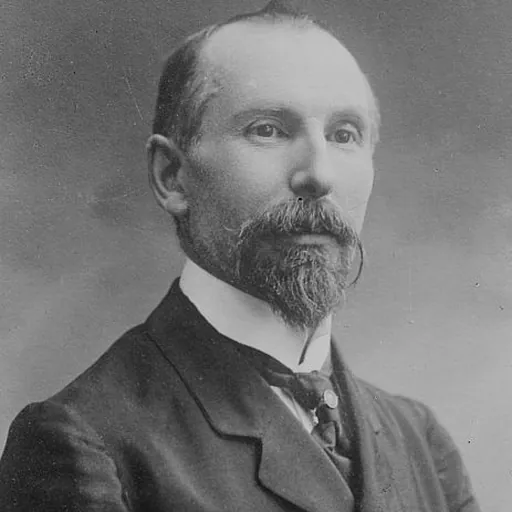
About Abel Lefranc
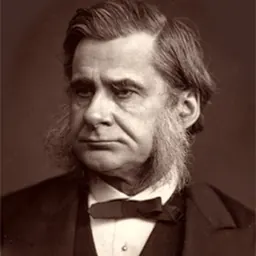
Lived 1863 – 1952 (aged 89). Abel Lefranc was a French librarian, literary historian, historian, professor, archivist and romanist.
Maurice Jules Abel Lefranc (27 July 1863 – 26 November 1952) was a historian of French literature, expert on Rabelais, and the principal advocate of the Derbyite theory of Shakespeare authorship.
Early life Lefranc was born in Élincourt-Sainte-Marguerite. After studying at the École Nationale des Chartes, where he wrote a thesis on the history and organization of the town of Noyon until the end of the 13th century (1886). He left to study in Leipzig and Berlin (1887), where he prepared a report on the teaching of history in Germany, which he believed to be the most advanced in the world.
Scholarly career While working with the National Archives, he continued his historical research, turning specifically to the 16th century. In 1893, at the age of 30, he published Histoire du Collège de France depuis les origines jusqu’à la fin du Premier Empire, a history of the Collège de France from its origin to the fall of Napoleon. His intention was to rehabilitate the later period of the Collège's existence, which had been neglected. He became secretary of the Collège de France under three of its directors: Gaston Boissier, Gaston Paris and Emile Levasseur, combining his job with those of archivist and librarian of the institution. He also continued with his own research on the history of literature. He believed that Rabelais was a militant anti-Christian atheist, whose nominally comic writings conveyed his philosophy.
Lefranc was elected to the Académie des inscriptions et belles-lettres in 1927.
His works are now largely outdated. They nevertheless helped train a generation of literary historians of the 16th century, who continued his work and applied his methods.
Shakespeare theories
His theories about William Shakespeare were published in 1918 in Sous le masque de William Shakespeare: William Stanley, Vie comte de Derby (2 vol., 1918). Lefranc argued that William Stanley, 6th Earl of Derby was the true author of Shakespeare's works. Lefranc developed the theory after James H. Greenstreet first suggested it in the 1890s, following his discovery of a letter which stated that Derby was "busy in penning comedies for the common players". Lefranc decided that Derby's life fitted the interests and beliefs of Shakespeare the writer. Derby may have had an affair with Mary Fitton, a candidate for the Dark Lady of the sonnets. Lefranc considered Derby to be sympathetic to France and to Catholicism, views he also believed to be present in the plays. Derby's proficiency in French would explain Shakespeare's use of the language in Henry V. According to Lefranc, Derby's experiences in the Court of Navarre are reflected in Love's Labour's Lost. Lefranc also believed that the character of Falstaff was influenced by the work of Rabelais, which was not available in English translation at the time.
Principal publications Histoire de la ville de Noyon et de ses institutions jusqu'à la fin du XIIIe siècle (1887) La Jeunesse de Calvin (1888) Histoire du Collège de France depuis ses origines jusqu'à la fin du premier Empire (1893) Les Idées religieuses de Marguerite de Navarre d'après son œuvre poétique Les Marguerites et les Dernières poésies (1898) Les Navigations de Pantagruel, études sur la géographie rabelaisienne (1905) Les Lettres et les idées depuis la Renaissance (2 vol., 1910–1914) Sous le masque de William Shakespeare : William Stanley, Vie comte de Derby (2 vol., 1918) La Vie quotidienne au temps de la Renaissance (1938) À la découverte de Shakespeare (2 vol., 1945)
Editions Marguerite de Navarre: Les Dernières poésies (1896) Jean Calvin: Institution de la religion chrestienne (en coll., 2 vol. 1911) François Rabelais: Œuvres (en coll., 5 vol. 1913–1931) André Chénier: Œuvres inédites (1914)
Don’t just read it —
keep it.
Full-length biographies made to live with: read them, listen on the way to work, watch them tonight.
- E-book
- Audio
- Video
Instant download · yours to keep · every purchase keeps this site free
Important facts
People in Abel Lefranc's life
Named in this biography and alive at the same time

Related people
Same field, nearest in time


Contemporaries
People whose lives overlapped Abel Lefranc's


Frequently asked questions
Who was Abel Lefranc?
Literature historian (1863–1952)
When was Abel Lefranc born?
Abel Lefranc was born on 27 July 1863 in Élincourt-Sainte-Marguerite.
When did Abel Lefranc die?
Abel Lefranc died on 27 November 1952 in Paris.
What was Abel Lefranc's occupation?
Abel Lefranc was a librarian, literary historian, historian, professor, archivist and romanist.
What nationality was Abel Lefranc?
Abel Lefranc was French.
Sources & further reading
Cite this page
APA: Biography.guide. (2026). Abel Lefranc. https://biography.guide/abel-lefranc/
MLA: "Abel Lefranc." Biography.guide, https://biography.guide/abel-lefranc/.
Chicago: "Abel Lefranc." Biography.guide. https://biography.guide/abel-lefranc/.
Data last updated: 2026-09-22 · Spot an error? Report a correction.
Portrait: Wikimedia Commons · author & licence
Page generated 2026-09-27 05:02 UTC