
About Irving Kaplansky
Lived 1917 – 2006 (aged 89). Irving Kaplansky was a Canadian and American mathematician and university teacher, known for Field theory (mathematics), Game theory and Group theory.
Biography Kaplansky, or "Kap" as his friends and colleagues called him, was born in Toronto, Ontario, Canada, to Polish-Jewish immigrants. His father worked as a tailor, and his mother ran a grocery and, eventually, a chain of bakeries. He went to Harbord Collegiate Institute receiving the Prince of Wales Scholarship as a teenager. He attended the University of Toronto as an undergraduate and finished first in his class for three consecutive years. In his senior year, he competed in the first William Lowell Putnam Mathematical Competition, becoming one of the first five recipients of the Putnam Fellowship, which paid for graduate studies at Harvard University.
After receiving his Ph.D. from Harvard in 1941 as Saunders Mac Lane's first student, he remained at Harvard as a Benjamin Peirce Instructor, and in 1944 moved with Mac Lane to Columbia University for one year to collaborate on work surrounding World War II working on "miscellaneous studies in mathematics applied to warfare analysis with emphasis upon aerial gunnery, studies of fire control equipment, and rocketry and toss bombing" with the Applied Mathematics Panel. He was a member of the Institute for Advanced Study and attended the 1946 Princeton University Bicentennial.
He was professor of mathematics at the University of Chicago from 1945 to 1984, and chair of the department from 1962 to 1967. In 1968, Kaplansky was presented an honorary doctoral degree from Queen's University with the university noting "we honour as a Canadian whose clarity of lectures, elegance of writing, and profundity of research have won him widespread acclaim as the greatest mathematician this country has so far produced." From 1967 to 1969, Kaplansky wrote the mathematics section of Encyclopædia Britannica. Kaplansky was the director of the Mathematical Sciences Research Institute from 1984 to 1992, and the president of the American Mathematical Society from 1985 to 1986.
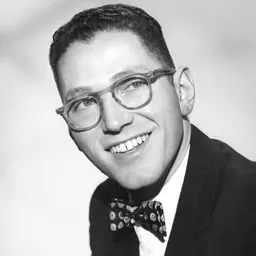
Kaplansky was also an accomplished amateur musician. He had perfect pitch, studied piano until the age of 15, earned money in high school as a dance band musician, taught Tom Lehrer, and played in Harvard's jazz band in graduate school. He also had a regular program on Harvard's student radio station. After moving to the University of Chicago, he stopped playing for two decades, but then returned to music as an accompanist for student-run Gilbert and Sullivan productions and as a calliope player in football game parades. He often composed music based on mathematical themes. One of those compositions, A Song About Pi, is a melody based on assigning notes to the first 14 decimal places of pi, and has occasionally been performed by his daughter, singer-songwriter Lucy Kaplansky.
Mathematical contributions Kaplansky made major contributions to group theory, ring theory, the theory of operator algebras and field theory and created the Kaplansky density theorem, Kaplansky's game and Kaplansky conjecture. He published more than 150 articles and 11 mathematical books.
Selected publications
Books revised edn. 1971 with several later reprintings
2nd edn. 1972 revised edn. 1974
several later reprintings 2nd edn. 1977 1st edn. 1966; revised 1974 with several later reprintings with I. N. Herstein: 2nd edn. 1978
Articles
with I. S. Cohen:
with Richard F. Arens:
Don’t just read it —
keep it.
Full-length biographies made to live with: read them, listen on the way to work, watch them tonight.
- E-book
- Audio
- Video
Instant download · yours to keep · every purchase keeps this site free
Important facts
more
Kaplansky's conjecture, Kaplansky's game, Kaplansky's theorem on quadratic forms, Operator algebras, Ring theory, Topological algebraPeople in Irving Kaplansky's life
Named in this biography and alive at the same time




Related people
Same field, nearest in time

Contemporaries
People whose lives overlapped Irving Kaplansky's

Frequently asked questions
Who was Irving Kaplansky?
Canadian mathematician (1917–2006)
When was Irving Kaplansky born?
Irving Kaplansky was born on 22 March 1917 in Toronto.
When did Irving Kaplansky die?
Irving Kaplansky died on 25 June 2006 in Los Angeles, Sherman Oaks.
What was Irving Kaplansky's occupation?
Irving Kaplansky was a mathematician and university teacher.
What was Irving Kaplansky known for?
Irving Kaplansky was known for Field theory (mathematics), Game theory, Group theory, Hilbert space, Homological algebra and Kaplansky density theorem.
What nationality was Irving Kaplansky?
Irving Kaplansky was Canadian and American.
Sources & further reading
Cite this page
APA: Biography.guide. (2026). Irving Kaplansky. https://biography.guide/irving-kaplansky/
MLA: "Irving Kaplansky." Biography.guide, https://biography.guide/irving-kaplansky/.
Chicago: "Irving Kaplansky." Biography.guide. https://biography.guide/irving-kaplansky/.
Data last updated: 2026-09-20 · Spot an error? Report a correction.
Page generated 2026-09-27 05:22 UTC