
About Ion Dragoumis
Lived 1878 – 1920 (aged 41). Ion Dragoumis was a politician, diplomat, philosopher and writer.
Ion Dragoumis (; 14 September 1878 – 31 July 1920) was a Greek diplomat, philosopher, writer and revolutionary.
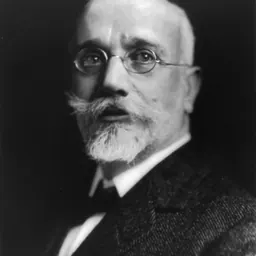
Biography Born in Athens, Dragoumis was the son of Stephanos Dragoumis who was foreign minister under Charilaos Trikoupis. The Dragoumis family was a prominent Greek family, which originated from Vogatsiko in Kastoria regional unit. Ion's great-grandfather, Markos Dragoumis (1770–1854), was a member of the Filiki Eteria revolutionary organisation.
Ion Dragoumis studied law at Athens University and, in 1899, entered the diplomatic branch of the Greek Foreign Ministry. In 1897, he enlisted in the Hellenic Army and fought in the Greco-Turkish War of 1897.
In 1902, Dragoumis was made deputy consul in the Greek consulate at Monastir (present-day Bitola). In 1903, he became head of the consulate at Serres and later went on to serve in Plovdiv, Burgas, Alexandria and Alexandroupolis. In 1907, he was assigned to the embassy in Constantinople.
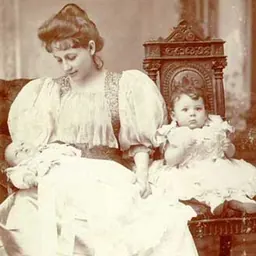
In 1905, during his time as the Vice-Consul of Greece in Alexandria, Dragoumis met and started a love affair with the writer Penelope Delta, who was married to the businessman Stephanos Delta. Out of respect for her husband and children, Dragoumis and Delta eventually decided to separate, but continued to correspond passionately until 1912, when Dragoumis started a relationship with the famous stage actress Marika Kotopouli.
Dragoumis became instrumental in the Macedonian Struggle. In Macedonia, a new Filiki Eteria was founded, under the leadership of Anastasios Pichion from Ohrid, whilst in Athens, the Macedonian Committee was formed in 1904 by Dragoumis' father, Stephanos Dragoumis.
In 1907, he published the book Martyron kai Iroon Aima (Martyrs’ and Heroes’ Blood), which presented his views on the situation in Macedonia and on what the Greek government should do to more properly defend the Greek element there. During this period, he also toyed with the idea of a Greek-Ottoman Empire, believing that Greeks, already having control of commerce and finance, would also gain political power in such an arrangement.
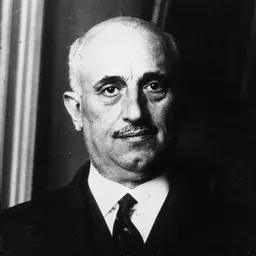
In 1909, the Goudi Revolt broke out and his father, Stephanos Dragoumis became Prime Minister of Greece. However, the Military League decided later to invite Eleftherios Venizelos to become prime minister.
In 1910, he founded, collaborating with philologists and writers (Vlasis Gavriilidis, Nikos Kazantzakis, Alexandros Delmouzos, Alexandros Papanastasiou, Manolis Triantafyllidis, Lorentzos Mavilis), the Educational Club (Εκπαιδευτικός Όμιλος), an organization for the promotion of Demotic Greek language, while he was writing also articles in the philological magazine "Noumas" (with the nickname Idas).
When the First Balkan War broke out, Dragoumis travelled to Thessaloniki as an attaché to Crown Prince (later King) Constantine.
In 1914, he is accredited Ambassador of Greece to Russia.
In 1915, he resigned from the diplomatic corps; having entered Greek politics as an independent, he was elected to the Greek Parliament for Florina Prefecture.
With the outbreak of the First World War, he was in favour of Greece joining the Entente, but gradually and during the National Schism he disagreed with Venizelos' policy and became hostile towards Venizelists. In 1917, he was exiled to Corsica by the French and Venizelists, from where he returned in 1919.
On 30 July 1920, an attempt was made by two royalists to assassinate Venizelos at the Gare de Lyon railway station in Paris. The next day, 31 July, Dragoumis was stopped by a Venizelist Democratic Security Battalion (Δημοκρατικά Τάγματα Ασφαλείας) in Athens and was executed as a form of payback.
Though her relationship with him ended many years before, Penelope Delta (herself a supporter of Venizelos) deeply mourned Dragoumis, and after he was killed wore nothing but black until her own death two decades later. In the late 1930s she received Dragoumis' diaries and archives, entrusted to her by his brother Philippos. She managed to dictate 1,000 pages of manuscripted comments on Dragoumis' work, before deciding to take her own life in 1941.
Ideas and legacy Dragoumis's thought was a mix of communitarianism and Romantic nationalism. He considered that the nation is superior than the state, which must serve the nation. He was a supporter of Greek irredentism, to include as many Greek lands and population as possible in the Greek state, but did not embrace the Megali Idea, with the capture of Constantinople, which he regarded as an anachronistic concept.
He believed that Hellenism was a power of civilization in the East and so would predominate. He supported preserving the Greek communities in Asia Minor and the Middle East.
Dragoumis is now honoured for his patriotism and significant contribution during the Macedonian Struggle. However, during the National Schism, he disagreed with the Venizelist policy and later did not believe in the success of the Asia Minor Campaign.
In 1986, the journalist Freddy Germanos (1934–1999) wrote the novel I Ektelesi (The Execution) about his murder. A stele with an epigram of Kostis Palamas stands on the site of his murder, while the Ion Dragoumis municipality was named after him.
Works The Path (Το Μονοπάτι), 1902 Martyrs and Heroes Blood, 1907 Samothrace, 1908 All Those Alive (Όσοι Ζωντανοί), 1911 Hellenic civilization, 1914 Stop (Σταμάτημα), 1918 My Hellenism and the Hellenes, 1927
Don’t just read it —
keep it.
Full-length biographies made to live with: read them, listen on the way to work, watch them tonight.
- E-book
- Audio
- Video
Instant download · yours to keep · every purchase keeps this site free
Important facts
People in Ion Dragoumis's life
Named in this biography and alive at the same time

Related people
Same field, nearest in time





Contemporaries
People whose lives overlapped Ion Dragoumis's





Frequently asked questions
Who was Ion Dragoumis?
Greek diplomat and philosopher (1878–1920)
When was Ion Dragoumis born?
Ion Dragoumis was born on 2 September 1878 in Athens.
When did Ion Dragoumis die?
Ion Dragoumis died on 31 July 1920 in Athens.
What was Ion Dragoumis's occupation?
Ion Dragoumis was a politician, diplomat, philosopher and writer.
What nationality was Ion Dragoumis?
Ion Dragoumis's recorded nationality: Kingdom of Greece.
Sources & further reading
Cite this page
APA: Biography.guide. (2026). Ion Dragoumis. https://biography.guide/ion-dragoumis/
MLA: "Ion Dragoumis." Biography.guide, https://biography.guide/ion-dragoumis/.
Chicago: "Ion Dragoumis." Biography.guide. https://biography.guide/ion-dragoumis/.
Data last updated: 2026-09-27 · Spot an error? Report a correction.
Page generated 2026-09-27 05:16 UTC