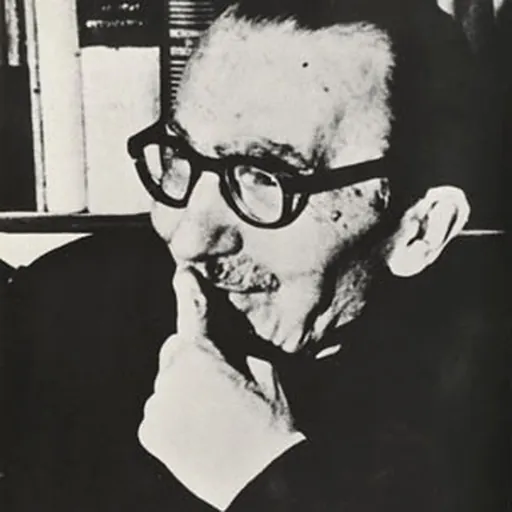
About Nikos Kazantzakis
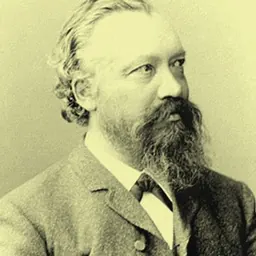
Lived 1883 – 1957 (aged 74). Nikos Kazantzakis was a Greek writer, poet, philosopher, novelist, playwright and travel writer.
Biography
Nikos Kazantzakis was born in the town of Kandiye (now Heraklion) in Crete, with origins from the village of Myrtia. Crete had not yet joined the modern Greek state (which had been established in 1832), and was still under the rule of the Ottoman Empire. Based on family records, Kazantzakis was born on 18 February 1883 (OS), in contrast to the census of Heraklion which listed his birthyear as 1881; this discrepancy was settled by Kazantzakis himself in one of his epistles. he went to the Sorbonne in 1907 to study philosophy and fell under the spell of Henri Bergson. In 1909 he graduated with a reworked doctoral dissertation: Friedrich Nietzsche dans la philosophie du droit et de la cité.
Nikos Kazantzakis married Galateia Alexiou in 1911. The two divorced in 1926, two years after Kazantzakis had met Eleni Samiou (Helen), whom he would later marry. Samiou helped Kazantzakis with his work, typing drafts, accompanying him on his travels, and managing his business affairs.
Between 1922 and his death in 1957, he sojourned in Paris and Berlin (from 1922 to 1924), Italy, Russia (in 1925), Spain (in 1932), and then later in Cyprus, Aegina, Egypt, Mount Sinai, Czechoslovakia, Nice (he later bought a villa in nearby Antibes, in the Old Town section near the famed seawall), China, and Japan.
While in Berlin, where the political situation was explosive, Kazantzakis discovered communism and became an admirer of Vladimir Lenin. He never became a committed communist but visited the Soviet Union and stayed with the Left Opposition politician and writer Victor Serge. He witnessed the rise of Joseph Stalin, and became disillusioned with Soviet-style communism. Around this time, his earlier nationalist beliefs were gradually replaced by a more universalist ideology. As a journalist, in 1926 he interviewed Prime Minister of Spain Miguel Primo de Rivera and the Italian dictator Benito Mussolini.
During the Second World War he was in Athens, where he and the philologist Ioannis Kakridis translated the Iliad. In 1945 Kazantzakis became the leader of a small party on the non-communist left, and entered the Greek government as Minister without Portfolio. He resigned this post the following year. In 1946 he became the head of the UNESCO Bureau of Translations, the organisation which promoted translations of literary works. However, he resigned in 1947 to concentrate on writing, and indeed produced most of his literary output during the last ten years of his life.
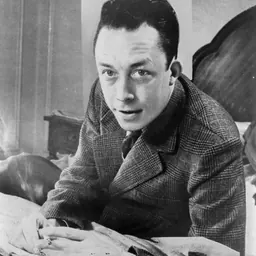
In 1946 the Society of Greek Writers recommended that Kazantzakis and Angelos Sikelianos should be awarded the Nobel Prize for Literature. In 1957 he lost the Prize to Albert Camus by a single vote. Camus later said that Kazantzakis deserved the honour "a hundred times more" than himself. In total, Kazantzakis was nominated in nine different years.
Death Epitaph on the grave of Kazantzakis in Heraklion. It reads "I hope for nothing. I fear nothing. I am free." Late in 1957, even though suffering from leukaemia, Kazantzakis set out on one last trip to China and Japan. According to one theory, while in China he had to be vaccinated, possibly due to symptoms of smallpox and cholera. The vaccine, however, caused gangrene, and at the expense of the Chinese government he was transported first to Copenhagen and then to Freiburg im Breisgau in West Germany. His gangrene was cured, but he had contracted a severe form of Asian flu in China, which eventually led to his death.
Kazantzakis died on 26 October 1957, in Freiburg, at the age of 74. He is buried at the highest point of the Walls of Heraklion, the Martinengo Bastion, looking out over the mountains and sea of Crete. His epitaph reads "I hope for nothing. I fear nothing. I am free."
The 50th anniversary of his death was selected as the main motif for a high-value euro collectors' coin; the €10 Greek Nikos Kazantzakis commemorative coin, minted in 2007. His image is on the obverse of the coin, while the reverse carries the National Emblem of Greece, with his signature.
Literary work Kazantzakis's first published work was the 1906 narrative, Serpent and Lily (Όφις και Κρίνο), which he signed with the pen name 'Karma Nirvami' (Κάρμα Νιρβαμή). In 1907 he went to Paris for his graduate studies and was deeply influenced by the philosophy of Henri Bergson, primarily the idea that a true understanding of the world comes from the combination of intuition, personal experience, and rational thought. The theme of rationalism mixed with irrationality later became central to many of Kazantzakis's later stories, characters, and personal philosophies. Later, in 1909, he wrote a one-act play titled Comedy, which was filled with existential themes, predating the post-Second World War existentialist movement in Europe spearheaded by writers like Jean-Paul Sartre and Camus. After completing his studies in Paris, he wrote the tragedy, "The Master Builder" , based on a popular Greek folkloric myth.
Through the next several decades, from the 1910s through the 1930s, Kazantzakis visited many countries, including Germany, Italy, France, the Netherlands, Romania, Egypt, Russia, Japan, and China, among others. Kazantzakis would often write about his influences in letters to friends, citing Sigmund Freud, the philosophy of Friedrich Nietzsche, Buddhist theology, and communist ideology as major influences. While he continued to travel later in life, the bulk of his travel writing came from this time period.
Kazantzakis began writing The Odyssey: A Modern Sequel in 1924, and completed it in 1938 after fourteen years of writing and revision. He saw the need for socialist parties throughout the world to put aside their bickering and unite so that the programme of "socialist democracy" could prevail not just in Greece but throughout the civilised world. He was also distrusted by both the Communist Party of Greece and the Soviet Union as a "bourgeois" thinker. Baptised Greek Orthodox as a child, he was fascinated by the lives of saints from a young age. As a young man he took a month long trip to Mount Athos, a monastic retreat and major spiritual center for Greek Orthodoxy. Most critics and scholars of Kazantzakis agree that the struggle to find truth in religion and spirituality was central to many of his works, and that some novels, like The Last Temptation of Christ and Christ Recrucified focus completely on questioning Christian morals and values. As he traveled Europe, he was influenced by various philosophers, cultures, and religions, like Buddhism, causing him to question his Christian beliefs. While never claiming to be an atheist, his public questioning and critique put him at odds with some in the Greek Orthodox Church and many of his critics.
Many Orthodox Church clergy condemned Kazantzakis's work and a campaign was started to excommunicate him. His reply was: "You gave me a curse, Holy fathers, I give you a blessing: may your conscience be as clear as mine and may you be as moral and religious as I" (""). While the excommunication was rejected by the top leadership of the Orthodox Church, it became emblematic of the persistent disapprobation from many Christian authorities for his political and religious views.
Modern scholarship tends to dismiss the idea that Kazantzakis was being sacrilegious or blasphemous with the content of his novels and beliefs. These scholars argue that, if anything, Kazantzakis was acting in accordance to a long tradition of Christians who publicly struggled with their faith, and grew a stronger and more personal connection to God through their doubt.
Anthologies A Tiny Anthology of Kazantzakis: Remarks on the Drama, 1910–1957, compiled by Peter Bien, The Literary Review 18, No. 4 (Summer 1975), pp. 455–459 {61}.
Film, television and documentary adaptations
Several of Nikos Kazantzakis' novels have been adapted for cinema and television.
Feature films He Who Must Die (French: Celui qui doit mourir, 1957), directed by Jules Dassin, based on the novel Christ Recrucified (Ο Χριστός Ξανασταυρώνεται).
Zorba the Greek (1964), directed by Michael Cacoyannis, based on the novel Zorba the Greek.
The Last Temptation of Christ (1988), directed by Martin Scorsese, based on Kazantzakis' novel The Last Temptation of Christ.
Kazantzakis (2017), directed by Yannis Smaragdis, a biographical film based primarily on Eleni Kazantzakis' memoir Report to Greco.
Television Christ Recrucified (BBC, 1969), a six-part television miniseries directed by Hugh David and adapted by Jack Pulman from the novel Christ Recrucified.
O Christos Xanastavronetai (Greek: Ο Χριστός Ξανασταυρώνεται, ERT, 1975–1976), directed by Vasilis Georgiadis, based on the novel of the same name.
Don’t just read it —
keep it.
Full-length biographies made to live with: read them, listen on the way to work, watch them tonight.
- E-book
- Audio
- Video
Instant download · yours to keep · every purchase keeps this site free
Important facts
People in Nikos Kazantzakis's life
Named in this biography and alive at the same time
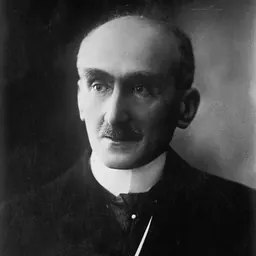


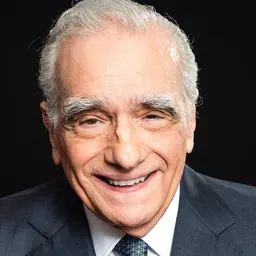
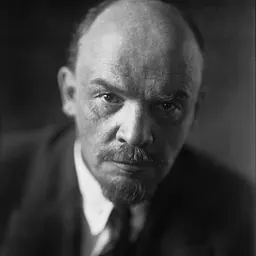
Related people
Same field, nearest in time


Contemporaries
People whose lives overlapped Nikos Kazantzakis's


Frequently asked questions
Who was Nikos Kazantzakis?
Greek writer, poet and philosopher (1883-1957)
When was Nikos Kazantzakis born?
Nikos Kazantzakis was born on 18 February 1883 in Heraklion.
When did Nikos Kazantzakis die?
Nikos Kazantzakis died on 26 October 1957 in Freiburg im Breisgau.
What was Nikos Kazantzakis's occupation?
Nikos Kazantzakis was a writer, poet, philosopher, novelist, playwright and travel writer.
What nationality was Nikos Kazantzakis?
Nikos Kazantzakis was Greek.
Sources & further reading
· Wikipedia: Nikos Kazantzakis
Cite this page
APA: Biography.guide. (2026). Nikos Kazantzakis. https://biography.guide/nikos-kazantzakis/
MLA: "Nikos Kazantzakis." Biography.guide, https://biography.guide/nikos-kazantzakis/.
Chicago: "Nikos Kazantzakis." Biography.guide. https://biography.guide/nikos-kazantzakis/.
Data last updated: 2026-09-20 · Spot an error? Report a correction.
Portrait: Wikimedia Commons · author & licence
Page generated 2026-09-27 04:58 UTC