
Inayat Khan
Founder of the Sufi Order in the West in 1914 and teacher of Universal Sufism
About Inayat Khan
Lived 1882 – 1927 (aged 44). Inayat Khan was an Indian writer, philosopher, teacher, musician and sufi.
Inayat Khan Rehmat Khan (; 5 July 1882 – 5 February 1927), was an Indian professor of musicology, singer, exponent of the sarasvati vina, poet, philosopher, writer, and pioneer of the transmission of Sufism to the West. At the urging of his students, and on the basis of his ancestral Sufi tradition and four-fold training and authorisation at the hands of Sayyid Abu Hashim Madani (d. 1907) of Hyderabad, he established an order of Sufism (The Sufi Order) in London in 1914. By the time of his death in 1927, centers had been established throughout Europe and North America, and multiple volumes of his teachings had been published.
Early life Inayat Khan was born in Baroda to a noble Mughal family. His paternal ancestors, comprising yüzkhans (Central Asian lords) and bakshys (shamans), were Turkmen from the Chagatai Khanate who settled in Sialkot, Punjab during the reign of Timur. Inayat Khan's maternal grandfather, Sangit Ratna Maulabakhsh Sholay Khan, was a Hindustani classical musician and educator known as "the Beethoven of India". His maternal grandmother, Qasim Bibi, was from the royal house of Tipu Sultan of Mysore.
Sufism Inayat Khan's Sufi sources included both the traditions of his paternal ancestors (remembered as the Mahashaikhan) and the tutelage he received from Sayyid Abu Hashim Madani.
Travels Inayat Khan toured the United States with his brother Maheboob Khan and cousin Mohammed Ali Khan between the years 1910 and 1912. Further travels took him to England, France, and Russia. During the First World War, living in London, he oversaw the founding of an order of Sufism under his guidance. Following the war he traveled widely, and numerous Sufi centers sprang up in his wake in Europe and the U.S. He ultimately settled in Suresnes, France, at the house and khanqah (Sufi lodge) known as Fazal Manzil.
Teaching Inayat Khan's teaching emphasised the oneness of God (tawhid) and the underlying harmony of the revelations communicated by the prophets of all the world's great religions. His discourses treated such varied subjects as religion, art, music, ethics, philosophy, psychology, and health and healing. The primary concern of Inayat Khan's teaching was the mystical pursuit of God-realisation. To this end he established an Inner School comprising four stages of contemplative study based on the traditional Sufi disciplines of mujahada, muraqaba, mushahada, and mu‘ayyana, which he rendered in English as concentration, contemplation, meditation, and realisation.
Foundational principles Ten principles, known as the Ten Sufi Thoughts, enunciate the universal spiritual values that are foundational to Inayat Khan's mystical philosophy. He is buried in the Inayat Khan Dargah in Nizamuddin, Delhi. The dargah is open to the public and hosts qawwali sessions.
Don’t just read it —
keep it.
Full-length biographies made to live with: read them, listen on the way to work, watch them tonight.
- E-book
- Audio
- Video
Instant download · yours to keep · every purchase keeps this site free
Important facts
People in Inayat Khan's life
Named in this biography and alive at the same time
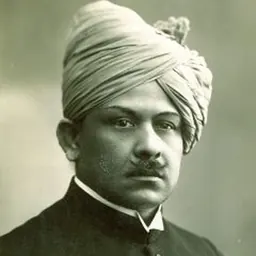

Related people
Same field, nearest in time


Contemporaries
People whose lives overlapped Inayat Khan's




Frequently asked questions
Who was Inayat Khan?
founder of the Sufi Order in the West in 1914 and teacher of Universal Sufism
When was Inayat Khan born?
Inayat Khan was born on 5 July 1882 in Vadodara.
When did Inayat Khan die?
Inayat Khan died on 5 February 1927 in New Delhi.
What was Inayat Khan's occupation?
Inayat Khan was a writer, philosopher, teacher, musician and sufi.
What nationality was Inayat Khan?
Inayat Khan was Indian.
Sources & further reading
Cite this page
APA: Biography.guide. (2026). Inayat Khan. https://biography.guide/inayat-khan/
MLA: "Inayat Khan." Biography.guide, https://biography.guide/inayat-khan/.
Chicago: "Inayat Khan." Biography.guide. https://biography.guide/inayat-khan/.
Data last updated: 2026-09-20 · Spot an error? Report a correction.
Page generated 2026-09-27 05:17 UTC