
About Maheboob Khan
Lived 1887 – 1948 (aged 60–61). Maheboob Khan was an Indian film producer, singer and composer.
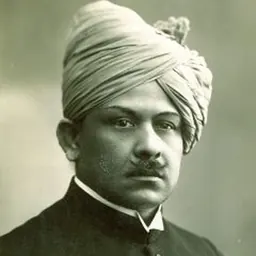
Maheboob Khan (1887 – 1948)Shaikh-ul-Mashaik Pyaromir Maheboob Khan (1887–1948) was born in Baroda, India. An Indian classical musician and younger brother of Inayat Khan, he became the representative of the International Sufi Movement on the latter's death in 1927.
Life
Their grandfather recognised his ability in improvisation and trained him in music with Inayat. As he grew up Maheboob was exposed more to European music than Inayat had been, he conducted and took some interest in Western musical theory.
When Inayat began to travel from Baroda, he entrusted his musical students to Maheboob, but when Inayat sailed to the West in 1910 Maheboob Khan accompanied him. He settled in The Hague, marrying a Dutch disciple, Shadbiy van Goens, who bore him two children, Raheemunnisa and Mahmood. Pyaromir Maheboob Khan, his wife Shadbiy Maheboob Khan van Goens and their daughter Raheemmunisa are buried in one grave at the Oud Eik en Duinen cemetery in The Hague.
In Europe, Maheboob learned musical composition and singing with composer and musicologist Edmond Bailly. Maheboob had a particularly strong voice, but Maheboob, musical, intelligent, thoughtful and retiring, would rarely sing for others. There is a story that Inayat and his cousin (according to Indian custom considered a brother) Ali Khan would sometimes pretend to go out, slamming the front door, then wait quietly in the front hall to hear Maheboob practise his singing. He composed more than 60 sacred songs. Barbara Blatherwick, the coloratura soprano, performed his songs in her recital in 1937 at the New York Town Hall. Maheboob composed a song on a sacred poem by Inayat Khan ('Before You Judge') but could not bring himself to show it to his brother who died without having heard it.
Upon the passing of Inayat Khan in 1927, Maheboob Khan took the responsibility of leading the International Sufi Movement, a post he held until his own death in 1948. He kept the Sufi message through the difficulties of Second World War time and is remembered with love, respect and gratitude.
Music
LP recordings Maheboob Khan. "Qawwali Asti Bulbul" (3:14) (melody by Inayat Khan) (1925) mp3 Maheboob Khan. "Qawwali Saki. Derwish Song" (3:25) (Rag Kalyan) (1925) mp3
Scores
"Molood" – Song and music. "The Sufi" magazine (London) 1915 February "Kaseeda", Music and song. "The Sufi" magazine (London) 1915 May "Naat", Music and text. "The Sufi" magazine (London) 1915 September "Kawwali", Song, text and music. "The Sufi" magazine (London) 1915 November "Ishk me tere Kohegam". Song, with P. F. accompaniment, by Maheboob Khan. (Maḣbūb Khān). London: Indian Art & Dramatic Society, 1916 "Kaseeda, Ganga Gumni", Text and scores. "The Sufi" magazine (London) 1916 April "Gazal I Hafiz" (Words by Inayat Khan). "The Sufi" magazine (London) 1916 November "Masnavi" (Words by Jalaluddin Rumi). "The Sufi" magazine (London) 1917 May "The Wine Divine" (Words by Inayat Khan). "The Sufi" magazine (London) 1917 October Maheboob Khan – Hindustani Songs. Words by Pir'o Murshid Inayad. French words by François de Bretevil. II. Hindou Song to the Soul of the Saint – Genève : Edition Henn, PN A. 521 H., cop. 1924. – 3 S. Kl. Randschaden. Gering gebräunt. Texte in Hindi/Französisch/Englisch. Maheboob Khan – Hindustani Songs / Words by Pir'o Murshid Inayad; French words by François de Breteuil. Genève : Edition Henn; London ... : [s.n.]; New York ... : [s.n.], 1924. Nr. 1: Bhajan Hindou (Hindou Love Song) — Nr. 2: Hindou Song to the Soul of the Saint — Nr. 3: Bibhas Hindou — Song to the Sun. "Jahanara Begam: En indisk kejsardotter". Butenschøn, Andrea Publication 1927 209 s. pl. mus. (Indian raga in European notation Maheboob Khan and by Nils Larsen). Songs of Maheboob Khan – 1. Before You Judge 2. Thy Wish 3. You Are My Life 4. Every Breath in Thy Thought 5. Turn Me Not Away 6. Kalyan. Lyrics words from the book 'Gayan, Vadan, Nirtan' by Inayat Khan; music by Maheboob Khan. Rotterdam: Faiz, PN 1374, cop. 1932. Songs by Shaikh-ul-Mashaik Pyaromir Maheboob Khan. 13 original songs for Voice and Piano. Hague, East-West Publications Fonds, 1988 .
CD recordings
"Sufi Songs". Songs composed by Maheboob Khan based on words of Inayat Khan. Ute Döring, mezzo-soprano, and J. van Lohuizen, piano. Recorded and мanufactured in Germany by: CES in 1998. "The Sun of Love". Symphonic compositions by Inayat Khan, Maheboob Khan and Hidayat Inayat Khan. Novosibirsk String Quintet. Recorded and manufactured in Russia by SufiMovement.ru in 2004.
Articles Spirituality – The Tuning of the Heart by Shaikh-ul-Mashaikh Maheboob Khan. "Toward the One" Volume IV. USA. Spring 2003 pp. 66–68.
Don’t just read it —
keep it.
Full-length biographies made to live with: read them, listen on the way to work, watch them tonight.
- E-book
- Audio
- Video
Instant download · yours to keep · every purchase keeps this site free
Important facts
People in Maheboob Khan's life
Named in this biography and alive at the same time






Related people
Same field, nearest in time




Contemporaries
People whose lives overlapped Maheboob Khan's




Frequently asked questions
Who was Maheboob Khan?
Indian Film Producer & Director
When was Maheboob Khan born?
Maheboob Khan was born in 1887.
When did Maheboob Khan die?
Maheboob Khan died in 1948.
What was Maheboob Khan's occupation?
Maheboob Khan was a film producer, singer and composer.
What nationality was Maheboob Khan?
Maheboob Khan was Indian.
Sources & further reading
Cite this page
APA: Biography.guide. (2026). Maheboob Khan. https://biography.guide/maheboob-khan/
MLA: "Maheboob Khan." Biography.guide, https://biography.guide/maheboob-khan/.
Chicago: "Maheboob Khan." Biography.guide. https://biography.guide/maheboob-khan/.
Data last updated: 2026-09-20 · Spot an error? Report a correction.
Page generated 2026-09-27 05:22 UTC