
About I'tisam-ud-Din
Lived 1730 – 1800. I'tisam-ud-Din was a writer.
Shaikh Mīrzā Muḥammad Iʿtiṣām ad-Dīn Panchnūrī (or Itesham Uddin and Syed Muhammad I'tisam al-Din; 1730–1800) was a Bengali diplomat for the Mughal Empire. He became the first South Asian to travel to Europe in the early modern period, in 1765. He had also written the text of the 1765 Treaty of Allahabad.
Early life and ancestry
Syed Muhammad I'tisam-ud-Din was born in 1730, to Sheikh Syed Taj-ud-Din, at the local Kazipara Masjid near his village. He belonged to a Bengali Muslim family of Syeds from the village of Panchnur, they had been a respected family who had been Sheikhs, near the town of Chakdaha within Nadia district in the Mughal Empire's Bengal Subah The contemporary Bengali historian Shabnam Begum equates her grandfather, Sheikh Syed Shahab-ud-Din, to Shihabuddin Talish, author of the Fathiya-i 'Ibriya, an account of Mir Jumla's invasion of Assam.
His birthplace, Kazipara Masjid, still stands today and his forefathers moved to Panchnur following the Battle of Pandua in Pandua. His ancestors settled in Bengal after fleeing the Mongol invasion of Persia and Mesopotamia.
Education I'tisam-ud-Din came from a privileged background, in which he was well educated and fluent in the Bengali, Arabic, Hindustani and Persian languages. His elder brother was a mufti and adviser to the Nawab of Bengal, Alivardi Khan. Munshi Salimullah and Mirza Muhammad Qasim, who worked under Mir Jafar, trained I'tisam to also become a munshi and taught him Persian. I'tisam was also accompanied by his servant, Muhammad Muqim. After three weeks at sea, Swinton revealed to I'tisam that neither the letter from Shah Alam nor his tribute of a lakh of takas was on board as it had been seized by Robert Clive. I'tisam taught Swinton the Arabic tales of Kalila and Demna. Clive later on sent the money to the English king, on his own behalf to suppress contact between England and the Mughals. As such I'tisam never ended up meeting George III and instead accompanied Swinton to Nantes in France via the southern coast of Africa. He also visited Mauritius, Madagascar, the Cape of Good Hope and Ascension Island.
Return to Asia He returned to Bengal after a three-year absence due to food problems. He was later employed by the British East India Company in negotiations with the Maratha Empire. He travelled with John Hamilton to Pune and drew up treaties and settled peace.
In 1785, he published the Shigurf-nama-i-Wilayat (or 'Wonder Book of England'), in the Persian language, detailing his travels.
Written works Treaty of Allahabad Shigurf Namah i Vilayat (Excellent intelligence concerning Europe) "The wonders of Vilayet : being the memoir, originally in Persian, of a visit to France and Britain by Mirza Sheikh Iʼtesamuddin, an eighteenth century Indian gentleman" "Shigurf namah i velaët, or, Excellent intelligence concerning Europe : being the travels of Mirza Itesa Modeen, in Great Britain and France" Nasab Namah (Family tree of Itisam Uddin)
Death It is estimated that he died in 1800.
Don’t just read it —
keep it.
Full-length biographies made to live with: read them, listen on the way to work, watch them tonight.
- E-book
- Audio
- Video
Instant download · yours to keep · every purchase keeps this site free
Important facts
People in I'tisam-ud-Din's life
Named in this biography and alive at the same time
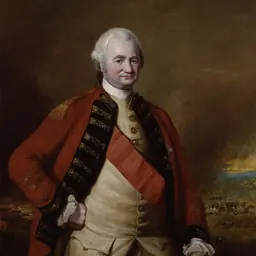

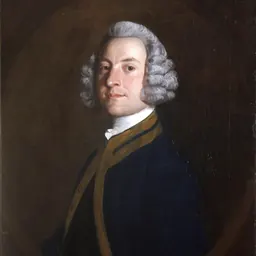
Related people
Same field, nearest in time

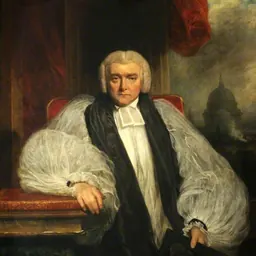


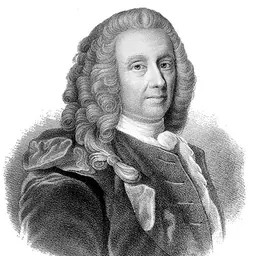
Contemporaries
People whose lives overlapped I'tisam-ud-Din's






Frequently asked questions
Who was I'tisam-ud-Din?
Indian traveller
When was I'tisam-ud-Din born?
I'tisam-ud-Din was born in 1730 in Bengal Subah, Kalyani subdivision, Mughal Empire, Nadia district.
When did I'tisam-ud-Din die?
I'tisam-ud-Din died in 1800 in Bengal Subah, Kalyani subdivision, Mughal Empire, Nadia district.
What was I'tisam-ud-Din's occupation?
I'tisam-ud-Din was a writer.
Sources & further reading
Cite this page
APA: Biography.guide. (2026). I'tisam-ud-Din. https://biography.guide/i-tisam-ud-din/
MLA: "I'tisam-ud-Din." Biography.guide, https://biography.guide/i-tisam-ud-din/.
Chicago: "I'tisam-ud-Din." Biography.guide. https://biography.guide/i-tisam-ud-din/.
Data last updated: 2026-09-20 · Spot an error? Report a correction.
Page generated 2026-09-27 05:28 UTC