
I. J. Good
British statistician and cryptographer
About I. J. Good
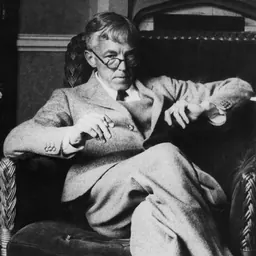
Lived 1916 – 2009 (aged 92). I. J. Good was a British mathematician, cryptographer, computer scientist, philosopher, statistician and university teacher.
Irving John Good (9 December 1916 – 5 April 2009) was a British mathematician who worked as a cryptologist at Bletchley Park with Alan Turing. After the Second World War, Good continued to work with Turing on the design of computers and Bayesian statistics at the University of Manchester. Good moved to the United States where he was a professor at Virginia Tech.
He was born Isadore Jacob Gudak to a Polish Jewish family in London. He later anglicised his name to Irving John Good and signed his publications "I. J. Good."
An originator of the concept known as the intelligence explosion, Good served as consultant on supercomputers to Stanley Kubrick, director of the 1968 film 2001: A Space Odyssey.
Good studied mathematics at Jesus College, Cambridge, graduating in 1938 and winning the Smith's Prize in 1940. He did research under G. H. Hardy and Abram Besicovitch before moving to Bletchley Park in 1941 on completing his doctorate.
Bletchley Park On 27 May 1941, having just obtained his doctorate at Cambridge, Good walked into Hut 8, Bletchley's facility for breaking German naval ciphers, for his first shift. This was the day that Britain's Royal Navy destroyed the after it had sunk the Royal Navy's . Bletchley had contributed to Bismarcks destruction by discovering, through wireless-traffic analysis, that the German flagship was sailing for Brest, France, rather than Wilhelmshaven, from which she had set out.
Good served with Turing for nearly two years.
Good was a member of the Bletchley Chess Club which defeated the Oxford University Chess Club 8–4 in a twelve-board team match held on 2 December 1944. Good played fourth board for Bletchley Park, with Conel Hugh O'Donel Alexander, Harry Golombek and James Macrae Aitken in the top three spots. He won his game against Sir Robert Robinson.
Postwar work In 1947, Newman invited Good to join him and Turing at Manchester University. There, for three years, Good lectured in mathematics and researched computers, including the Manchester Mark 1. In 1973, he was elected as a Fellow of the American Statistical Association.
He later said about his arrival in Virginia (from Britain) in 1967 to start teaching at VPI, where he taught from 1967 to 1994:
Research and publications Good's published work ran to over three million words. credit Good (and in turn Turing) with coining the term Bayes factor. He is the first known person (in a document) to use the term "Baby" for the Manchester Baby. Good published a number of books on probability theory. In 1958, he published an early version of what later became known as the fast Fourier transform but it did not become widely known. He played chess to county standard and helped popularise Go, an Asian boardgame, through a 1965 article in New Scientist (he had learned the rules from Alan Turing). In 1965, he originated the concept now known as "intelligence explosion" or the "technological singularity", which anticipates the eventual advent of superhuman intelligence:
Good's authorship of treatises such as his 1965 "Speculations Concerning the First Ultraintelligent Machine" and "Logic of Man and Machine" made him the obvious person for Stanley Kubrick to consult when filming 2001: A Space Odyssey (1968), one of whose principal characters was the paranoid HAL 9000 supercomputer. According to The Economist, Graphcore aims to take the "first step" towards creating I. J. Good's imagined "Ultraintelligent Machine".
Personality Good published a paper under the names IJ Good and "K Caj Doog"—the latter, his own nickname spelled backwards. In a 1988 paper, he introduced its subject by saying, "Many people have contributed to this topic but I shall mainly review the writings of I. J. Good because I have read them all carefully." In Virginia he chose, as his vanity licence plate, "007IJG," in subtle reference to his Second World War intelligence work. After going through ten assistants in his first thirteen years at Virginia Tech, he hired Leslie Pendleton, who proved up to the task of managing his quirks. He wanted to marry her, but she refused. Although there was speculation, they were never more than friends, but she was his assistant, companion, and friend for the rest of his life.
Death Good died on 5 April 2009 of natural causes in Radford, Virginia, aged 92.
Books
(ISBN for 2009 pbk reprint)
Significant papers Good, I. J.. “Explicativity, corroboration, and the relative odds of hypotheses.” Synthese 30 (1975): 39–73.
Don’t just read it —
keep it.
Full-length biographies made to live with: read them, listen on the way to work, watch them tonight.
- E-book
- Audio
- Video
Instant download · yours to keep · every purchase keeps this site free
Important facts
People in I. J. Good's life
Named in this biography and alive at the same time
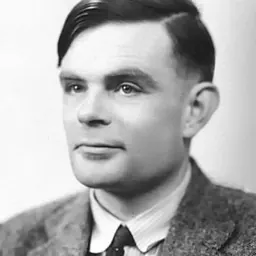



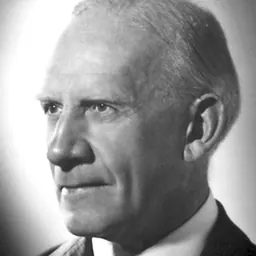

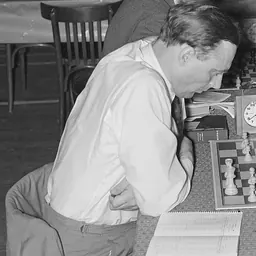
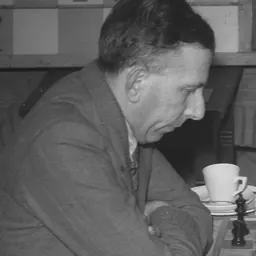
Related people
Same field, nearest in time


Contemporaries
People whose lives overlapped I. J. Good's




Frequently asked questions
Who was I. J. Good?
British statistician and cryptographer (1916–2009)
When was I. J. Good born?
I. J. Good was born on 9 December 1916 in London.
When did I. J. Good die?
I. J. Good died on 5 April 2009 in Radford.
What was I. J. Good's occupation?
I. J. Good was a mathematician, cryptographer, computer scientist, philosopher, statistician and university teacher.
What nationality was I. J. Good?
I. J. Good was British.
Sources & further reading
Cite this page
APA: Biography.guide. (2026). I. J. Good. https://biography.guide/i-j-good/
MLA: "I. J. Good." Biography.guide, https://biography.guide/i-j-good/.
Chicago: "I. J. Good." Biography.guide. https://biography.guide/i-j-good/.
Data last updated: 2026-09-20 · Spot an error? Report a correction.
Page generated 2026-09-27 05:01 UTC