
About Huseyn Javid
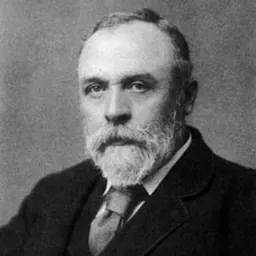
Lived 1882 – 1941 (aged 59). Huseyn Javid was a Russian poet, writer and playwright.
Huseyn Javid , was born Huseyn Abdulla oghlu Rasizadeh (24 October 1882 in Nakhchivan – 5 December 1941 in Shevchenko, Tayshetsky District), was a prominent Azerbaijani poet and playwright of the early 20th century. He was one of the founders of progressive romanticism movement in the contemporary Azerbaijani literature. He was exiled during the Stalin purges in the USSR.
Life and career Huseyn Abdulla oglu Rasizadeh was born in 1882 to a family of a theologian in Nakhchivan in the Erivan Governorate. After completing his elementary education at a religious school in 1898, Javid pursued his mid-school education in the Maktab-i Tarbiya of Mashadi Taghi Sidgi. In 1899–1903, Huseyn Javid studied in the Talibiyya Madrasah in Tabriz. After obtaining a degree in literature at the Istanbul University in 1909, Javid worked as a teacher in Nakhchivan, Ganja and Tiflis, and starting from 1915 in Baku.
Huseyn Javid's first book of lyrical poems titled Kechmish gunlar ("The Past Days") was published in 1913. However, Javid was known more as a playwright. His philosophical and epic tragedies, and family dramas introduce a new line of development in Azerbaijani literature. In his literary tragedy Sheikh Sanan (1914), Huseyn Javid philosophized about the idea of a universal religion to lift interreligious barrier between humans. His most famous creation, Iblis (The Devil) written in 1918, exposed all oppressive forces as the supporters of "humans are wolves to each other" philosophy and "the 20th century cultural savages", and summarized them in the character of Satan. In his works, Javid criticized any form of colonialism and oppression.
During the 1920s and 1930s, Huseyn Javid authored a number of historical epics, such as Peyghambar (The Prophet) in 1922, Topal Teymur (Timur) in 1925, Sayavush (Siyâvash) in 1933 and Khayyam (Khayyám) in 1935.
Arrest, exile and death
Huseyn Javid wrote during the time of Collectivization and Stalin purges in the Soviet Azerbaijan. In the worst times of totalitarianism, he refused to serve as propagandist of "revolutionary socialist achievements". Javid was arrested in 1937 on trumped-up charges of being a "founding member of a counter-revolutionary group that was plotting an overthrow of the Soviet power".
His arrest was a part of the nationwide campaign of purge against intelligentsia. The Soviet government exiled Huseyn Javid to the Far East to the city of Magadan, Siberia in the late 1930s. He died on 5 December 1941 in the village of Shevchenko (Tayshetsky District). Huseyn Javid was officially exonerated in 1956. His repatriation came only on Javid's 100th birthday in 1982, when his remains were moved from Shevchenko back to his homeland of Nakhchivan and reburied in a mausoleum built in Javid's honor. Monument to Javid was built in King's Park in Podgorica in 2013.
One of the primary work of Huseyn Javid is his “Iblis (The Evil)” tragedy, written in 1918. The author concludes all his observations during the processes were happening at the beginning of the 20th century. Javid creates his main character “evil”. In this work of tragedy the author touches several pressing issues which concerned him, such as wars and their tragic consequences, the causes of wars (including human ego) and his philosophical views regarding the future destiny of the world.
List of works
Works of Huseyn Javid up to 1920
Works of Huseyn Javid during Soviet period Name
The home museum of Huseyn Javid was opened in 1984 in Alixan street, where Javid was born. There are about 6000 exhibits. Besides preserving personal belongings and writings of Huseyn Javid, the museum researches his works.
Huseyn Javid Mausoleum The mausoleum was built on his grave in 1996, for the 114th anniversary of Huseyn Javid. The architect was Rasim Aliyev. Heydar Aliyev participated in the opening ceremony.
Don’t just read it —
keep it.
Full-length biographies made to live with: read them, listen on the way to work, watch them tonight.
- E-book
- Audio
- Video
Instant download · yours to keep · every purchase keeps this site free
Important facts
People in Huseyn Javid's life
Named in this biography and alive at the same time

Related people
Same field, nearest in time

Contemporaries
People whose lives overlapped Huseyn Javid's




Frequently asked questions
Who was Huseyn Javid?
Azerbaijani poet and playwright (1882–1941)
When was Huseyn Javid born?
Huseyn Javid was born on 24 October 1882 in Nakhchivan.
When did Huseyn Javid die?
Huseyn Javid died on 5 December 1941 in Tayshetsky District.
What was Huseyn Javid's occupation?
Huseyn Javid was a poet, writer and playwright.
What nationality was Huseyn Javid?
Huseyn Javid was Russian.
Sources & further reading
Cite this page
APA: Biography.guide. (2026). Huseyn Javid. https://biography.guide/huseyn-javid/
MLA: "Huseyn Javid." Biography.guide, https://biography.guide/huseyn-javid/.
Chicago: "Huseyn Javid." Biography.guide. https://biography.guide/huseyn-javid/.
Data last updated: 2026-09-22 · Spot an error? Report a correction.
Page generated 2026-09-27 05:22 UTC