
About Hunter Snevily
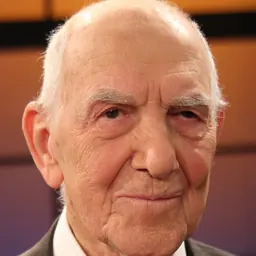
Lived 1956 – 2013 (aged 57). Hunter Snevily was an American mathematician, known for Graph theory, Ramsey theory and Set theory.
Education and career
Hunter received his undergraduate degree from Emory University in 1981, After a postdoctoral fellowship at Caltech, where he mentored many students, Hunter took a faculty position at the University of Idaho in 1993 where he was a professor until 2010. while fighting with Parkinsons, bounding the size of a family of sets under intersection constraints. He conjectured that if is a set of positive integers and is a family of subsets of an -set satisfying whenever , then . His conjecture was ambitious in a way it would beautifully unify classical results of Nicolaas Govert de Bruijn and Paul Erdős (1948), Bose (1949), Majumdar (1953), H. J. Ryser (1968), Frankl and Füredi (1981), and Frankl and Wilson (1981). Hunter finally proved his conjecture in 2003
Hunter made important contribution to the well known Chvátal's Conjecture (1974) which states that every hereditary family of sets has a largest intersecting subfamily consisting of sets with a common element. Schönheim proved this when the maximal members of have a common element. Vašek Chvátal proved it when there is a linear order on the elements such that implies when for . A family has as a dominant element if substituting for any element of a member of not containing yields another member of . Hunter's 1992 result greatly strengthened both Schönheim's result and Chvátal's result by proving the conjecture for all families having a dominant element; it was major progress on the problem.
One of his most cited papers is with Lior Pachter and Bill Voxman on Graph pebbling. This paper and Hunter's later paper with Foster added several conjectures on the subject and together have been cited in more than 50 papers.
Hunter made important contributions on the Snake-in-the-box problem and on the Graceful labeling of graphs.
One of Hunter's conjectures (1999) became known as Snevily's Conjecture: Given an abelian group of odd order, and subsets and of , there exists a permutation of such that are distinct. Noga Alon proved this for cyclic groups of prime order. Dasgupta et al. (2001). proved it for all cyclic groups. Finally, after a decade, the conjecture was proved for all groups by a young mathematician Arsovski. Terence Tao devoted a section to Snevily's Conjecture in his well-known book Additive Combinatorics.
Hunter collaborated the most with his long-term friend
Don’t just read it —
keep it.
Full-length biographies made to live with: read them, listen on the way to work, watch them tonight.
- E-book
- Audio
- Video
Instant download · yours to keep · every purchase keeps this site free
Important facts
People in Hunter Snevily's life
Named in this biography and alive at the same time



Related people
Same field, nearest in time


Contemporaries
People whose lives overlapped Hunter Snevily's


Frequently asked questions
Who was Hunter Snevily?
American mathematician and physics professor
When was Hunter Snevily born?
Hunter Snevily was born on 15 June 1956.
When did Hunter Snevily die?
Hunter Snevily died on 11 November 2013 in Moscow, Idaho.
What was Hunter Snevily's occupation?
Hunter Snevily was a mathematician.
What was Hunter Snevily known for?
Hunter Snevily was known for Graph theory, Ramsey theory and Set theory.
What nationality was Hunter Snevily?
Hunter Snevily was American.
Sources & further reading
Cite this page
APA: Biography.guide. (2026). Hunter Snevily. https://biography.guide/hunter-snevily/
MLA: "Hunter Snevily." Biography.guide, https://biography.guide/hunter-snevily/.
Chicago: "Hunter Snevily." Biography.guide. https://biography.guide/hunter-snevily/.
Data last updated: 2026-09-22 · Spot an error? Report a correction.
Page generated 2026-09-27 05:07 UTC