
Hugo Marcus
German writer and intellectual in Berlin during Weimar Germany
About Hugo Marcus
Lived 1880 – 1966 (aged 85). Hugo Marcus was a German lGBTQ rights activist, writer and philosopher.
Dr. Hugo "Hamid" Marcus (6 July 1880 – 18 April 1966) was a homosexual, Muslim, German-Jewish academic, author, teacher, and political activist.
Foremost a dedicated writer, a large portion of Marcus' writing focuses on male homoerotic relationships and his interpretations of Islam. Despite being ethnically Jewish, Marcus converted to Islam in 1931, at the age of 51, after being heavily involved in the Ahmadiyya mosque community in Berlin in the prior years. In 1938, Marcus was arrested by the Nazis for his Jewish heritage and sent to Oranienburg concentration camp, but was released a month later due to help from the Ahmadiyya community.
Marcus was an exceptional example of a Jewish convert to Islam,
Marcus was also highly involved in homosexual activism during his younger years, being a close associate to famous homosexual activist and sexual scientist Magnus Hirschfeld (1868–1935) and others. His mother was Cäcilie Hepner and he had brothers Otto,
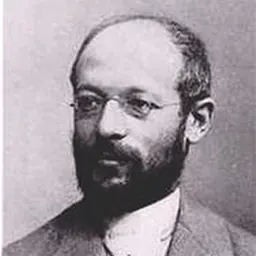
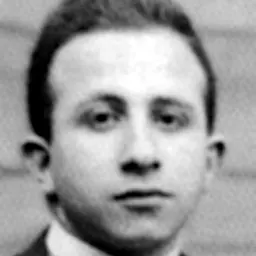
Marcus and Hiller were academically mentored by early sociologist and left-wing activist Georg Simmel. Simmel's influence put Hiller on a path towards a life of left-wing activism, but Marcus was not so straightforward. While Hiller was far more upfront about his sexuality, calling himself "gay" and even proposing a thousand members of the Scientific-Humanitarian Committee publicly identify themselves as homosexual to push forward the movement, This was considered a major accomplishment of the Ahmadiyya community in Europe, with Marcus even delaying his escape from Nazi persecution to finish the translation.
Persecution by the Nazis In November 1938, Marcus was arrested by the Nazi regime at his mother's flat in Berlin for his Jewish heritage. He was sent to Oranienburg concentration camp, where he was held for a month, but with help from his friends at the Ahmadiyya community, he was set free. At his potential peril, Marcus remained in Berlin until July 1939, in order to finish a German translation of the Quran. He left for Switzerland immediately after it was published, bringing with him everything he had ever written (besides Das Tor dröhntzu), weighing at least 100 kilos.
Despite being one of the lucky few Jews who were allowed to seek refuge from the Nazis in Switzerland, Marcus was forced to keep the name "Hugo Isreal Marcus," which was prescribed by the Nazis to denote his Jewish status, on his Swiss documentation.
Marcus remained in Switzerland for the rest of his life. He continued writing and publishing his work, including some love stories which he sent to the Zurich homosexual magazine Der Kreis (The Circle), which was founded by Marcus' old friend Kurt Hiller.
Most of Marcus' family was displaced or murdered in the holocaust. His cousin Else fled to New York, his aunt to British Palestine. His cousin Leonie Cahn and her husband fled to Zurich like Marcus and his mother. By the time of his mother's death in 1947, Marcus was the last of his brothers alive.
Writings Marcus was a prolific writer and his published and unpublished work spans forty whole containers, currently held in The Central Library in Zurich, Switzerland. He wrote on a daily basis since adolescence, and his work includes hundreds of stories about exalted male friendship, usually with a repressed homoerotic or homoromantic edge, thousands of aphorisms about the friction between Eros and Heroism, a dozen published books, and twenty published treatises surrounding the topic of Islam.
Marcus' writings and ideology was heavily inspired by influential German authors Friedrich Nietzsche and Johann Wolfgang von Goethe, the latter he presumed to be both gay and hold Islamic beliefs, like himself.
Marcus wrote and published throughout his entire adult life. His first published book, the novel Das Frühlingsglück (Spring Happiness), was completed in 1900, when he was 20 years old. The book follows the young boy, Guido, who forms a romantic relationship with a girl, Adeline, however he actually loves a boy, Ernst, despite the fact that the two have not meaningfully interacted. Guido's relationship with Adeline breaks down due to his love for Ernst, but rather than pursuing the other boy, Guido gives up romance altogether and lives the rest of his days alongside his mother, never seeking another woman to court.
During a time period spanning from his teens to late middle age, Marcus wrote between 700 and 800 short texts similar in essence to Das Frühlingsglück, following two boys: the extroverted Guido and shy Heinrich. The boys' names are not always consistent, and notably sometimes "Heinrich" is replaced with "I" in these texts, but they all explore like themes of homosexual desire, despair, and repression. The texts were likely written to help Marcus cope with his inability to find love and connection due to societal restraints. In 1915, Marcus compiled a large collection of his Guido and Henrich stories into the privately published and anonymous book Das Tor dröhntzu (The Gate Slams Shut). This book was not received well by Marcus' family.
Marcus' last published work, a booklet of aphorisms called Einer sucht den Freund (Looking for a Friend) was released when he was 81.
Don’t just read it —
keep it.
Full-length biographies made to live with: read them, listen on the way to work, watch them tonight.
- E-book
- Audio
- Video
Instant download · yours to keep · every purchase keeps this site free
Important facts
People in Hugo Marcus's life
Named in this biography and alive at the same time

Related people
Same field, nearest in time



Contemporaries
People whose lives overlapped Hugo Marcus's



Frequently asked questions
Who was Hugo Marcus?
German writer and intellectual in Berlin during Weimar Germany
When was Hugo Marcus born?
Hugo Marcus was born on 6 July 1880 in Poznań.
When did Hugo Marcus die?
Hugo Marcus died on 18 April 1966 in Basel.
What was Hugo Marcus's occupation?
Hugo Marcus was a lGBTQ rights activist, writer and philosopher.
What nationality was Hugo Marcus?
Hugo Marcus was German.
Sources & further reading
Cite this page
APA: Biography.guide. (2026). Hugo Marcus. https://biography.guide/hugo-marcus/
MLA: "Hugo Marcus." Biography.guide, https://biography.guide/hugo-marcus/.
Chicago: "Hugo Marcus." Biography.guide. https://biography.guide/hugo-marcus/.
Data last updated: 2026-09-20 · Spot an error? Report a correction.
Page generated 2026-09-27 05:29 UTC