
About Hugh Samuel Johnson
Lived 1882 – 1942 (aged 59). Hugh Samuel Johnson was an American military officer, administrator, politician and journalist.
Hugh Samuel Johnson (August 5, 1882 – April 15, 1942) was a United States Army officer, businessman, speech writer, government official and newspaper columnist. He was a member of the Brain Trust of Franklin D. Roosevelt from 1932 to 1934. He wrote numerous speeches for FDR and helped plan the New Deal. Appointed head of the National Recovery Administration (NRA) in 1933, he was highly energetic in his "blue eagle" campaign to reorganize American business to reduce competition and raise wages and prices. Schlesinger and Ohl (1985) conclude that he was an excellent organizer, but that he was also domineering, abusive, outspoken, and unable to work harmoniously with his peers. He lost control of the NRA in August 1934.
Early life He was born in Fort Scott, Kansas in 1882 to Samuel L. and Elizabeth (née Mead) Johnson.
His paternal grandparents, Samuel and Matilda (MacAlan) Johnson, emigrated to the United States from Ireland in 1837 and originally settled in Brooklyn, New York. His father promised to try to secure him an appointment to the United States Military Academy (West Point), and was successful in obtaining an alternate appointment. and graduated and was commissioned a second lieutenant in the 1st Cavalry on June 11, 1903. Johnson was subsequently stationed at Yosemite and Sequoia national parks. and the same month was named to a Department of War committee on military training (the U.S. had entered World War I on April 6, 1917).
As a captain, Johnson helped co-author the regulations implementing the Selective Service Act of 1917. At the time of his promotion, he was the youngest person, at the age of 35, to reach the rank of brigadier general since the Civil War, and the youngest West Point graduate to remain continuously in the service who had ever reached the rank.
Upon his promotion to brigadier general, Johnson was appointed director of the Purchase and Supply Branch of the General Staff in April 1918,
Johnson resigned from the U.S. Army on February 25, 1919.
After World War I Johnson was named assistant general manager of the Moline Plow Company on September 1, 1919. He joined the Brain Trust of Franklin D. Roosevelt in the 1932 presidential election. His major role was drafting speeches, most notably one that FDR delivered in Pittsburgh denouncing the reckless spending of the Hoover administration and calling for a very conservative fiscal policy.
New Deal career NRA Time magazine cover awarding Johnson the 1933 Man of the Year.
Three months into President Roosevelt’s term, with banking reforms and agricultural support already under way, FDR’s advisers sought a new approach dubbed “workplace democratization.” Early drafts of the industrial recovery legislation had been prepared by Raymond Moley, but in spring 1933 Roosevelt charged Hugh S. Johnson—an Army veteran turned businessman and progressive—with administering the new Act. On June 16, 1933, the National Industrial Recovery Act (NIRA) took effect. Title II of the Act created the Public Works Administration to fund construction projects, while Title I established the National Recovery Administration (NRA) to oversee industry codes for “fair competition.”
Under the NIRA, thousands of firms joined industry-wide “codes” setting wages, hours, production limits and price guidelines in cooperation with labor and consumer representatives. In contrast to top-down planning, each Code was drafted by committees of business, labor and consumer groups at a public hearing. A Deputy Administrator then mediated differences and, failing agreement, deferred to the state for a final determination—seeking “the greatest justice & fairness” for all participants. Section 7 guaranteed collective bargaining; in response the Act created the National Labor Board (NLB) with 20 regional panels appointed by the NRA to resolve labor disputes, issue subpoenas and oversee union elections. Between its inception and abolition, the NLB settled 1,019 strikes, avoided 498 more and mediated 1,800 other conflicts.
The NRA also launched the Blue Eagle campaign: compliant firms displayed the eagle emblem to signal to patriotic consumers, while non-compliers faced boycotts.
The NRA involved ending the Great Depression by organizing thousands of businesses under codes drawn up by trade associations and industries. According to biographer John Ohl (as summarized by reviewer Lester V. Chandler): Johnson's priorities became evident almost immediately. In the prescription, "Self regulation of industry under government supervision" the emphasis was to be on maximum freedom for business to formulate its own rules with a minimum of government supervision. Consumer protection and the interests of labor were of decidedly lesser importance. To induce business to formulate and abide by codes of fair competition Johnson was willing to condone almost any type of price fixing, restriction of production, limitation of productive capacity, and other types of anti-competitive practices.
Johnson was recognized for his efforts when Time named him Man of the Year of 1933—choosing him instead of FDR. By 1934 the enthusiasm that Johnson had so successfully created had faded. Johnson was faltering badly, which historians ascribe to the profound contradictions in NRA policies, compounded by heavy drinking on the job. Big business and labor unions both turned hostile. 1 According to historian Ellis Hawley: at the hands of historians the National Recovery Administration of 1933-35 has fared badly. Cursed at the time, it has remained the epitome of political aberration, illustrative of the pitfalls of “planning” and deplored both for hampering recovery and delaying genuine reform.
In its brief existence, according to internal reports, the NRA created an estimated 2.78 million jobs—more than all other New Deal agencies combined by 1935, and added roughly $3 billion annually to purchasing power without direct Treasury appropriations. It established minimum wages, maximum hours, ended most child-labor practices and dissolved sweatshops across multiple industries.
The key NRA code successes included: Bituminous Coal Code**: This code unified northern and southern Appalachian producers and restored over 4,500 small mines under fair labor rules. Lumber Code**: This code reopened some 2,000 small mills with regulated prices and hours. Corrugated & Solid Fiber Shipping Container Code**: This code, through the “Stevenson Plan” incentivized innovation over price cutting; production value rose 76.3% from 1932–35 and employment by 30.7%.
By mid-1934 enforcement slackened and voluntary compliance collapsed. On September 9, 1934, Johnson proposed converting the NRA into an administrative body with 60 government representatives, a National Industrial Commission, and a judicial tribunal for code disputes—but none of these reforms were adopted. He submitted his resignation that month after Frances Perkins, convinced that Hugh S Johnson sought to implement fascism, had been pressuring FDR to fire Johnson. And yet, according to Johnson's account, he resigned from the NRA because his planned reform of the NRA would result in his leadership role being redundant. Hugh S Johnson's resignation became effective October 15, 1934. The NRA continued in deteriorating form until the Supreme Court struck down the NIRA in *Schechter Poultry Corp. v. United States* (May 1935).
Johnson came under attack by Labor Secretary Frances Perkins for having "un-American policies". He distributed copies of a fascist tract called "The Corporate State" by one of Benito Mussolini's favorite economists, Bruno Biagi, including giving one to Perkins and asking her to give copies to Roosevelt's cabinet.
Journalism, later life and death
Upon leaving the Roosevelt administration, Johnson, who had long been a successful essay writer for national magazines, now became a syndicated newspaper columnist specializing in political commentary. He supported Roosevelt in the 1936 presidential election, but when the Court-packing plan was announced in 1937 he denounced Roosevelt as a would-be dictator. In 1939 he endorsed isolationism—staying out of World War II; he endorsed Wendell Willkie the Republican candidate in the 1940 presidential election.
Johnson wrote a number of articles and stories. One future history piece, The Dam, was written in 1911 and appears in the Sam Moskowitz anthology, Science Fiction by Gaslight. In the story, Japan invades and conquers California.
General Hugh S. Johnson died in Washington, D.C., in April 1942 from pneumonia. He was buried in Arlington National Cemetery.
Writings
After leaving government service, Johnson became a syndicated columnist for the New York Daily News, where he wrote extensively on political and military issues. His columns were known for their blunt style and often critical tone, with some historians describing him as “domineering, abusive, outspoken” in his public commentary.
In 1935, Johnson published a memoir:
The Blue Eagle from Egg to Earth (New York: D. Appleton-Century Company, 1935) – a detailed personal account of his experiences in the Roosevelt administration and his role in shaping the National Recovery Administration (NRA). The book reflects his complex relationship with the New Deal and contains insights into his evolving political views.
Some of Johnson's writings in the late 1930s and early 1940s took on a more isolationist tone as tensions rose in Europe. Until his death in April 1942, he remained a prominent media figure—working as a public speaker, syndicated columnist, and author.
Awards Distinguished Service Medal (U.S. Army) Philippine Campaign Medal Mexican Service Medal World War I Victory Medal (United States)
Dates of rank
Footnotes
Don’t just read it —
keep it.
Full-length biographies made to live with: read them, listen on the way to work, watch them tonight.
- E-book
- Audio
- Video
Instant download · yours to keep · every purchase keeps this site free
Important facts
People in Hugh Samuel Johnson's life
Named in this biography and alive at the same time
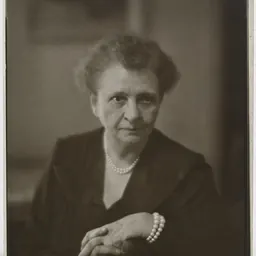


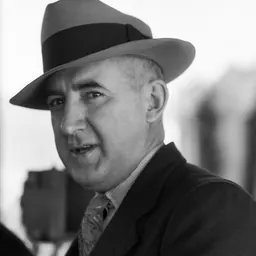

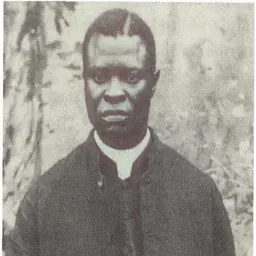

Related people
Same field, nearest in time

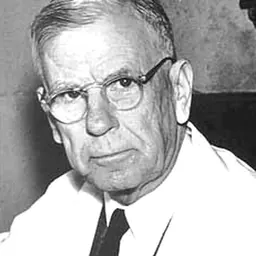


Contemporaries
People whose lives overlapped Hugh Samuel Johnson's




Frequently asked questions
Who was Hugh Samuel Johnson?
American administrator (1882–1942)
When was Hugh Samuel Johnson born?
Hugh Samuel Johnson was born on 5 August 1882 in Bourbon County.
When did Hugh Samuel Johnson die?
Hugh Samuel Johnson died on 15 April 1942 in Washington, D.C..
What was Hugh Samuel Johnson's occupation?
Hugh Samuel Johnson was a military officer, administrator, politician and journalist.
What nationality was Hugh Samuel Johnson?
Hugh Samuel Johnson was American.
Sources & further reading
· Wikipedia: Hugh Samuel Johnson
Cite this page
APA: Biography.guide. (2026). Hugh Samuel Johnson. https://biography.guide/hugh-samuel-johnson/
MLA: "Hugh Samuel Johnson." Biography.guide, https://biography.guide/hugh-samuel-johnson/.
Chicago: "Hugh Samuel Johnson." Biography.guide. https://biography.guide/hugh-samuel-johnson/.
Data last updated: 2026-09-20 · Spot an error? Report a correction.
Page generated 2026-09-27 05:29 UTC