
Hu Chunhua
Vice Chairman of the Chinese People's Political Consultative Conference
About Hu Chunhua
Born 1963. Hu Chunhua is a Chinese politician.
Hu Chunhua (; born April 1963) is a Chinese politician. Hu currently serves as a Vice Chairman of the National Committee of the Chinese People's Political Consultative Conference since 2023. From 2012 to 2022, Hu served as a member of the Politburo of the Chinese Communist Party. He also served as Vice Premier of China from 2018 to 2023.
Born in Yichang, Hubei, Hu first entered politics by working as a cadre of the Communist Youth League in the Tibet Autonomous Region. After serving various roles in Tibet, he rose through the ranks of the Communist Youth League, eventually returning to Beijing and becoming its first secretary in 2006. In 2008, he was appointed the governor of Hebei. He was reassigned to the post of Chinese Communist Party (CCP) committee secretary of Inner Mongolia in 2009, a post he held until 2012.
In 2012, he became the CCP secretary of Guangdong, as well as a member of the CCP Politburo. During his time in Guangdong lasting until 2017, Hu launched anti-corruption campaigns and earned reputation as a low-key leader. Hu became a vice premier of China in 2018, a post he served until 2023. He left the Politburo in 2022, after the 20th CCP National Congress following the 3rd term general secretaryship of Xi Jinping, though he kept his membership to the CCP Central Committee. In March 2023, he became a vice chairman of the Chinese People's Political Consultative Conference. Hu is popularly known as "Heir apparent of Tuanpai" due to the similarities of his career with that of former CCP general secretary Hu Jintao and former Premier of China Li Keqiang.
Early life and education Hu was born into a family of farmers in Wufeng County, Yichang, Hubei province on 1 April 1963. In 1979, he ranked first in the county for the Gaokao examination. At age 16, he was the youngest in his class. In 1983, he joined the Chinese Communist Party (CCP). He received a bachelor's degree in Chinese literature from Peking University in August 1983. At Peking University he was friends with Li Keqiang, who was also attending Peking University at the time. Hu later entered the Central Party School in 1996, graduating via part-time studies with a master's degree in world economics 1999. He also took cadre training programs from the Central Party School from 1996 to 1997 and in 2000. On January 12, 2009, he was officially elected Governor. In Hebei, Hu had the reputation of working 'non-stop', visiting all of the province's 11 prefecture-level cities within a few months. He was also elected Chairman of the Inner Mongolia People's Congress in January 2010. Hu believed that dogmatically pursuing a mere increase in economic output did not benefit everyone in the region, particularly farmers and nomadic herders, pointing out that the large mining projects had brought significant wealth which did not trickle down to the grassroots. He stressed that one of the priorities of his administration would be assuring equitable policies in the relocation, employment and social welfare of nomadic peoples.
Guangdong
According to Reuters in August 2012, Hu Jintao sought to promote Hu Chunhua to be a member of the CCP Politburo or the Party Secretary of Shanghai after the 18th Party National Congress. In November 2012, after the Party Congress, Hu was appointed to the 18th Politburo of the Chinese Communist Party, a ruling council of China's top leaders. He, along with Sun Zhengcai, were the youngest members of the 18th politburo, raising speculation that they were being groomed to become China's next leaders in 2022. In December 2012, Hu was appointed Party Secretary of Guangdong, succeeding Wang Yang, who went on to become Vice-Premier in Beijing. The Guangdong leadership post has historically been filled by those who have gone on to join the national leadership, such as Zhao Ziyang, Xi Zhongxun, Li Changchun, Zhang Dejiang, and Wang Yang. It is widely regarded to be one of China's most important regional offices.
In Guangdong, Hu earned a reputation for being low-key, action-oriented leader who is not fond of bureaucracy or formalities. Almost immediately after his assuming the reins in Guangdong, Hu's government began a sweeping crackdown on so-called luoguan, i.e., officials who work in China but whose spouses and children live abroad. Since the beginning of Hu's term, over 800 luoguan have been disciplined, demoted, or otherwise removed from office. Hu's government also cracked down on drug trafficking and the sex industry in the Dongguan area, dispatching police to conduct massive raids of the city's prostitution venues, and removing the city's vice mayor and police chief from office.
Hu's government also began experimenting with the public release of information on the assets of local officials, and have moved to codify anti-corruption measures into law with the provincial legislature. In October 2014, Hu's government began a series of public consultations on new anti-corruption regulations. Taking best practices from the Independent Commission Against Corruption in Hong Kong, Hu's government experimented with – in select local areas – merging the traditionally separate departments of Discipline Inspection, Supervision, Anti-Corruption, and Audit into a single agency in charge of combating graft. He was named as one of two deputy party secretaries of the CPPCC in the same month.
Public image Hu has maintained a relatively low public profile during his rise to positions of power. Hu is known for his low-key style in public, and does not discuss his private life. During the 2012 National People's Congress, Hu Chunhua only answered four out of twenty questions posed to him by reporters, casting many sensitive questions to his subordinates. When asked personal questions, he said that he was only interested in matters relating to Inner Mongolia. He refused to comment on his personal ambitions, or whether or not he had a Weibo account.
After Xi Jinping assumed General Secretary of the Chinese Communist Party in 2012, Hu continued to play a prominent role politically - his record in Guangdong impressed the central authorities and was praised by Xi personally. There was wide speculation that Hu would advance directly to the CCP Politburo Standing Committee in 2017 and be groomed as a putative successor to the top leadership, but this ultimately did not occur. However, Hu was selected to become Vice-Premier in 2018, continuing to be the youngest leader among the senior-most ranks of the party. It was again speculated that Hu might join the Standing Committee in 2022, but instead he was demoted from the Politburo at the 2022 National Congress under protest from Hu Jintao, who was then ejected from the meeting.
His political beliefs about Tibet are fairly opaque. He is able to hold simple conversations in Tibetan as he had worked there as a regional official.
Personal life Hu married his wife in Tibet. They have one daughter.
Don’t just read it —
keep it.
Full-length biographies made to live with: read them, listen on the way to work, watch them tonight.
- E-book
- Audio
- Video
Instant download · yours to keep · every purchase keeps this site free
Important facts
Family & relationships
People in Hu Chunhua's life
Named in this biography and alive at the same time

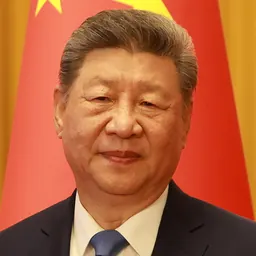





Related people
Same field, nearest in time

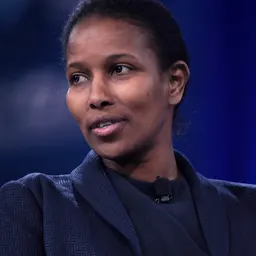




Contemporaries
People whose lives overlapped Hu Chunhua's

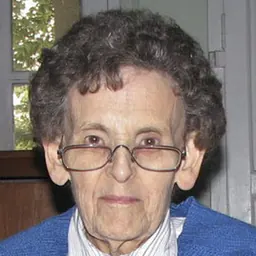
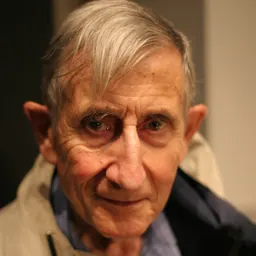


Frequently asked questions
Who is Hu Chunhua?
Vice Chairman of the Chinese People's Political Consultative Conference
When was Hu Chunhua born?
Hu Chunhua was born on 1 April 1963 in Wufeng Tujia Autonomous County.
What is Hu Chunhua's occupation?
Hu Chunhua is a politician.
What nationality is Hu Chunhua?
Hu Chunhua is Chinese.
Sources & further reading
Cite this page
APA: Biography.guide. (2026). Hu Chunhua. https://biography.guide/hu-chunhua/
MLA: "Hu Chunhua." Biography.guide, https://biography.guide/hu-chunhua/.
Chicago: "Hu Chunhua." Biography.guide. https://biography.guide/hu-chunhua/.
Data last updated: 2026-09-25 · Spot an error? Report a correction.
Page generated 2026-09-27 05:12 UTC