
About Zhang Dejiang
Born 1946. Zhang Dejiang is a Chinese politician.
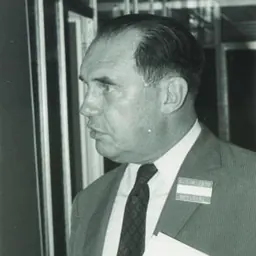
Zhang Dejiang (; born 4 November 1946) is a Chinese retired politician who served as the chairman of the Standing Committee of the National People's Congress between 2013 and 2018. He was also the third-ranking member of the Politburo Standing Committee of the Chinese Communist Party from 2012 to 2017.
Born in Tai'an County, Liaoning, Zhang attended Yanbian University and Kim Il Sung University. Entering politics in 1983, he served as the deputy party secretary of the Yanji from 1983 to 1985 and the deputy party secretary of the Yanbian Korean Autonomous Prefecture from 1985 to 1986, when he became a vice minister of Civil Affairs. In 1990, he became the Party Secretary of Yanbian. In 1995, he was appointed as the Party Secretary of Jilin, serving there until 1998. In that year, he became the Party Secretary of Zhejiang, where he served until 2002. That year, he was promoted to the CCP Politburo and was appointed as the Party Secretary of Guangdong. During his tenure, the SARS outbreak began in Guangdong.
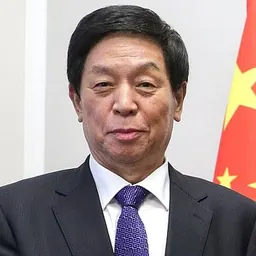
From 2008 to 2013, he served as vice premier in charge of energy, telecommunications, and transportation under Premier Wen Jiabao, widely known for being Wen's 'troubleshooter' of choice, leading various disaster response task forces, such as during the 2009 Heilongjiang mine explosion and the 2011 Wenzhou train collision. In March 2012, Zhang briefly replaced Bo Xilai as the party secretary of Chongqing, who was removed due to a political scandal. In 2013, he was promoted to become the third-ranking member of the CCP Politburo Standing Committee. He also became the deputy head of the National Security Commission and the top official responsible for Hong Kong and Macau affairs. He was appointed as the chairman of the NPCSC in 2013. In 2017, Zhang retired from the Politburo Standing Committee, and was succeeded by Li Zhanshu as NPCSC chair in 2018.
Early life Zhang, a native of Tai'an County, Liaoning, attended Yanbian University in Yanji, Jilin, where he studied the Korean language. Zhang enrolled in Kim Il Sung University in North Korea in August 1978 and received a degree in economics in 1980. After return to China, he became the Vice President of Yanbian University until 1983. Zhang was popular among business leaders in Zhejiang due to his relatively laissez-faire attitude towards private enterprise. Zhang was known for allowing private business to operate freely, within the bounds of the law.
In 2001, Zhang wrote an article attacking the idea of allowing business owners to join the Communist Party, claiming that doing so would ruin the party, shortly before Jiang formally accepted the idea through the Three Represents idea.
Party Secretary of Guangdong In November 2002, Zhang was transferred to Guangdong to become its Party Secretary.
Economy Zhang arrived in Guangdong at a time when the province's economic growth seemed to be lagging coastal provinces such as Jiangsu and Shandong, both of which were a mere several hundred billion yuan away from 'catching up' to Guangdong's GDP figures. Zhang made it a top priority to stimulate the province's economy. During his five-year tenure, Zhang worked to integrate the economies of the Pearl River Delta. Critics called Pan-Pearl Delta economic integration an empty concept and alleged that Zhang was pushing the policy as a platform for future promotion. A senior journalist compared Zhang's ambitions to that of Bo Xilai, "Bo Xilai manipulates the media to promote himself, while Zhang Dejiang manipulates the media to promote his grandiose plans." while another legislator expressed support for independent labour unions in mainland China Zhang responded that China would not allow such a move because it did not want a Polish-style revolution.
Health and education Zhang also spearheaded initiatives to improve public health. For example, he implemented a plan known as "one medical station per village", granting modern clinical services to underdeveloped villages for the first time. Zhang's achievements at a time when national health care reform seemed to be failing gained him recognition from officials at the national Ministry of Health.
While planning for Guangzhou's "Education Town" began in 2000, Zhang approved the project immediately after his appointment to Guangdong and construction began in 2003. Before building began thousands of police and relocation officials armed with electric truncheons, dogs, and helicopters cleared the site of 10,000 villagers. Many villagers complained of inadequate compensation. Local media outlets were banned from reporting negative news about the project and law firms refused to handle compensation cases due to their sensitive nature. Construction was completed in a mere nine months. Contractors working on the project complained that the completion deadline was too tight and that they could not guarantee the quality of their work. Numerous artefacts believed to date to the Western Han dynasty were found during construction, but archaeologists were usually barred from entering the construction site. Zhang said of the rapid progress, "It's a modern urban construction management miracle." In 2004 a group of villa owners whose homes were confiscated to build the Guangzhou University Town threatened to sue Zhang, along with other officials, for abusing their authority. The property owners claimed that their homes were seized to provide premium land for property development.
Patron ties It is widely believed that Zhang owes his appointment as Guangdong party secretary to then-party leader Jiang Zemin. Nonetheless, Zhang was not considered a part of the "Shanghai clique" of Jiang's closest associates.
Vice Premier Zhang was appointed vice premier in 2008 in Wen Jiabao Government. As vice premier Zhang oversaw China's energy, telecommunications, and transportation industries. He also took over as the head of a central task force on Production Safety.
During a trip to Pakistan in 2010, Zhang was awarded the Hilal-i-Pakistan by the Pakistan's president for his role in strengthening ties between the two countries.
As vice premier, Zhang served as a 'troubleshooter-in-chief', often being dispatched to scenes of ongoing disasters to direct relief operations. He therefore emerged as a visible face of the national leadership during incidents which required on-site presence of political leaders. Zhang was the highest-ranked official on the site of the 2009 Heilongjiang mine explosion, which killed over one hundred people. He also led the response team to the crash of Henan Airlines Flight 8387 in Yichun, Heilongjiang.
During the July 2011 Wenzhou train collision, Zhang, in his capacity as vice premier in charge of transportation, was dispatched to Wenzhou to lead the search and rescue efforts on directives from General Secretary Hu Jintao and Premier Wen Jiabao. Independent sources said that he set up his 'headquarters' at the Shangri-La Hotel in downtown Wenzhou, instead of at the crash scene itself. He shouldered some responsibility for the botched handling of the rescue operations, which was widely criticised on Chinese media.
Immediately after taking office in Chongqing, Zhang made statements to ease the concerns of the business community that Bo's removal would lead to a slowdown to the city's economy. Chongqing's newspapers all featured the details of Zhang's resume immediately after his appointment. During a televised government meeting Chongqing's mayor, Huang Qifan, expressed his support for Zhang. Huang was a close ally of Bo. Civil servants in Chongqing were called to meetings where they were required to pledge allegiance to the municipality's new leadership. During the same meetings, officials were told to make social and political stability their top priorities.
Chairman of the National People's Congress Standing Committee Zhang was appointed a member of the decision-making Politburo Standing Committee after the 18th CCP National Congress held in November 2012. A few days later, he was succeeded by Sun Zhengcai as party secretary of Chongqing. On 14 March 2013, during the first session of the 12th National People's Congress. Zhang was elected as the chairman of the Standing Committee of the National People's Congress, succeeding the retiring Wu Bangguo. Zhang's election marked the decrease of the NPCSC chair's importance; Zhang was the third-ranking member behind the CCP General Secretary and the Premier, compared to Wu who was the second-ranking member. On 24 January 2014, the CCP Politburo announced Zhang's appointment as vice chairman of the newly established National Security Commission under general secretary Xi Jinping.
Since ascending to the Standing Committee, Zhang also ostensibly continued his role as an 'expert' in Korean affairs, meeting with South Korean President Park Geun-hye on two occasions: during the latter's visit to Beijing in June 2013, and on his own official visit to Seoul in June 2015. In September 2017, Zhang became the leader of a leading group which drafted the 2018 constitutional amendment.
Hong Kong After his election to the Politburo Standing Committee, Zhang was appointed as the leader of the Central Coordination Group for Hong Kong and Macau Affairs, having succeeded Xi Jinping in 2012, making him the CCP's top leader in regards to Hong Kong and Macau affairs.
On the issue of electoral reform in Hong Kong, Zhang stuck close to the party line, reiterating the view that Beijing did not favour public nominations to the position of Chief Executive of the territory, and opposed the Occupy Central campaign. Zhang also publicly endorsed the "satisfactory" performance of chief executive Leung Chun-ying, who came under immense pressure during the Umbrella Movement to step down from office.
Zhang arrived in Hong Kong on 17 May 2016 for a three-day visit in his capacity as the official responsible for Hong Kong and Macau affairs to unprecedentedly level of security. Zhang was protected by heavily armed police officers and a 45-car cortège. Despite the high level of alert, pro-democracy activists managed to put up massive banners in prominent locations to welcome Zhang – whilst some banners recalled the Umbrella revolution slogan "I want genuine universal suffrage", another, which read: "End Chinese Communist Party dictatorship", was hung up and visible to Zhang's motorcade from the airport. Zhang spoke at a policy conference on Xi Jinping's One Belt, One Road economic project.
On 6 February 2017, multiple media reports said Zhang and Sun Chunlan, head of the CCP United Front Work Department, were in Shenzhen to meet with some Election Committee members from the major business chambers and political groups. It was reported that Zhang told the electors that the Politburo had decided to support Carrie Lam in the election.
Family Zhang is married to Xin Shusen , who was born in July 1949. Xin was originally from Haiyang, Shandong province. She served in a variety of senior executive roles at the China Construction Bank, and a member of the 11th National Committee of the Chinese People's Political Consultative Conference.
Don’t just read it —
keep it.
Full-length biographies made to live with: read them, listen on the way to work, watch them tonight.
- E-book
- Audio
- Video
Instant download · yours to keep · every purchase keeps this site free
Important facts
People in Zhang Dejiang's life
Named in this biography and alive at the same time



Related people
Same field, nearest in time






Contemporaries
People whose lives overlapped Zhang Dejiang's

Frequently asked questions
Who is Zhang Dejiang?
Chinese retired politician
When was Zhang Dejiang born?
Zhang Dejiang was born on 4 November 1946 in Tai'an County.
What is Zhang Dejiang's occupation?
Zhang Dejiang is a politician.
What nationality is Zhang Dejiang?
Zhang Dejiang is Chinese.
Sources & further reading
Cite this page
APA: Biography.guide. (2026). Zhang Dejiang. https://biography.guide/zhang-dejiang/
MLA: "Zhang Dejiang." Biography.guide, https://biography.guide/zhang-dejiang/.
Chicago: "Zhang Dejiang." Biography.guide. https://biography.guide/zhang-dejiang/.
Data last updated: 2026-09-20 · Spot an error? Report a correction.
Page generated 2026-09-27 05:33 UTC