
About Wang Yang
Born 1955. Wang Yang is a Chinese politician.
Wang Yang (; born 5 March 1955) is a Chinese retired politician who served as the chairman of the National Committee of the Chinese People's Political Consultative Conference from 2018 to 2023. He was the fourth-ranking member of the Politburo Standing Committee of the Chinese Communist Party from 2017 to 2022.
Wang was born in Anhui, where he began his initial political career. He joined the central government in 1999, serving in various posts at the State Council until 2005. He was appointed as the Party Secretary of Chongqing in 2005, and later became the Party Secretary of Guangdong and a member of the Politburo in 2007. During his tenure in Guangdong, he pursued relatively liberal economic and social policies, dubbed the "Guangdong model" and contrasted with the more leftist model advocated by Bo Xilai, who succeeded Wang as the Chongqing Communist Party Secretary.
From 2013 to 2018, Wang served as vice premier in charge of agriculture, water management, commerce, tourism, and poverty reduction under Premier Li Keqiang. He was promoted to the Politburo Standing Committee in 2017, becoming its fourth-ranking member. He was appointed as the chairman of the Chinese People's Political Consultative Conference in 2018. Wang retired from the PSC in 2022, and was succeeded by Wang Huning as the CPPCC chair in 2023.
Early life and career Wang was born in Suzhou, Anhui on 12 March 1955, to an ordinary urban working-class family. His father was a manual labourer, and died when he was at a young age. He joined the Chinese Communist Party (CCP) in 1975. He subsequently joined the local Party School as an instructor, before going on to study political economy at the dawn of Deng Xiaoping's economic reforms at the Central Party School in 1979.
Chongqing (2005–2007) Wang served as the Party Committee Secretary in Chongqing, a western interior municipality, from 2005 to 2007. Wang's track record in Chongqing earned him national attention, for his work of bringing a geographically remote and relatively underdeveloped region onto the international scene. In Chongqing, Wang won praise for handling a sensitive urban demolition case. He was also the pioneer of media reforms in the municipality. Since 1 January 2007, Chongqing media no longer gave priority to the activities of the city's municipal leaders in daily news broadcasts, instead focusing on stories about ordinary people, which resulted in an increase of coverage about agriculture, rural life and rural migrant workers. and for tolerating organized crime in general. Bo Xilai was subsequently arrested for a variety of charges and sentenced to life imprisonment, and official evaluation of his "crime"-fighting campaign recognizes that it encompassed gross violations of civil rights, with almost 1,000 people sent to labor camps, and served to a large extent as a tool for Bo Xilai to consolidate power and take over economic resources.
Guangdong (2007–2012) As part of a party-wide reshuffle of regional leaders, Wang Yang was slated to become CCP Committee Secretary of Guangdong after the 17th Party National Congress. He took on the post formally in November 2007. As the post was considered one of the most important regional leadership offices in China, he also earned a seat on the Communist Party's Politburo, the country's second-highest ruling council. Wang's entry to the Politburo came as a surprise to some observers, given that prior to 2007, he had not even held full membership in the Central Committee, a larger body composed of around 200 members consisting mostly of provincial- and minister-level party officials.
In Guangdong, Wang increasingly branded himself as a bold reformer. He was instrumental in pushing Guangdong province, already dubbed China's "breeding ground of reform", towards even greater economic and political freedoms. Additionally, Wang sought to diversify the province's economy away from manufacturing, and make Shenzhen an innovation hub for China's new economy. Wang's unique leadership style set him apart from normally colourless and risk-averse provincial administrators who parrot the party line. He was often compared to Bo Xilai by political observers, as both Wang and Bo were seen as rising stars of Chinese politics vying for top office. Both held important regional offices that could be used as 'testing grounds' for policies that could eventually be implemented nationally.
During the 2008 financial crisis, Guangdong faced a mass wave of bankruptcies of small to medium-sized enterprises (SMEs). In response, Wang said that his administration would not intervene to prevent bankruptcies. He remarked that unprofitable SMEs are "not productive and will eventually be eliminated by the market." After a visit to the Pearl River Delta by Premier Wen Jiabao, who was in favour of protecting small and medium-sized enterprises in order to prevent unemployment, the Wang-led Guangdong government showed resistance adhering to central government directives which called for heavier state intervention.
In 2009, Wang wished to re-instate the May Day week-long holiday in Guangdong. The holiday was removed from the calendar by central authorities a few years earlier. However, the decision was subsequently reversed by the central government.
Wang won international praise for his handling of the Wukan protests in 2011. Wukan is a fishing village under the jurisdiction of the city of Shanwei; thousands of villagers rose in protest against what they saw as insufficient compensation for local residents during the sale of land by officials. Under Wang's leadership the provincial government offered concessions to protesting villagers and allowed local elections for a new village chief.
During his term in Guangdong, Wang also became an outspoken critic of corruption and nepotism, reputedly putting him at odds with the family of the late general Ye Jianying. Ye's family had extensive economic and political interests in Guangdong and retained massive influence among the country's political elites, particularly the descendants of early Communist revolutionaries, better known as "Princelings". As a result, Wang's detractors considered him "politically unreliable", suggesting that Wang showed too much boldness in upstaging the status quo, under which most Princelings had benefited immensely. Wang was widely touted in the lead up the 18th Party National Congress as a rising star, likely slated for Politburo Standing Committee (PSC) membership in 2012. However, it was said that Wang's poor relations with the Ye family reduced his chances of entering the PSC.
Wang has taken on several important roles in heading ad hoc policy coordination steering committees known as Central Leading Groups. He has, since 2013, been the leader of the Leading Group on Intellectual Property and Counterfeit Goods, the leader of the State Council Leading Group on Poverty Reduction, and the deputy leader of the Commission on Food Safety. He was also named in 2014 as the deputy leader of the Leading Group for Advancing the Development of One Belt One Road, and the leader of the Leading Group on Poverty Reduction. Wang was considered a strong candidate for entry into the Politburo Standing Committee at the 19th Party National Congress in 2017.
Chairman of the Chinese People's Political Consultative Conference (2018–2023) Wang was chosen to be a member of the 19th Politburo Standing Committee, China's top decision-making body, at the 1st Plenary Session of the 19th Central Committee on 25 October 2017. In March 2018, Wang became Chairman of the National Committee of the Chinese People's Political Consultative Conference at the 1st Session of the 13th CPPCC National Committee.
Wang was the head of the Central Xinjiang Work Coordination Group, a body deciding Xinjiang policies. Wang visited Xinjiang in April 2018, and in March and July 2019. According to a source quoted by the South China Morning Post, Wang reported to Xi Jinping that measures targeting Muslim ethnic minorities in Xinjiang have triggered widespread discontent among Han Chinese officials and citizens.
During the 20th National Congress of the Chinese Communist Party in October 2022, Wang was not elected to the new 20th Central Committee of the Chinese Communist Party which indicated his political retirement. Wang stepped down as Chairman of the Chinese People's Political Consultative Conference in March 2023.
Political positions and public image
Wang is often seen as a leading liberal and reformist in China's ruling elite, representing a school of thought that advocates for a greater role of the market, gradual political liberalization, and a government that is more in touch with the needs of ordinary people. Although he has been generally more daring in challenging party orthodoxy compared to his peers, analysts suggest that he is unlikely to directly challenge the party line.
Wang is also seen as an advocate for market-based solutions to economic development. If economic growth were analogous to baking a cake, Wang said that the priority should be to "bake a cake" rather than to divide it, i.e., economic growth takes precedence over wealth re-distribution. This was in stark contrast to the "Chongqing model" advanced by Bo Xilai, which suggests that wealth should be re-distributed fairly first, or that wealth redistribution and economic growth can take place simultaneously. Wang and Bo's opposing views on what was dubbed the "Cake Theory" have been characterized as an increasingly apparent "left-right" ideological divide within China's ruling elite.
Personal life Wang Yang is married to Zhu Mali, whose father Zhu Jianyuan was the deputy head of the Suxian Prefecture. They have one daughter, Wang Xisha, who graduated from Peking University’s Guanghua School of Management and received a master's degree from Tufts University. In particular, it was mentioned by an employee at the bank during her application process that Wang Xisha would "have access" to a state-owned automaker in Guangzhou, where Wang Yang was a top government official. In 2020, Wang Xisha was mentioned again by the New York Times, where it was reported that she bought a US$2 million home in Hong Kong in 2010. She is married to Nicholas Zhang (Zhang Xinliang), the grandson of the former defense minister Zhang Aiping.
Awards and honors
Don’t just read it —
keep it.
Full-length biographies made to live with: read them, listen on the way to work, watch them tonight.
- E-book
- Audio
- Video
Instant download · yours to keep · every purchase keeps this site free
Important facts
People in Wang Yang's life
Named in this biography and alive at the same time



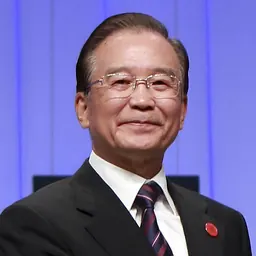
Related people
Same field, nearest in time


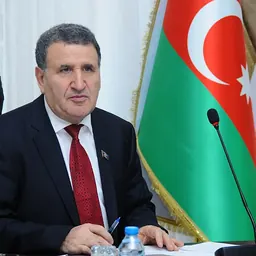


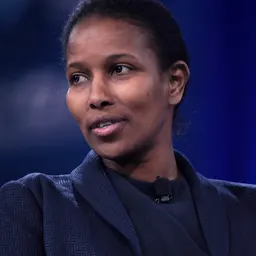
Contemporaries
People whose lives overlapped Wang Yang's

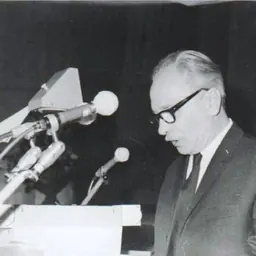

Frequently asked questions
Who is Wang Yang?
9th Chairman of Chinese People's Political Consultative Conference
When was Wang Yang born?
Wang Yang was born on 12 March 1955 in Suzhou.
What is Wang Yang's occupation?
Wang Yang is a politician.
What nationality is Wang Yang?
Wang Yang is Chinese.
Sources & further reading
· DBpedia: Wang Yang (politician)
Cite this page
APA: Biography.guide. (2026). Wang Yang. https://biography.guide/wang-yang-politician-1955/
MLA: "Wang Yang." Biography.guide, https://biography.guide/wang-yang-politician-1955/.
Chicago: "Wang Yang." Biography.guide. https://biography.guide/wang-yang-politician-1955/.
Data last updated: 2026-09-20 · Spot an error? Report a correction.
Page generated 2026-09-27 05:25 UTC