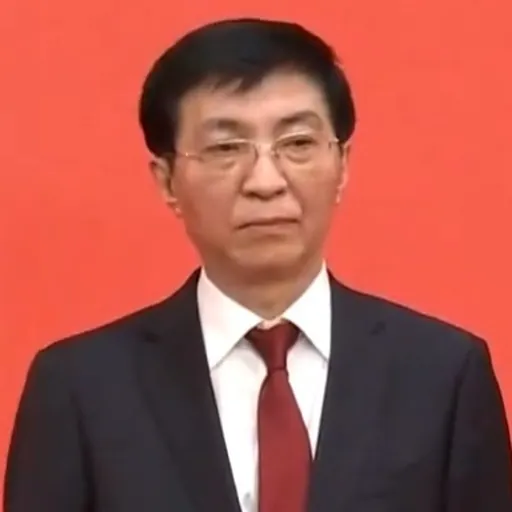
Wang Huning
Chairman of the Chinese People's Political Consultative Conference
About Wang Huning
Born 1955. Wang Huning is a Chinese politician, political scientist, political theorist and strategist.
Wang Huning (; born 6 October 1955) is a Chinese political scientist and politician who is one of the top leaders of the Chinese Communist Party (CCP). He is currently the chairman of the National Committee of the Chinese People's Political Consultative Conference (CPPCC). He has been a leading ideologist in the country since the 1980s. He has been a member of the CCP's Politburo Standing Committee, the highest decision-making body within the party between convocations of the Central Committee and the National Congress, since 2017 (19th).
A former academic, Wang was a professor of international politics and dean of the law school at Fudan University. During this time, he gained attention due to his belief in "neoauthoritarianism", which held that a strong leadership was needed for China's stability and political reforms. He became a policy author for the CCP leadership in 1995 as a director of a research team at the CCP's Central Policy Research Office (CPRO). He became the CPRO's deputy director in 1998, and became a member of the party's Central Committee and director of the office in 2002. He remained in the CPRO until 2020, the longest tenure in the office. As CPRO deputy director and later as director, he was instrumental in developing the Three Represents, a new ideological theory formulated under Jiang Zemin's leadership. He continued this work under Hu Jintao, and is believed to have had an important role in developing the theories, Scientific Outlook on Development, as well as Harmonious Society. He became a member of the CCP secretariat in 2007, a central leading organ responsible for executing and implementing policy decisions.
Wang became a member of the Politburo (18th) in 2012, and is believed to have developed close relations with CCP general secretary Xi Jinping, becoming one of his closer associates. In 2017, he was promoted to the 5th-ranked member of the Politburo Standing Committee and was elected to the Secretariat (19th). He has also chaired leading commissions on ideology and reforms and is believed to have been instrumental in developing key concepts under Xi, including Xi Jinping Thought, Chinese-style modernization, the Chinese Dream, and the Belt and Road Initiative. In 2022, he stopped serving in the Secretariat and became the 4th-ranking member of the PSC. He became the CPPCC chairman in March 2023, succeeding Wang Yang. He also became the deputy leader of the Central Leading Group for Taiwan Affairs, an internal policy coordination organization on Taiwan policy.
Widely regarded as the "Gray Eminence" of the CCP, Wang is perceived by external observers to be the informal chief ideologue of the CCP as well as the principal architect behind the party's political ideologies since the 1990s. He has held significant positions under three paramount leaders, a rare occurrence in Chinese politics. Wang believes that a strong, centralized state is needed in China to resist foreign influence, an idea that has been influential under Xi.
Early life Wang was born on 6 October 1955 in Nanshi, Shanghai. He traces his heritage to Ye County, Shandong province, though he never lived in Shandong. Wang's name, "Huning ", literally means "the peace of Shanghai ", a typical name given by his Red Army parents, who fought in the Shanghai Campaign of the Chinese Civil War and remained in the city thereafter. As a military official, Wang Huning's father was implicated during the anti–Peng Dehuai campaign launched by Mao Zedong and suffered persecution during the Cultural Revolution. His mother was hospitalized several times due to illness after 1965, requiring Wang and his two older brothers to look after her. In order to prevent his three sons from dawdling amidst the Cultural Revolution, his father locked them inside their home and required them to either copy the manuscript of the Selected Works of Mao Tse-Tung or read books. This experience fostered Wang's calm personality.
During his youth, Wang went to the Shanghai Yongqiang Middle School, where he obtained books that were forbidden from his teachers. After the school opened a mechanic class, Wang participated in it as an apprentice worker. He graduated from this junior high school in 1972. After Nixon's visit to China, the Chinese Communist Party (CCP) found itself lacking diplomats familiar with foreign languages. Following an order by the CCP Central Committee, the Shanghai Revolutionary Committee established the Foreign Language Training Class in the Fudan University, the Shanghai Normal University and the Shanghai International Studies College, with each university being required to enroll 200 students in the first enrollment year of 1977. Wang was recommended to enter Shanghai Normal University 7 May Cadre School's Foreign Language Training Class to study French with 24 other classmates.
After his graduation in February 1977,Notetag|The training school did not offer a degree for graduates. On 13 July 1982, after countless petitions for certificates, the Shanghai Higher Education Bureau issued notice that all training school graduates who participated and passed an exam which consisted of political theory, Chinese literature and foreign languages would be granted a junior college (大专) degree. Wang's Master dissertation was "From Bodin to Maritain: A review on the development of the Western sovereignty theory". The thesis was highly approved by the defense committee, which called it "a preliminary attempt by the Chinese academic circles to systematically study bourgeois sovereignty theory". They were usually referred to as "the two Wang" by their counterparts. According to Radio Free Asia, the theoretical framework for the "one country, two systems" principle for Hong Kong was first developed by Wang Huning and Wang Bangzuo in an unpublished article in the early 1980s.
Academic career
In April 1984, Wang joined the Party. In 1985 at age 29, without first needing to serve as lecturer, Wang was promoted to associate professor in international politics, making him China's youngest associate professor at the time.
During this time he published widely in academic journals, newspapers and magazines, which were read by the intellectual elite. He was also selected as a special policy researcher by Organization Department of the Shanghai Municipal Party Committee, which controls staffing positions within the Municipal Committee, and was the main contributor to the book Introduction to Political Science, a key social sciences project during the sixth five-year plan.
In May 1987, he published the book Comparative Political Analysis, in which he proposed the concept "historical-social-cultural analytical framework". and later wrote about his experiences in his book America Against America. During his academic career, Wang was noticed by top Shanghai politicians Zeng Qinghong, the director of the General Office of the CCP Central Committee, and Wu Bangguo, the Party Secretary of Shanghai, both of whom were politically close with General Secretary Jiang Zemin. While in Shanghai, Wu considered asking Wang to be a political researcher, an idea he mentioned to Jiang several times after starting to work in Beijing as a Vice Premier. When Jiang and Wang first met, Jiang joked "If you don’t come to Beijing again, these people will fall out with me", referring to Zeng and Wu. Jiang, who had heard a lot about Wang and read his works, quoted arguments from Wang's works, pleasantly surprising Wang. and accompanied Jiang on foreign visits since 1998 as a special assistant to the president. He was also part of a team that formulated "Three Represents" that allowed entrepreneurs to join the CCP and which was written into the CCP constitution in 2002.
On 14 May 2017, Xi Jinping and Russian president Vladimir Putin attended the Belt and Road Forum for International Cooperation. Behind them were Wang, Li Zhanshu and He Lifeng. He was elected to the Politburo of the Chinese Communist Party in November 2012 by the 18th Central Committee, becoming the first director of the CPRO to hold a seat on the Politburo. He also stopped serving in the CCP Secretariat. On 22 January 2014, Wang was appointed as the director of the Office of the Central Comprehensively Deepening Reforms Commission (CCDR), a new CCP body responsible for implementing domestic economic, political, cultural and social reforms. In April 2015, he became the deputy head of the newly created Belt and Road Construction Leadership Group, a coordination group to oversee the Belt and Road Initiative.
19th Secretariat (2017–2022) Wang was elected by the 1st plenary session of the 19th Central Committee to be the 5th-ranking member of the Politburo Standing Committee on 25 October 2017, becoming one of the few members of the body without prior ministerial or provincial experience. He became a member of the 19th Secretariat. In September 2017, Wang became a deputy leader of a leading group headed by National People's Congress Standing Committee chairman Zhang Dejiang, which drafted the 2018 constitutional amendment. In May 2018, Wang presided over the conference to commemorate the 200th birth anniversary of Karl Marx. In August 2018, Wang chaired the National Conference on Publicity and Ideological Work, where Xi delivered a keynote speech. Along with other leading cadre, Wang presided over the development of Xuexi Qiangguo, an app designed to teach Xi Jinping Thought. After the CCP launched the "remain true to our original aspiration and keep our mission firmly in mind" educational campaign in May 2019, Wang was appointed as the head of the Central Leading Group.
In January 2020, Wang became the deputy leader of the Central Leading Group for Responding to the COVID-19 Pandemic, with premier Li Keqiang as the leader. He also accompanied Xi to visiting Wuhan in March. Wang was succeeded by Jiang Jinquan as the director of CPRO in 2020. In 2020, he was one of the drafters of the outline of the fourteenth five-year plan. In February 2021, he gave a speech at a symposium commemorating the 100th birth anniversary of Hua Guofeng. He played a key role in drafting the "third historical resolution" in November 2021, which further consolidated Xi's power. In January 2022, Wang chaired the National Conference of Publicity Ministers, where he emphasized the importance of Xi Jinping Thought and called on officials to follow the "442 formula", meaning the Four Consciousnesses, the Four Confidences and the Two Upholds. Wang served as the secretary-general of the 20th CCP National Congress and briefed the Party Central Committee on the proposed Party Constitution amendments. Reuters reported on 3 March 2023, citing sources, that Wang held a meeting in late October with top medical experts, senior officials and people from the propaganda apparatus, asking them how many deaths an abandonment of zero-COVID controls would cause in a worst-case scenario and requesting them to devise roadmaps on reopening policies in different paces.
Chairman of the CPPCC National Committee (2023–)
In a preparatory meeting, Wang was elected as the secretary-general of the 20th CCP National Congress, which was held in October 2022. He was also one of the deputy directors of the drafting team helping draft Xi's speech for the National Congress. On 17 January 2023, he was elected as a member of the 14th National Committee of the Chinese People's Political Consultative Conference (CPPCC), China's national specialist consultative organ. Though initial reporting before the CCP Congress by the South China Morning Post suggested that he was going to become the chairman of the Standing Committee of the National People's Congress, He also kept his position as the deputy leader of the CCDR. According to a Foreign Affairs article by Odd Arne Westad in 2023, Wang is also a member of the CCP National Security Commission and "is perhaps the most influential presence after Xi himself."
In May 2023, Wang visited Xinjiang, including major cities such as Ürümqi and Kashgar as well as rural communities, schools, mosques and businesses. In Ürümqi, he visited the Xinjiang Islamic Institute, the Xinjiang University and some companies, while in Kashgar, he visited the Id Kah Mosque and the Mangan village. During the visit, he called for unity among ethnic groups and called on to "plant the seeds of patriotism into everyone, especially the teenagers". During a work conference on Xinjiang in September 2023, Wang called for efforts to develop industrial, education and cultural sectors of Xinjiang, and also stressed the importance of "pairing assistance" programs. He also called for "fostering a strong sense of community of the Chinese nation". In December 2023, Wang spoke at the 11th National Chinese Christian Congress, where he called on the Three-Self Patriotic Movement and the China Christian Council to "adhere to the direction of Sinicization of Christianity" and "interpret the doctrines that conform to the development and progress requirements of contemporary China, the core values of socialism and the excellent traditional Chinese culture".
In 2024, he was a deputy head to the Xi-led drafting committee that wrote the resolutions of the third plenary session of the 20th Central Committee in July 2024. In December 2024, he visited the China Tibetology Research Center in Beijing. In January 2025, Wang held a meeting of the CPPCC, where he pledged to support the development of the private sector, saying China "must support the healthy development of the non-public sector and entrepreneurs, and also guide private enterprises and entrepreneurs to strengthen confidence, surmount challenges, and propel growth". In February 2025, he presided over a symposium attended by Xi and private sector leaders including Alibaba Group founder Jack Ma, Huawei founder Ren Zhengfei, Unitree Robotics founder Wang Xingxing, Will Semiconductor leader Yu Renrong, CATL leader Robin Zeng, Meituan leader Wang Xing, BYD Company leader Wang Chuanfu, Tencent CEO Ma Huateng and DeepSeek founder Liang Wenfeng. In March 2025, Wang held discussions with religious leaders in the CPPCC, where he called on religious activities to be "legal, safe, and orderly."
In July 2025, Wang told a CPPCC meeting that non-CCP groups, including members of the eight minor political parties, industry and commerce representatives, and public figures without party affiliation, to contribute to the debate about increasing consumption, which he called a long-term and healthy goal. In August 2025, Wang joined Xi in attending the 60th anniversary of the Tibet Autonomous Region, where he gave a speech praising the CCP's leadership in the region. In September 2025, Wang joined Xi in attending the 70th anniversary of the Xinjiang Uygur Autonomous Region, where he gave a speech praising CCP policies regarding Xinjiang. In November 2025, Wang met with German Vice Chancellor Lars Klingbeil. In the same month, he declared the 2025 National Games of China officially closed and visited the Shenzhen Municipal Party Committee. In December 2025, Wang visited Laos to attended celebrations for the 50th anniversary of the Lao People's Democratic Republic, where he met with Lao People's Revolutionary Party General Secretary and President Thongloun Sisoulith. He also visited Indonesia, where he met with Indonesian President Prabowo Subianto and Speaker of the House of Representatives Puan Maharani. In the same month, he met members of the Buddhist Association of China, calling on them to "listen to the Party and follow the Party".
In June 2026, Wang held a meeting on spurring demand for the domestic market. In July 2026, he visited North Korea to mark the 65th anniversary of the Treaty on Friendship, Cooperation and Mutual Assistance between China and North Korea, where he met with Workers' Party of Korea Organization and Guidance Department director Jo Yong-won and visited the Sino-Korean Friendship Tower, where he paid respects to Chinese volunteer soldiers who died in the Korean War. Wang also met with North Korean leader Kim Jong Un, and visited the Kumsusan Palace of the Sun, the People’s Volunteer Army Martyrs’ Cemetery, the Central Cadres Training School, and the Wonsan Kalma Coastal Tourist Area. In the same month, he visited the Tibet Autonomous Region's Lhasa and the Ngari Prefecture, where he called on for the implementation of the Law on Promoting Ethnic Unity and Progress and called on effoirts "to continuously guide Tibetan Buddhism to adapt to socialist society in line with the requirement to ... systematically promote the Sinicisation of religion in China".
Taiwan In January 2023, Wang became the deputy leader of the Central Leading Group for Taiwan Affairs, placing him in charge of political relations with Taiwan. He is tasked with laying the groundwork for unification with Taiwan, coming up with a theory that replaces "one country, two systems" to serve as a metric to measure progress toward China's unification goals. On 10 February, he met with Andrew Hsia, vice chairman of the Kuomintang, Taiwan's main opposition party. During the visit, Wang said that "Taiwan independence is incompatible with peace and runs counter to the well-being of Taiwan compatriots". In the same month, at the Straits Forum Wang unveiled a plan to transform Fujian province into a demonstration zone for "Taiwan’s economic integration into China". On 11 September, he was chosen as the president of the China Council for the Promotion of Peaceful National Reunification, a body designed to advance unification with Taiwan; the CPPCC chairman also generally serves as the president of the council. In December 2023, Taiwanese officials told reporters convened Wang a meeting to coordinate efforts across various departments to influence the 2024 Taiwanese presidential election.
In February 2024, Wang spoke at the Taiwan Work Conference, where he said China "must resolutely fight ‘Taiwan independence’ separatism" and "further grasp the strategic initiative to achieve the complete unification of the motherland". On 10 April, he was one of the officials that met former Taiwanese President Ma Ying-jeou during his meeting with Xi. He attended the Straits Forum in June 2024, where he said the "historic trend of China’s renaissance and reunification is unstoppable". In August, he sent a congratulatory to the Overseas Chinese World Conference for Promoting Peaceful Reunification of China held in Hong Kong, praising the efforts of Chinese in Hong Kong, Macau, Taiwan and overseas in advocating against Taiwanese independence. In February 2025, he attended a work conference on Taiwan affairs, where he called on China to "shape the inevitable reunification of the motherland". In June 2025, he attended the Straits Forum, where he again met with Ma Ying-jeou. In October 2025, Wang attended an event to mark the newly established Commemoration Day of Taiwan's Restoration.
In February 2026, he met with Kuomintang vice chairman Hsiao Hsu-tsen, where he said that the CCP was willing to strengthen exchanges with Taiwan's political parties and civil groups on the basis of the 1992 Consensus and opposition to Taiwan independence, and advocated for the principle that "both sides of the Taiwan Strait are one family". In the same month, Wang addressed the annual Taiwan Work Conference, where he said it is necessary to "firmly support the patriotic pro-unification forces on the island, resolutely strike against 'Taiwan independence' separatist forces, oppose interference by external forces, and safeguard peace and stability in the Taiwan Strait". In April, Wang accompanied Xi during his meeting with Kuomintang chairwoman Cheng Li-wun. On 10 May, he met with Kuomintang vice chairman Chang Jung-kung, where he called on further cooperation on the basis of the Xi–Cheng meeting. In June 2026, he addressed the annual Straits Forum, where he said "This year’s Straits Forum was held in a grand manner, with many Taiwan compatriots overcoming obstacles to participate enthusiastically"; the Democratic Progressive Party government in Taiwan had forbidden local officials attending the event.
Political positions
Wang has been called China's "chief ideologue" by external observers He is also believed to play a key role in drafting concepts including the Harmonious Society, Chinese Dream, Chinese-style modernization, and the Belt and Road Initiative. According to the South China Morning Post, Xi "regularly asks for Wang’s input on his major speeches and statements". While in Fudan, Wang took an interest in the economic development of the Four Asian Tigers, particularly of Singapore. He also wrote "Aside from historical, social, economic and other causes, the imperfect and incomplete nature of political reforms were a cause that cannot be underestimated". He wrote the Cultural Revolution occurred because the CCP had not "formed a complete set of democratic systems" including a "system of division" between the Party and government, the National People's Congress was unable to exercise its powers, and there was no independent judicial system, a vertical decentralization in the political system, a national public servant system or a system to protect the right of citizens. As a solution, Wang proposes the CCP use "political projects" to create a further fusion of social and political life and to strengthen the CCP technologically.
In 1986, Wang wrote an article in which he argued that central power must be concentrated in the reform process and that the government should be relied upon to advance further economic reform. The article caused a debate in the Shanghai intellectual community, which debated the role of government centralization in the process of national modernization, and was seen as the theoretical embryo of neoauthoritarianism. In a 1995 interview, he said that "n a place without central authority, or a place where central authority has become weakened, the country would be mired in a state of division and chaos," and that " strong central authority is the fundamental guarantee for achieving rapid and stable development at a relatively low cost during the process of modernization."
Culture In his 1988 essay "The Structure of China's Changing Political Culture", Wang said that the CCP must reconsider how a nation's "software", meaning culture, values, and attitudes, shaped its "hardware", meaning economics, systems, and institutions. Some sources have attributed this type of thought to be "a daring break from the materialism of Orthodox Marxism."
In the essay, he recommends that China combine and "re-engineer" its historical and modern values (including foreign Marxist values) to create a "synchronic" culture.
United States On 26 June 2010, Chinese leader Hu Jintao talked with U.S. President Barack Obama at the G20 Toronto Summit. Behind them was Wang Huning.In 1991, after his visit to the U.S., Wang wrote the book America Against America. The book talked about the increasing challenges he saw in the U.S., such as inequality, economic conflicts, decaying of social values and commodification. and was described by The Economist as "seeing the weaknesses in America's system, but not exaggerating them".
Personal life Wang has been described by former colleagues as an insomniac and workaholic, introverted, discreet and "almost obsessively low-profile."
Family Wang has two older brothers.
Public perceptions Having served under three consecutive paramount leaders, Wang demonstrated a notable ability to retain influence across different Communist Party factions. He has also been described as "China's Kissinger" by The Hankyoreh, and is referred to by Chinese netizens as guóshī (Chinese: 国师)—a title historically reserved for senior religious advisers in Imperial China.
Works
Wang's books include The Logic of Politics—The Principles of Marxist Political Science, General Introduction to New Politics, Analysis of Modern Western Politics, Analysis of Comparative Politics and Debate Contest in Lion City, all in Chinese. Others include (all in Chinese):
Translations --, Wang Huning, "Reflections on the Cultural Revolution and the Reform of China's Political System, " (Translated from 王沪宁, "'文革'反思与政治体制改革," originally published in the World Economic Herard 世界经济导报 8 May 1986), Introduction by Matthew D. Johnson and Translation by David Ownby, Reading the China Dream
Don’t just read it —
keep it.
Full-length biographies made to live with: read them, listen on the way to work, watch them tonight.
- E-book
- Audio
- Video
Instant download · yours to keep · every purchase keeps this site free
Important facts
People in Wang Huning's life
Named in this biography and alive at the same time





Related people
Same field, nearest in time

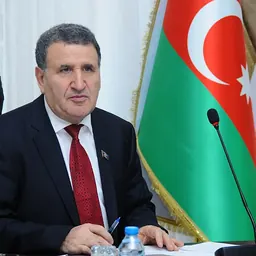

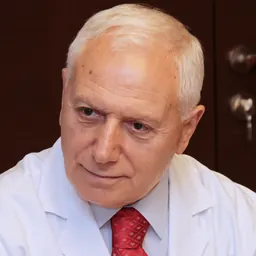
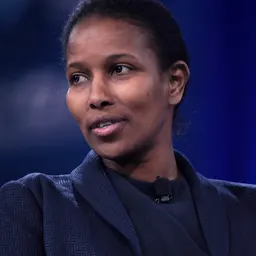
Contemporaries
People whose lives overlapped Wang Huning's

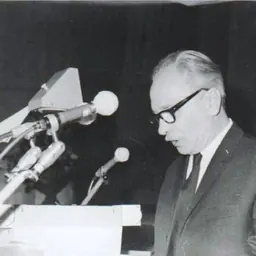
Frequently asked questions
Who is Wang Huning?
Chairman of the Chinese People's Political Consultative Conference
When was Wang Huning born?
Wang Huning was born on 6 October 1955 in Shanghai.
What is Wang Huning's occupation?
Wang Huning is a politician, political scientist, political theorist and strategist.
What nationality is Wang Huning?
Wang Huning is Chinese.
Sources & further reading
Cite this page
APA: Biography.guide. (2026). Wang Huning. https://biography.guide/wang-huning/
MLA: "Wang Huning." Biography.guide, https://biography.guide/wang-huning/.
Chicago: "Wang Huning." Biography.guide. https://biography.guide/wang-huning/.
Data last updated: 2026-09-20 · Spot an error? Report a correction.
Page generated 2026-09-27 05:10 UTC