
About Hsü Ti-shan
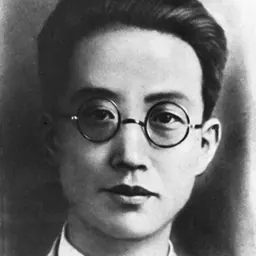
Lived 1893 – 1941 (aged 48). Hsü Ti-shan was a Chinese writer, university teacher, translator and religious studies scholar.
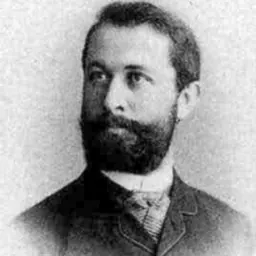
Xu Dishan (; given name: ; pen name: Luo Huasheng; ; 3 February 1893 – 4 August 1941) was a Chinese author, translator and folklorist. He received his education in China, the United States, Britain, and India; while in school, he studied diverse topics in religion, philosophy, and literature. Upon his return to China, he was an active member of the May Fourth Movement, and published literary journals with his academic peers. He wrote a plethora of academic and fictitious works during his life, many of which he published under the pen name Luo Huasheng. He was best known for his short stories that focus on the people from the southern provinces of China and Southeast Asia. The protagonists of his stories were often women. Xu Dishan was a strong proponent of the Latinization Movement and believed that writing Chinese with a phonetic alphabet would greatly increase literacy. He died at age 47 from a heart attack.
Personal life
Early life Xu Dishan was born in Tainan, Taiwan on 14 February 1893. He was one of eight children born to his father, Xu Nanying, and mother, Wu Shen. After returning from Southeast Asia, Xu Nanying moved his family to Fujian, and in 1897 they settled down in Guangzhou where Xu Dishan received his education. Xu Dishan died of a heart attack on 4 August 1941.
Education and academia
Education In 1917, Xu Dishan attended Yenching University for his undergraduate studies. He graduated in 1920 with his bachelor's degree in literature and enrolled in the seminary at Yenching University to continue his study of comparative religion. Upon his graduation, he moved to New York City to pursue a master's degree at Columbia University's Department of Indo-Iranian languages; he graduated in 1924 with a master's degree in comparative religion and the history of religion. Xu Dishan takes up Southeast Asian communities as his subjects in many of his stories. Additionally, many of his earliest writings showcase powerful women and explore religious themes. Often, these women gain strength from the teachings of multiple religions, rather than strictly adhering to the dogma of just one; in this way Xu Dishan's female protagonists are world citizens who make their own way in the world. His works with religious underpinnings tend to focus on such themes as love, charity, and other values fundamental to religion; through his writing, he illustrates the omnipresence of religion in all life. His fascination with Theravada Buddhism influences his work, and many of his stories draw inspiration from Buddhist, Hindu, and Christian myths. Many May Fourth Era writers write about myths individually, but Xu Dishan incorporates mythic elements into his stories. Xu Dishan's fiction tends to be romantic and involve sophisticated plot lines which deal with human nature and how to live a good life. They often engage a moral message that usually engages with the idea that how one attains his goal is just as important as the goal itself; in other words, the means are just as important as the ends.
Literary involvement (1919–1921) While at Yenching University, Xu Dishan was an active part of the May the Fourth Movement and the New Culture Movement; he participated by attending meetings and organizing conversations with his fellow students. Xu Dishan, Qu Qiubai, and Zheng Zhenduo edited Xin shihue xunkan (New Society Thrice Monthly), a journal that was in publication from November 1919 to May 1920. In 1921, Xu Dishan, Zheng Zhenduo, Mao Dun, and Ye Shaojun founded the literary society Wenxue yanjiu hui (Literary Research Association). Also in 1921, Xu Dishan and Zheng Zhenduo established the Taige'er yanjiu hui (Tagore Research Society), which operated as a subsidiary of the Literary Research Association.
Literary involvement (1925–1934) Xu Dishan continued to publish short publications in Xiaoshuo yuebao (Short Story Monthly) while he studied and taught. In 1925, his short stories were published in the collection Zhuiwang laozhu (The Web Mending Spider), and his essays were collected into the work Kongshan lingyu (Timely Rain on an Empty Mountain). He was a strong proponent of the Latinization Movement. Title English title Date Publication Translation 明明鳥 Bird of Destiny In 綴網勞蛛 (The Vain Labour of a Spider) no 商人婦 A Businessman's Wife In 綴網勞蛛 (The Vain Labour of a Spider) yes 換巢鸞鳳 Luan and Feng Change Nests In 綴網勞蛛 (The Vain Labour of a Spider) no 黃昏后 After Dusk In 綴網勞蛛 (The Vain Labour of a Spider) no 綴網勞蛛 The Vain Labour of a Spider In 綴網勞蛛 (The Vain Labour of a Spider) no 無法投遞之郵件 The Post That Cannot Be Delivered In 綴網勞蛛 (The Vain Labour of a Spider) no 海世間 The World of the Sea In 綴網勞蛛 (The Vain Labour of a Spider) no 枯楊生化 The Withered Poplar Blooms In 綴網勞蛛 (The Vain Labour of a Spider) yes 讀芝鞡與茉莉因而想及我的祖母 On Reading "Orchid" and "Jasmin" I Think of My Grandmother In 綴網勞蛛 (The Vain Labour of a Spider) no 慕 Admiration In 綴網勞蛛 (The Vain Labour of a Spider) no 在費總理底客廳裏 Director Fei's Reception Room In 解放者 (The Liberator) yes 三博士 The Three PhD's In 解放者 (The Liberator) no 街頭巷尾之倫理 The Ethics of the Man in the Street In 解放者 (The Liberator) no 法眼 Magic Eyes In 解放者 (The Liberator) no 歸途 Homeward Bound In 解放者 (The Liberator) no 解放者 The Liberator In 解放者 (The Liberator) no 無憂花 Flower Without Sorrow In 解放者 (The Liberator) no 東野先生 Mr. Higashina In 解放者 (The Liberator) no 人非人 Inhuman Existence In 危巢墮簡 (Letters from an Endangered Home) no 春桃 Chuntao In 危巢墮簡 (Letters from an Endangered Home) yes 玉官 Yu Guan In 危巢墮簡 (Letters from an Endangered Home) yes 危巢墮簡 Letters from an Endangered Home In 危巢墮簡 (Letters from an Endangered Home) no 鐵魚底鰓 The Iron Fish Grills In 危巢墮簡 (Letters from an Endangered Home) yes
Published posthumously
+Included Works (Weichao zhuijian):TitleEnglish titleEnglish Translation?Tieyu de saiThe Iron Fish With GillsYesYuguanYu GuanYes
Collections
English translations of Xu Dishan's writing "Big Sister Liu." In Stories from the Thirties. 2 volumes. Beijing: Panda Books, 1982, 1: 111–41. "Blooms on a Dried Poplar." In Stories from the Thirties. 2 volumes. Beijing: Panda Books, 1982, 1: 71–97. "Director Fei's Reception Room." In Stories from the Thirties. 2 volumes. Beijing: Panda Books, 1982, 1: 98–110. "I think." Tr. Yunte Huang. In The Big Red Book of Modern Chinese Literature. Ed, Yunte Huang. New York: Norton, 2016. "The Iron Fish With Gills." In Stories from the Thirties. 2 volumes. Beijing: Panda Books, 1982, 1: 141–57. "The Merchant's Wife." Tr. William H. Nienhauser, Jr. In Modern Chinese Stories and Novellas, 1919–1949. Eds, Lao, Hsia, Lee. New York: Columbia University Press, 1981, 41–50. "The Peanut." Tr. Yunte Huang. In The Big Red Book of Modern Chinese Literature. Ed, Yunte Huang. New York: Norton, 2016. "Spring Peach." Tr. Zhihua Fang. In Chinese Stories of the Twentieth Century. Ed, Zhihua Fang. New York: Garland Publishing, 1995, 173–201. "Yu-kuan." Tr. Cecile Chu-chin Sun. In Modern Chinese Stories and Novellas, 1919–1949. Eds, Lao, Hsia, Lee. New York: Columbia University Press, 1981, 51–87.
Don’t just read it —
keep it.
Full-length biographies made to live with: read them, listen on the way to work, watch them tonight.
- E-book
- Audio
- Video
Instant download · yours to keep · every purchase keeps this site free
Important facts
People in Hsü Ti-shan's life
Named in this biography and alive at the same time


Related people
Same field, nearest in time



Contemporaries
People whose lives overlapped Hsü Ti-shan's





Frequently asked questions
Who was Hsü Ti-shan?
Chinese writer (1893–1941)
When was Hsü Ti-shan born?
Hsü Ti-shan was born on 3 February 1893 in Tainan.
When did Hsü Ti-shan die?
Hsü Ti-shan died on 4 August 1941 in Hong Kong.
What was Hsü Ti-shan's occupation?
Hsü Ti-shan was a writer, university teacher, translator and religious studies scholar.
What nationality was Hsü Ti-shan?
Hsü Ti-shan was Chinese.
Sources & further reading
Cite this page
APA: Biography.guide. (2026). Hsü Ti-shan. https://biography.guide/hsu-ti-shan/
MLA: "Hsü Ti-shan." Biography.guide, https://biography.guide/hsu-ti-shan/.
Chicago: "Hsü Ti-shan." Biography.guide. https://biography.guide/hsu-ti-shan/.
Data last updated: 2026-09-20 · Spot an error? Report a correction.
Page generated 2026-09-27 05:01 UTC