
About Mao Dun
Lived 1896 – 1981 (aged 84). Mao Dun was a Chinese translator, literary critic, journalist, writer, politician and critic.
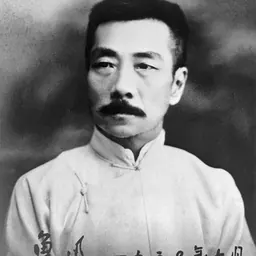
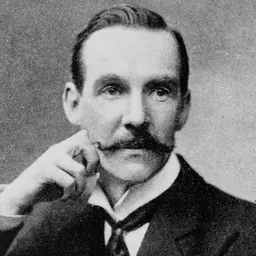
Shen Dehong (Shen Yanbing; 4 July 1896 – 27 March 1981), best known by the pen name of Mao Dun, was a Chinese novelist, essayist, journalist, playwright, and literary and cultural critic. He was highly celebrated for his realist novels, including Midnight, which depicts life in cosmopolitan Shanghai. Mao was one of the founders of the Chinese Communist Party and participated in a number of left-wing cultural movements during the 1920s and 1930s. He was the editor-in-chief of Fiction Monthly and helped lead the League of Left-Wing Writers. He formed a strong friendship with fellow left-wing Chinese author Lu Xun.
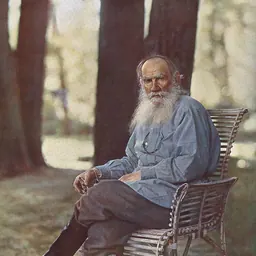
At 24 years of age, Mao Dun was already renowned as a novelist by the community in general, and in 1920, he and a group of young writers took over the magazine Fiction Monthly, to publish literature by western authors, such as Tolstoy, Chekhov, Balzac, Flaubert, Zola, Byron, Keats, and Shaw, and make new theories of literature better known. Despite the fact that he was a naturalistic novelist, he admired writers like Leo Tolstoy for their great artistic style.
In 1920, he was invited to edit a new column: The Fiction-New-Waves in Fiction Monthly. He even took up the post of Chief Editor of the Monthly in the same year and was obliged to reform it thoroughly, in response to the May Fourth Movement. His young writer friends in Beijing supported him by submitting their creative writings, translating Western literature and their views on new literature theories and techniques to the magazines. The Literary Study Group was formed partly because of this. Later, China went to war with Japan and he actively engaged in resisting the Japanese attack in 1937.
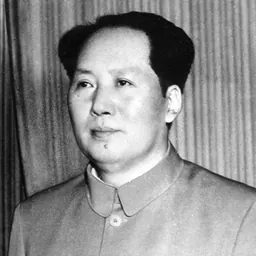
After the communists won the Chinese Civil War and established the People's Republic of China in 1949, Mao Dun worked as Mao Zedong's secretary and Culture Minister.
In the early 1950s, cultural policy sought to revise the practices of Peking opera. Mao described the purpose of these policies as "to preserve and develop the positive traditions of old opera and eliminate the unreasonable and unrealistic aspects created by the prolonged effects of feudal society.
The experience of political conflict broadened his horizon in literature, therefore the theme of his later writing was mostly based on this. He helped to found the League of Left-Wing Writers in 1930. After that, he worked together with Lu Xun to fight for the right of the society and the revolutionary movement in literature. The harvest period of Mao Dun's writing is considered to have been from 1927 to 1937.
Shi (蚀), also translated in English as The Eclipse, was Mao's first novel. It was published in three volumes: Disillusions (幻灭, 1927), Wavering (动摇, 1928), and Pursuits (追求, 1928). In Yan'an, he wrote essays praising the Communist Party's transformation of the region through both cultivation of culture and of labor.
List of works A bust of Mao Dun in his former residence in Wuzhen, Zhejiang.
Mao Dun has over 100 publications throughout his life, which includes short stories, novels, theories etc. Some of his most famous works include:
Short stories Wild Rose ( Ye Qiangwei (1929) The Smoke and Cloud Collection Yanyunji (1937)
Novellas Disillusions Huanmie (1927) Wavering Dongyao (1927) Pursuits Zhuiqiu (1928) Three people walking, Sanrenxing (1931) The Shop Of the Lin Family Linjia Puzi (1932) Spring Silkworms, Chuncan (1932) Autumn Harvest QiuShou
Novels Rainbow Hong (1930) Midnight: A Romance of China, 1930 Ziye (1933) Giving to the poet festivalXian Gei Shi Ren Jie (1946)
Theories The recent works of Mao DunMao Dun Jin Zuo (1980) Mao Dun's comment on creativityMao Dun Lun Chuang Zuo (1980)
Essays "Travelling Diary of USSR"Su Lian Jian Wen Lu (1948) "Talks on USSR"Ji Tan Su Lian (1949)
Drama script Front and rear Pure Brightness, QianMingQianHou (1945)
Translation Modern drama Russian Question (1946) Novelette Group's Son (1946)
Others Works of Mao DunMao Dun Quanji (vol. 1–15, 1984–1987) Introduction to the books of Mao DunMao Dun Shujian (1st edition, collection of letters, 1984) later changed the name into Mao Dun Shuxinji (1988)
Transition of female characters The 1930s is a turning point of the female characters' identity in Mao Dun's works. Between the 1920s and the 1930s, which was also the early period of Mao Dun's writing career, the female characters occurring in his works mostly were in identity of "New Woman", for instance, Mrs. Gui (桂阿姨) and Qionghua (琼华) in Wild Rose (野蔷薇, 1929), Ms. Mei (梅小姐) in Rainbow (虹, 1930). in the novel.
Don’t just read it —
keep it.
Full-length biographies made to live with: read them, listen on the way to work, watch them tonight.
- E-book
- Audio
- Video
Instant download · yours to keep · every purchase keeps this site free
Important facts
People in Mao Dun's life
Named in this biography and alive at the same time

Related people
Same field, nearest in time



Contemporaries
People whose lives overlapped Mao Dun's



Frequently asked questions
Who was Mao Dun?
Chinese writer (1896-1981)
When was Mao Dun born?
Mao Dun was born on 4 July 1896 in Tongxiang City.
When did Mao Dun die?
Mao Dun died on 27 March 1981 in Beijing.
What was Mao Dun's occupation?
Mao Dun was a translator, literary critic, journalist, writer, politician and critic.
What nationality was Mao Dun?
Mao Dun was Chinese.
Sources & further reading
Cite this page
APA: Biography.guide. (2026). Mao Dun. https://biography.guide/mao-dun/
MLA: "Mao Dun." Biography.guide, https://biography.guide/mao-dun/.
Chicago: "Mao Dun." Biography.guide. https://biography.guide/mao-dun/.
Data last updated: 2026-09-20 · Spot an error? Report a correction.
Page generated 2026-09-27 05:29 UTC