
About Howqua
Lived 1769 – 1843 (aged 73–74). Howqua was a Chinese merchant, known for Cohong.
Wu Bingjian (; 17694 September 1843 ), trading as "Houqua" and better known in the West as "Howqua" or "Howqua II", was a hong merchant in the Thirteen Factories, head of the E-wo hong and leader of the Canton Cohong. He was once the richest man in the world.
Biography A Hokkien by his paternal ancestry with ancestry from Quanzhou, Wu was known by the Europeans as Howqua, as was his father, Wu Guorong, the founder of the family business or hong. The name "Howqua" is a romanization, in his native Hokkien, of the business name under which he traded, "浩官" . He became rich on the trade between China and the British Raj in the middle of the 19th century during the First Opium War. Perhaps the wealthiest man in China during the nineteenth century, Howqua was the senior of the hong merchants in Canton, one of the few authorized to trade silk and porcelain with foreigners. In an 1822 fire which burned down many of the cohongs, the silver that melted allegedly formed a little stream almost two miles in length. He died in Canton in 1843.
After the Opium Wars, Howqua's familial and business lineage quickly diminished. In 1891, the American trading house that had been handling Howqua's international investments, Russell & Company, collapsed. The descendants of Howqua are now commoners. What had been the massive and beautiful estate of the Howqua family is now relatively unmarked in a poor neighborhood in the region of Honam.
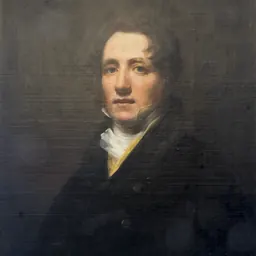
The founders of then world-renowned firms including James Matheson, William Jardine, Samuel Russell and Abiel Abbot Low all had a close relationship with Howqua. Portraits of Howqua in his robes still hang in Salem and Newport mansions built by American merchants grateful for his assistance.
Legacy Following the 1842 Treaty of Nanking, which spelled the end of the Thirteen Factories, Jardine Matheson & Co continued to use "Ewo" as their Chinese name.
A settlement on the east bank of Lake Eildon, from Mansfield, in Victoria, Australia, is named after him, possibly by Chinese miners who passed through the area during the Victorian gold rush.
Don’t just read it —
keep it.
Full-length biographies made to live with: read them, listen on the way to work, watch them tonight.
- E-book
- Audio
- Video
Instant download · yours to keep · every purchase keeps this site free
Important facts
more
Peiguan, Bingjian, Zhongcheng, Houqua, Houqua II, HoquaPeople in Howqua's life
Named in this biography and alive at the same time


Related people
Same field, nearest in time


Contemporaries
People whose lives overlapped Howqua's




Frequently asked questions
Who was Howqua?
Chinese businessman (1769-1843)
When was Howqua born?
Howqua was born in 1769 in Fujian.
When did Howqua die?
Howqua died on 4 September 1843 in Guangzhou.
What was Howqua's occupation?
Howqua was a merchant.
What was Howqua known for?
Howqua was known for Cohong.
What nationality was Howqua?
Howqua was Chinese.
Sources & further reading
Cite this page
APA: Biography.guide. (2026). Howqua. https://biography.guide/howqua/
MLA: "Howqua." Biography.guide, https://biography.guide/howqua/.
Chicago: "Howqua." Biography.guide. https://biography.guide/howqua/.
Data last updated: 2026-09-20 · Spot an error? Report a correction.
Page generated 2026-09-27 05:28 UTC