
Abiel Abbot Low
American businessman and philanthropist who gained most of his fortune from the China trade, importing teas, porcelains, and silk, and building and operating a fleet of reputable clipper ships
About Abiel Abbot Low
Lived 1811 – 1893 (aged 81). Abiel Abbot Low was an American businessperson, known for Clipper ship.
Abiel Abbot Low (February 7, 1811 – January 7, 1893) was an American entrepreneur, businessman, and philanthropist who gained most of his fortune from the China trade, importing teas, porcelains, and silk, and building and operating a fleet of reputable clipper ships.
Early life Low was one of twelve children (eight sons, four daughters) of a Salem, Massachusetts, drug merchant, Seth Low, and Mary ( Porter) Low. His sister, Harriet Low, was one of the first young American women to live in China and is remembered for her journal of life in Macau from 1829 to 1833. Another brother, Charles Porter Low, served as captain on the Houqua, Jacob Bell, Samuel Russell, and N.B. Palmer.
His paternal grandparents were Hannah ( Haskell) Low and David Low (a son of David and Abigail ( Choate) Low).
Abiel grew up attending public schools; became a clerk in the house of Joseph Howard & Company, a company engaged in the South American trade, and moved to New York with his family in 1829. There, Seth Low's pharmaceutical business flourished, importing drugs and India goods.
Career China
In 1833, Low sailed to Canton, China, and started working as a clerk for the mercantile house of Russell & Company, the largest American firm in China and also the country's leading American opium trading and smuggling enterprise. of the Chesapeake and Ohio Railway through West Virginia together with Collis P. Huntington and others, and of Newport News, Virginia, and Huntington, West Virginia. Low was made a member of the New York chamber of commerce in 1846, and was elected as its president in 1863. He held the office until 1866 when he resigned and embarked on a voyage around the world. During his tenure, he spoke out on behalf of New York businessmen against British support to Confederate commerce destroyers.
Low never pursued an active political career, unlike his father, who had become mayor of the village of Brooklyn, or son, Seth Low, who later became the mayor of Greater New York. However, Low did accept nominations as a consultant and advisor to local trade and governmental authorities regarding trade and commercial interests. During the Civil War, he was active within the Union Defense Committee of New York, a member of the War Fund Committee of Brooklyn, and president of the General Committee of Citizens in Brooklyn, appointed in aid of the sanitary service.
He is also known for his philanthropy activities. In 1858, he became president of the Brooklyn Female Academy, later the Packer Collegiate Institute, and remained on the Packer board until his death in 1893. He was known to give bonuses to teachers and anonymous scholarships to deserving students. He also contributed to the development of the Brooklyn Library, the City hospital and many other cultural, educational, social and religious enterprises.
Personal life On March 16, 1841, Low married Ellen Almira, a daughter of wealthy dry goods importer and farmer Josiah Dow of Brooklyn, and Rebecca Marie ( Phippen) Dow. Before her death in 1850, they were the parents of two sons and two daughters:
Harriette Low (1842–1884), who died unmarried at her father's cottage in Newport, Rhode Island. Abbot Augustus Low (1844–1912), an inventor (notably of the paper shredder), businessman and industrialist; he married Marian Ward, a daughter of George Cabot Ward, in 1877. Ellen Almira Low (1846–1884), who married Henry Evelyn Pierrepont, elder brother of John Jay Pierrepont, in 1869. Seth Low (1850–1916) who later became mayor of New York and president of Columbia University; he married Anne Wroe Scollay Curtis, a daughter of Supreme Court Justice, Benjamin Robbins Curtis.
Upon the death of his wife in 1850, Low married Anne ( Davison) Low, widow of Low's brother William Henry Low. She died in Newport in 1890 and her funeral was held at Grace Church, Brooklyn Heights.
He died in Brooklyn on January 7, 1893.
Legacy The Low Memorial Library, administrative center of Columbia University, was built in his memory by his son, Seth, in 1895. In 1894, Low's sons Abbot Augustus and Seth, built a hospital in Wu-Chang, China in memory of their father.
Don’t just read it —
keep it.
Full-length biographies made to live with: read them, listen on the way to work, watch them tonight.
- E-book
- Audio
- Video
Instant download · yours to keep · every purchase keeps this site free
Important facts
Family & relationships
People in Abiel Abbot Low's life
Named in this biography and alive at the same time
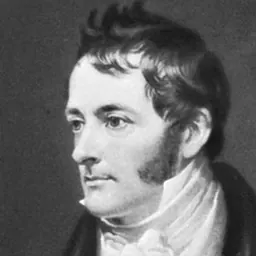
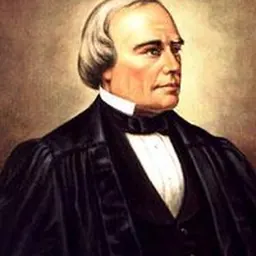



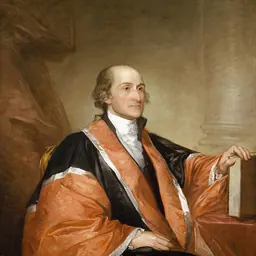

Related people
Same field, nearest in time

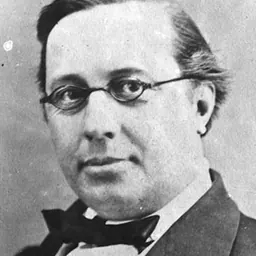

Contemporaries
People whose lives overlapped Abiel Abbot Low's




Frequently asked questions
Who was Abiel Abbot Low?
American businessman and philanthropist who gained most of his fortune from the China trade, importing teas, porcelains, and silk, and building and operating a fleet of reputable clipper ships
When was Abiel Abbot Low born?
Abiel Abbot Low was born on 7 February 1811 in Salem.
When did Abiel Abbot Low die?
Abiel Abbot Low died on 7 January 1893 in Brooklyn, New York City.
What was Abiel Abbot Low's occupation?
Abiel Abbot Low was a businessperson.
What was Abiel Abbot Low known for?
Abiel Abbot Low was known for Clipper ship.
What nationality was Abiel Abbot Low?
Abiel Abbot Low was American.
Sources & further reading
Cite this page
APA: Biography.guide. (2026). Abiel Abbot Low. https://biography.guide/abiel-abbot-low/
MLA: "Abiel Abbot Low." Biography.guide, https://biography.guide/abiel-abbot-low/.
Chicago: "Abiel Abbot Low." Biography.guide. https://biography.guide/abiel-abbot-low/.
Data last updated: 2026-09-22 · Spot an error? Report a correction.
Page generated 2026-09-27 05:19 UTC