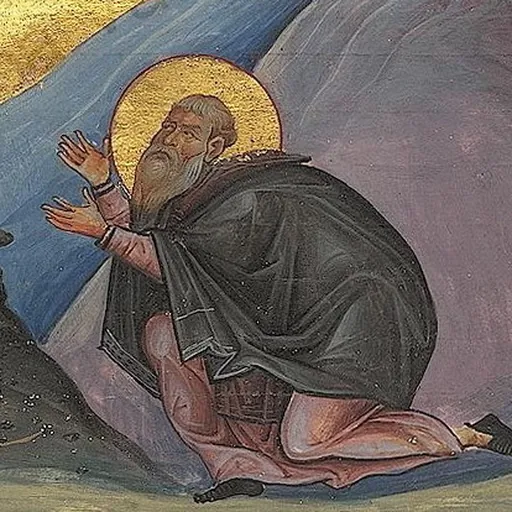
Hilarion
Anchorite and saint who spent most of his life in the desert
About Hilarion
Lived 291 – 372 (aged 80–81). Hilarion was an anchorite.
Hilarion ( 291 – 371), also known by the bynames of Thavata, of Gaza and, in the Orthodox Church, as the Great, was a Christian anchorite who spent most of his life in the desert according to the example of Anthony the Great (c. 251–356). While Anthony is considered to have established Christian monasticism in the Egyptian Desert, Hilarion, who lived in the coastal area near Gaza, is considered by his biographer Jerome (c. 342/347 – 420), to be the founder of Palestinian monasticism – regarding this claim see also Hilarion's contemporary, Chariton (mid-3rd century – c. 350), founder of monasticism in the Judaean Desert. His pagan parents sent him in his youth to study with a grammarian in Alexandria, where he gave, according to Jerome, a remarkable proof of his ability and character and became an accomplished speaker. While in Alexandria, he heard of the hermit Anthony and set off to study with him. After two months of learning the ascetic life from Anthony, Hilarion started to feel that the many visitors who came to Anthony for healing or exorcism were too much to bear and he decided to set off in the wilderness of Palestine to live alone as a hermit.
Hilaron returned to Gaza where he found his parents dead and subsequently gave away his goods to his brothers and the poor. He then established himself as a hermit in the desert inland from the coastal road, seven miles from Maiuma, the port of Gaza. Though he went on one occasion to Jerusalem to venerate the holy sites, he chose not to live in the Judaean Desert as he did not wish to appear to confine God within prescribed limits, believing he could be close to God anywhere. Around 308, he built a hut where he lived in solitude for 22 years and which survived into the time of Jerome. people began to flock to Hilarion for spiritual training. Sozomen, possibly due to his local sources, singles out Epiphanius and Hesyach as the two most outstanding in the circle around Hilarion. Epiphanius, who is known by the bynames 'of Eleutheropolis' and 'of Salamis', became his disciple after returning from Egypt and would later go to Cyprus where he introduced monasticism and was elected bishop of Salamis around 367/368. With many more people seeking his guidance, Hilarion established a monastery during the reign of emperor Constantius (337–361) which, by the time he was sixty-three, consisted of a large community with many visitors.
Final years and death Hilarion remained in Gaza until three years after the death of Anthony (around 356), upon which he went to the place where Anthony had died in Egypt in order to escape the crowds that visited him. His relics continued to be venerated and are also mentioned by the anonymous Piacenza Pilgrim around the year 570.
Hilarion was venerated from early time in both East and West as an example of monastic holiness. Bede included him in his martyrology and he appeared frequently in Pre-Conquest English monastic calendars before his feast was ousted by those of Ursula and Dunstan's ordination.
Hilarion is the patron saint of Caulonia, a southern Italian town in Calabria, under the name Sant'Ilario.
On icons, Hilarion is depicted as an old man with a brown, rush-like beard divided into three points and he holds sometimes a scroll which reads: "The tools of a monk are steadfastness, humility, and love according to God." Jerome was inspired by reading the Life of Anthony which also served as a literary model with regard to its content and ecclesiastic function of the text. There are two major themes Jerome focuses on, one being Hilarion's search for a life of solitary prayer and contemplation and the other being Hilarion's role as successor to Anthony. Jerome's goal was not so much to write a historical exact account but rather a hagiographic composition focusing on the life and deeds of Hilarion. Though Jerome's historical accuracy has been occasionally questioned, there can be no doubt that Hilarion was a historical figure and that Gaza became during his time a center of monasticism.
Hilarion's life is mentioned in the third, fifth and sixth book of Sozomen's Ecclesiastical history, which was written in the 440s. Whereas in the third book no new information to Jerome's Life of Hilarion is added and is in parts less detailed, Sozomen adds new information in the fifth and sixth books, possibly thanks to his local sources and own family history. Sozomen's own origin and literary aims as a historian therefore result in a different historical sketch of Hilarion's life than that of Jerome.
Hilarion is also mentioned twice in the Sayings of the Desert Fathers.
In literature
Johann Gottfried Herder wrote the poem "The Paradise in the desert" about the teacher-disciple relation between Anthony and Hilarion in 1797. This motif was also taken up by Gustave Flaubert in his The Temptation of Saint Anthony, though changed, as Hilarion attempts to tempt Anthony away from his faith by creating doubt. Hermann Hesse adapted a biography of Hilarion as one of the three Lives of Joseph Knecht, making his Nobel Prize–winning novel The Glass Bead Game (also known as Magister Ludi).
Don’t just read it —
keep it.
Full-length biographies made to live with: read them, listen on the way to work, watch them tonight.
- E-book
- Audio
- Video
Instant download · yours to keep · every purchase keeps this site free
Important facts
People in Hilarion's life
Named in this biography and alive at the same time

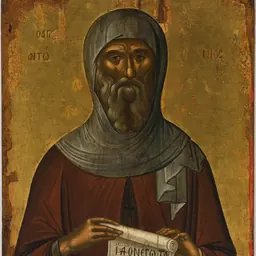
Related people
Same field, nearest in time

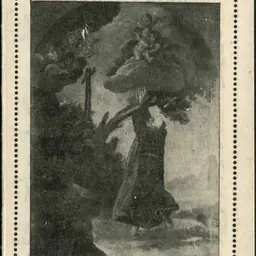

Contemporaries
People whose lives overlapped Hilarion's

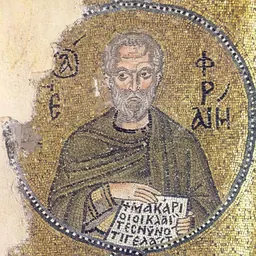
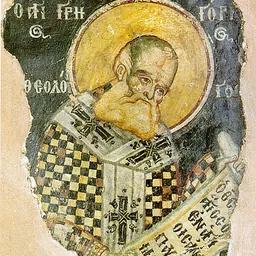

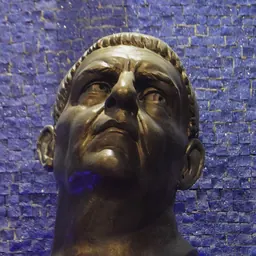
Frequently asked questions
Who was Hilarion?
anchorite and saint who spent most of his life in the desert
When was Hilarion born?
Hilarion was born in 291 in Gaza City.
When did Hilarion die?
Hilarion died in 372 in Paphos.
What was Hilarion's occupation?
Hilarion was an anchorite.
Sources & further reading
Cite this page
APA: Biography.guide. (2026). Hilarion. https://biography.guide/hilarion-anchorite/
MLA: "Hilarion." Biography.guide, https://biography.guide/hilarion-anchorite/.
Chicago: "Hilarion." Biography.guide. https://biography.guide/hilarion-anchorite/.
Data last updated: 2026-09-20 · Spot an error? Report a correction.
Portrait: Wikimedia Commons · author & licence
Page generated 2026-09-27 04:57 UTC