
Athanasius of Alexandria
Pope of Alexandria from 328 to 373
About Athanasius of Alexandria
Lived 296 – 373 (aged 76–77). Athanasius of Alexandria was a Roman catholic priest, hagiographer, theologian, writer, deacon and patriarch.
Athanasius I of Alexandria ( – 2 May 373), also called Athanasius the Great, Athanasius the Confessor, or, among Coptic Christians, Athanasius the Apostolic, was a Christian theologian and the 20th patriarch of Alexandria (as Athanasius I). His intermittent episcopacy spanned 45 years ( – 2 May 373), of which over 17 encompassed five exiles, when he was replaced on the order of four different Roman emperors. Athanasius was a Church Father, the chief proponent of Trinitarianism against Arianism, and a noted Egyptian Christian leader of the fourth century.
Conflict with Arius and Arianism, as well as with successive Roman emperors, shaped Athanasius' career. In 325, at age 27, Athanasius began his leading role against the Arians as a deacon and assistant to Bishop Alexander of Alexandria during the First Council of Nicaea. Roman Emperor Constantine the Great had convened the council in May–August 325 to address the Arian position that the Son of God, Jesus of Nazareth, is of a distinct substance from the Father. Three years after that council, Athanasius succeeded his mentor as Patriarch of Alexandria. In addition to the conflict with the Arians (including powerful and influential Arian churchmen led by Eusebius of Nicomedia), he struggled against the Emperors Constantine, Constantius II, Julian the Apostate, and Valens.
Nonetheless, within a few years of his death, Gregory of Nazianzus called him the "Pillar of the Church". His writings were well regarded by subsequent Church fathers in the West and the East, who noted their devotion to the Word-become-man, pastoral concern and interest in monasticism. Athanasius is honored, along with Basil of Caesarea, Gregory of Nazianzus and John Chrysostom, as one of the four Great Greek Church Fathers. Some argue that, in his Easter letter of 367, Athanasius was the first person to list the 27 books of the New Testament canon that are in use today. Others argue that Origen of Alexandria was the first to list the twenty-seven books of the New Testament in his Homilies on Joshua (only there is a textual variant as to whether or not he included Revelation). Athanasius is venerated as a saint in the Catholic Church, Eastern Orthodox Church, Oriental Orthodox Church, Church of the East, the Anglican Communion, and Lutheranism.
Biography
Athanasius was born to a Christian family in Alexandria, or possibly the nearby Nile Delta town of Damanhur, sometime between 293 and 298. The earlier date is sometimes assigned because of the maturity revealed in his two earliest treatises Contra Gentes (Against the Heathens) and De Incarnatione (On the Incarnation), which were likely written circa 318 before Arianism had begun to make itself felt, as those writings do not show an awareness of Arianism. He was, nevertheless, clearly not a member of the Egyptian aristocracy. Some Western scholars consider his command of Greek, in which he wrote most (if not all) of his surviving works, evidence that he may have been a Greek born in Alexandria. Historical evidence, however, indicates that he was fluent in Coptic as well, given the regions of Egypt where he preached. Its famous catechetical school, while maintaining a strong commitment to orthodoxy associated with figures such as Pantaenus, Clement of Alexandria, Origen, Dionysius and Theognostus, had begun to develop a broader intellectual scope. Its range of interests extended beyond strictly theological concerns, and it attracted a number of influential pagan auditors.
Peter of Alexandria, the 17th archbishop of Alexandria, was martyred in 311 in the closing days of the Great Persecution and may have been one of Athanasius's teachers. His successor as bishop of Alexandria was Alexander of Alexandria. According to Sozomen; "the Bishop Alexander 'invited Athanasius to be his commensal and secretary. He had been well educated, and was versed in grammar and rhetoric, and had already, while still a young man, and before reaching the episcopate, given proof to those who dwelt with him of his wisdom and acumen (Soz., II, xvii).
Bishop Alexander ordained Athanasius a deacon in 319. In 325, Athanasius served as Alexander's secretary at the First Council of Nicaea. Already a recognized theologian and ascetic, he was the obvious choice to replace his ageing mentor Alexander as the Pope of Alexandria, despite the opposition of the followers of Arius and Meletius of Lycopolis. Arius embraced a subordinationist Christology which taught that Christ was the divine Son (Logos) of God, made, not begotten. Arius had support from a powerful bishop named Eusebius of Nicomedia (not to be confused with Eusebius of Caesarea), illustrating how Arius's subordinationist Christology was shared by other Christians in the empire. Arius was subsequently excommunicated by Alexander, and Arius began to elicit the support of many bishops who agreed with his position. Alban Butler writes on the subject: "Five months after this great Council, Nicae, St Alexander lying on his deathbed, recommended to his clergy and people the choice of Athanasius for his successor, thrice repeating his name. In consequence of his recommendation, the bishops of all Egypt assembled at Alexandria, and finding the people and clergy unanimous in their choice of Athanasius for patriarch, they confirmed the election about the middle of year 326. He seems, then, to have been about thirty years of age."
Athanasius' episcopate began on 9 May 328 as the Alexandrian Council elected Athanasius to succeed after the death of Alexander. At that meeting, the Arians claimed Athanasius would try to cut off essential Egyptian grain supplies to Constantinople. He was found guilty and sent into exile to Augusta Treverorum in Gaul (now Trier in Germany). Constantine died in 337 and was succeeded by his three sons, Constantine II, Constantius, and Constans. Paul I of Constantinople had cautioned Emperor Constans against the Arians, revealing their plots, and he also had been banished and found shelter with Maximin.
Second exile
When Emperor Constantine I died, Athanasius was allowed to return to his See of Alexandria. Shortly thereafter, however, Constantius II renewed the order for Athanasius's banishment in 338. "Within a few weeks he set out for Rome to lay his case before the Church at large. He had made his appeal to Pope Julius, who took up his cause with whole-heartedness that never wavered down to the day of that holy pontiff's death. The pope summoned a synod of bishops to meet in Rome. After a careful and detailed examination of the entire case, the primate's innocence was proclaimed to the Christian world." and vigorously rejected the criticisms of the Eusebian faction at Tyre. Plus, Pope Julius wrote to the supporters of Arius strongly urging Athanasius's reinstatement, but that effort proved in vain. Julius called a synod in Rome in 340 to address the matter, which proclaimed Athanasius the rightful bishop of Alexandria.
Early in 343 Athanasius met with Hosius of Córdoba, and together they set out for Serdica. A full council of the Church was summoned there in deference to the Roman pontiff's wishes. At this great gathering of prelates, leaders of the Church, the case of Athanasius was taken up once more, that is, Athanasius was formally questioned over misdemeanours and even murder, (a bishop in Egypt named Arsenius had turned up missing, and they blamed his death on Athanasius, even supposedly producing Arsenius' severed hand.)
The council was convoked for the purpose of inquiring into the charges against Athanasius and other bishops, on account of which they were deposed from their sees by the semi-Arian Synod of Antioch in 341 and went into exile. Eusebian bishops objected to the admission of Athanasius and other deposed bishops to the council, except as accused persons to answer the charges brought against them. Their objections were overridden by the orthodox bishops. The Eusebians, seeing they had no chance of having their views carried, retired to Philippopolis in Thrace where they held an opposition council under the presidency of the Patriarch of Antioch and confirmed the decrees of the Synod of Antioch. He celebrated his last Easter in exile in Aquileia in April 345, received by Bishop Fortunatianus.
The Council of Serdica sent an emissary to report their finding to Constantius. Constantius reconsidered his decision, owing to a threatening letter from his brother Constans and the uncertain conditions of affairs on the Persian border, and he accordingly made up his mind to yield. But three separate letters were needed to overcome the natural hesitation of Athanasius. When he finally acquiesced to meet with Constantius, he was accorded a gracious interview by the emperor and sent back to his see in triumph and began ten years of peace.
With characteristic energy he set to work to re-establish the somewhat shattered fortunes of the orthodox party and to purge the theological atmosphere of uncertainty. To clear up the misunderstandings that had arisen in the course of the previous years, an attempt was made to determine still further the significance of the Nicene formularies. In the meanwhile, Julian, who seems to have become suddenly jealous of the influence that Athanasius was exercising at Alexandria, addressed an order to Ecdicius, the Prefect of Egypt, peremptorily commanding the expulsion of the restored primate on the ground that he had not been included in the imperial act of clemency. The edict was communicated to the bishop by Pythicodorus Trico, who, though described in the "Chronicon Athanasianum" (XXXV) as a "philosopher", seems to have behaved with brutal insolence. On 23 October the people gathered about the proscribed bishop to protest against the emperor's decree; but Athanasius urged them to submit, consoling them with the promise that his absence would be of short duration. they constitute the first classic work of developed Orthodox theology. In the first part, Athanasius attacks several pagan practices and beliefs. The second part presents teachings on the redemption.
Other examples of Athanasius' polemical writings against his theological opponents include his defence of the divinity of the Holy Spirit Letters to Serapion
Athanasius was the first patriarch of Alexandria to use Coptic and Greek for didactic homilies.
Biographical and ascetic works
His biography of Anthony the Great entitled Life of Antony (Βίος καὶ Πολιτεία Πατρὸς Ἀντωνίου, Vita Antonii) became his most widely read work. Translated into several languages, it became something of a best seller in its day and played an important role in the spreading of the ascetic ideal in Eastern and Western Christianity.
Misattributed works
There are several other works ascribed to him, although not necessarily generally accepted as being his own. These include the so-called Athanasian Creed (which is today generally seen as being of 5th-century Galician origin), and a complete Expositions on the Psalms. which he brought back to Egypt on 15 May. The relic is currently preserved under the new Saint Mark's Coptic Orthodox Cathedral in Cairo. However, the majority of Athanasius's corpse remains in the Venetian church.
All major Christian denominations which officially recognize saints venerate Athanasius. Western Christians observe his feast day on 2 May, the anniversary of his death. The Catholic Church considers Athanasius a Doctor of the Church. Athanasius is honored on the liturgical calendars of the Church of England and the Episcopal Church on 2 May. Gregory of Nazianzus (330–390, also a Doctor of the Church), said: "When I praise Athanasius, virtue itself is my theme: for I name every virtue as often as I mention him who was possessed of all virtues. He was the true pillar of the Church. His life and conduct were the rule of bishops, and his doctrine the rule of the orthodox faith."
The greater majority of Church leaders and the emperors fell into support for Arianism, so much so that Jerome (340–420) wrote of the period: "The whole world groaned and was amazed to find itself Arian".
Historical significance and controversies
New Testament canon
It was the custom of the bishops of Alexandria to circulate a letter after Epiphany each year confirming the date of Easter and therefore other moveable feasts. They also took the occasion to discuss other matters. Athanasius wrote forty-five festal letters. Athanasius' 39th Festal Letter, written in 367, is widely regarded as a milestone in the evolution of the canon of New Testament books. Some claim that Athanasius is the first person to identify the same 27 books of the New Testament that are in use today. Up until then, various similar lists of works to be read in churches were in use. Others argue that Origen of Alexandria was the first to list the twenty-seven books of the New Testament in his Homilies on Joshua (only there is a textual variant as to whether or not he included Revelation).
Athanasius' list is similar to the Codex Vaticanus in the Vatican Library. The establishment of the canon was not a unilateral decision by a bishop in Alexandria but the result of a process of careful investigation and deliberation, as documented in a codex of the Greek Bible and, twenty-seven years later, in his festal letter.
Scholars debate whether Athanasius' list in 367 formed the basis for later lists. Because Athanasius' canon is the closest canon of any of the Church Fathers to the one used by Protestant churches today, many Protestants point to Athanasius as the Father of the Canon.
Supporters Athanasius (left) and his supporter Cyril of Alexandria. 17th-century depiction.
Christian denominations worldwide revere Athanasius as a saint and teacher. They cite his defence of the Christology described in the first chapter of the Gospel of St. John and his significant theological works (C. S. Lewis calls On the Incarnation of the Word of God a "masterpiece") as evidence of his righteousness. They also emphasize his close relationship with Anthony the Great, the ancient monk who was one of the founders of the Christian monastic movement.
The Gospel of St. John, and particularly the first chapter, demonstrates the Divinity of Jesus. This Gospel is the greatest support of Athanasius' stand. The Gospel of St. John's first chapter began to be said at the end of Mass, we believe as a result of Athanasius and his life's stand. The beginning of John's Gospel was much used as an object of special devotion throughout the Middle Ages; the practice of saying it at the altar grew, and eventually Pope Pius V made this practice universal for the Roman Rite in his 1570 edition of the Missal. It became a firm custom with exceptions in using another Gospel in use from 1920. Cyril of Alexandria (370–444) in the first letter says: "Athanasius is one who can be trusted: he would not say anything that is not in accord with sacred scripture." (Ep 1).
Critics Throughout most of his career, Athanasius had many detractors. Classics scholar Timothy Barnes recounts ancient allegations against Athanasius: from defiling an altar, to selling Church grain that had been meant to feed the poor for his own personal gain, and even violence and murder to suppress dissent. According to Sir Isaac Newton, Athanasius lied about the death of Arius, feigned other men's letters and denied his own, murdered the bishop Arsenius, broke a communion cup, overthrew an altar, was made bishop by violence and sedition against the canons of his own church, and was seditious and immoral. Athanasius used "Arian" to describe both followers of Arius and as a derogatory polemical term for Christians who disagreed with his formulation of the Trinity. Athanasius called many of his opponents "Arian", except for Meletius.
Scholars now believe that the Arian party was not monolithic but held drastically different theological views that spanned the early Christian theological spectrum. They supported the tenets of Origenist thought and subordinationist theology but had little else in common. Moreover, many labelled "Arian" did not consider themselves followers of Arius. In addition, non-homoousian bishops disagreed with being labeled as followers of Arius, since Arius was merely a presbyter, while they were fully ordained bishops.
The old allegations continue to be made against Athanasius, however, many centuries later. For example, Richard E. Rubenstein suggests that Athanasius ascended to the rank of bishop in Alexandria under questionable circumstances because some questioned whether he had reached the minimum age of 30 years, and further that Athanasius employed force when it suited his cause or personal interests. Thus, he argues that a small number of bishops who supported Athanasius held a private consecration to make him bishop.
Selected works Athanasius. Contra Gentes – De Incarnatione (translated by Thompson, Robert W.), text and ET (Oxford: Clarendon Press, 1971). at Letters to Serapion (on the Holy Spirit) at archive.org
Don’t just read it —
keep it.
Full-length biographies made to live with: read them, listen on the way to work, watch them tonight.
- E-book
- Audio
- Video
Instant download · yours to keep · every purchase keeps this site free
Important facts
more
Athanasios of Alexandria, Athanasius Contra Mundum, Athanasius the Great, Saint Athanasius the Apostolic, St Athanasius, St Athanasius of Alexandria, Athanasius I of Alexandria, Saint Athanasius the Confessor, St. Athanasius the Apostolic, St Athanasius the Confessor, Athanasias, St. Athanasius of Alexandria, St. Athanasius the Confessor, Athanasius AlexandPeople in Athanasius of Alexandria's life
Named in this biography and alive at the same time
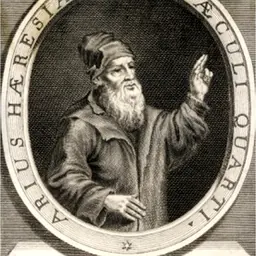
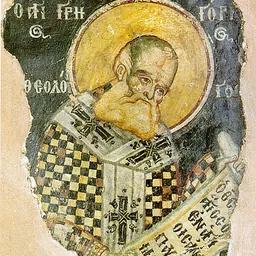
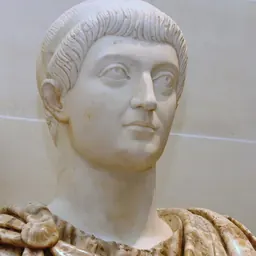
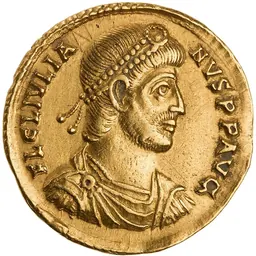

Related people
Same field, nearest in time

Contemporaries
People whose lives overlapped Athanasius of Alexandria's
Frequently asked questions
Who was Athanasius of Alexandria?
Pope of Alexandria from 328 to 373 (296–373)
When was Athanasius of Alexandria born?
Athanasius of Alexandria was born in 296 in Alexandria.
When did Athanasius of Alexandria die?
Athanasius of Alexandria died on 2 May 373 in Alexandria.
What was Athanasius of Alexandria's occupation?
Athanasius of Alexandria was a catholic priest, hagiographer, theologian, writer, deacon and patriarch.
What nationality was Athanasius of Alexandria?
Athanasius of Alexandria was Roman.
Sources & further reading
· Wikipedia: Athanasius of Alexandria
· DBpedia: Athanasius of Alexandria
Cite this page
APA: Biography.guide. (2026). Athanasius of Alexandria. https://biography.guide/athanasius-of-alexandria/
MLA: "Athanasius of Alexandria." Biography.guide, https://biography.guide/athanasius-of-alexandria/.
Chicago: "Athanasius of Alexandria." Biography.guide. https://biography.guide/athanasius-of-alexandria/.
Data last updated: 2026-09-20 · Spot an error? Report a correction.
Page generated 2026-09-27 05:19 UTC