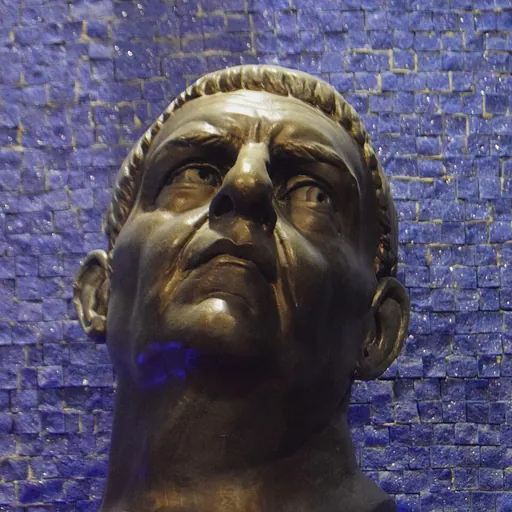
About Licinius
Lived 263 – 325 (aged 61–62). Licinius was a Roman politician.
Early reign Born to a Dacian peasant family in Moesia Superior, Licinius accompanied his close childhood friend and future emperor Galerius, on the Persian expedition in 298.
Upon his return to the east Galerius elevated Licinius to the rank of Augustus in the West on 11 November 308, and under his immediate command were the Balkan provinces of Illyricum, Thrace and Pannonia. On the death of Galerius in May 311, The redaction of the edict as reproduced by Lactantius – who follows the text affixed by Licinius in Nicomedia on 14 June 313, after Maximinus's defeat – uses neutral language, expressing a will to propitiate "any Divinity whatsoever in the seat of the heavens".
Maximinus Daza in the meantime decided to attack Licinius. Leaving Syria with 70,000 men, he reached Bithynia, although the harsh weather he encountered along the way had gravely weakened his army. In April 313, he crossed the Bosporus and went to Byzantium, which was held by Licinius's troops. Undeterred, he took the town after an eleven-day siege. He moved to Heraclea, which he captured after a short siege, before moving his forces to the first posting station. With a much smaller body of men, possibly around 30,000, Licinius arrived at Adrianople while Daza was still besieging Heraclea. Before the decisive engagement, Licinius allegedly had a vision in which an angel recited him a generic prayer that could be adopted by all cults which Licinius then repeated to his soldiers. On 30 April 313, the two armies clashed at the Battle of Tzirallum, and Daza's forces were crushed. Daza escaped, disguised as a slave, and fled to Nicomedia, at the Battle of Adrianople (3 July 324), succeeded in shutting him up within the walls of Byzantium. resulted in Licinius's final submission.
Character and legacy
As part of Constantine's attempts to decrease Licinius's popularity, he actively portrayed his brother-in-law as a pagan supporter. This characterisation may be inaccurate; contemporary evidence suggests that Licinius was, at least for a period, a committed supporter of Christians. He co-authored the Edict of Milan which ended the Great Persecution, and re-affirmed the rights of Christians in his half of the empire. He also adopted Christian symbols for his armies and attempted to regulate the affairs of the Church hierarchy, much as Constantine and his successors would later do. His wife was a devout Christian.
It is possible that he converted. However, Eusebius of Caesarea, writing under the rule of Constantine, charges him with expelling Christians from the Palace and ordering military sacrifices to pagan gods, as well as interfering with the Church's internal procedures and organization. It has been theorized that he originally supported Christians along with Constantine, but later in his life turned against them and to paganism.
Finally, on Licinius's death, his memory was branded with infamy; his statues were thrown down; and by edict, all his laws and judicial proceedings during his reign were abolished. Such official erasure from the public record has come to be called damnatio memoriae.
Family tree
Don’t just read it —
keep it.
Full-length biographies made to live with: read them, listen on the way to work, watch them tonight.
- E-book
- Audio
- Video
Instant download · yours to keep · every purchase keeps this site free
Important facts
Family & relationships
People in Licinius's life
Named in this biography and alive at the same time




Related people
Same field, nearest in time


Contemporaries
People whose lives overlapped Licinius's




Frequently asked questions
Who was Licinius?
Roman emperor from 308 to 324
When was Licinius born?
Licinius was born in 263 in Felix Romuliana.
When did Licinius die?
Licinius died in 325 in Thessaloniki.
What was Licinius's occupation?
Licinius was a politician.
What nationality was Licinius?
Licinius was Roman.
Sources & further reading
Cite this page
APA: Biography.guide. (2026). Licinius. https://biography.guide/licinius/
MLA: "Licinius." Biography.guide, https://biography.guide/licinius/.
Chicago: "Licinius." Biography.guide. https://biography.guide/licinius/.
Data last updated: 2026-09-21 · Spot an error? Report a correction.
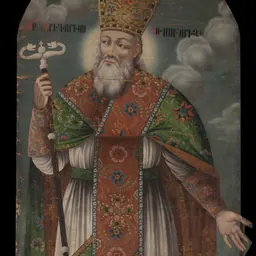
Portrait: Wikimedia Commons · author & licence
Page generated 2026-09-27 05:01 UTC