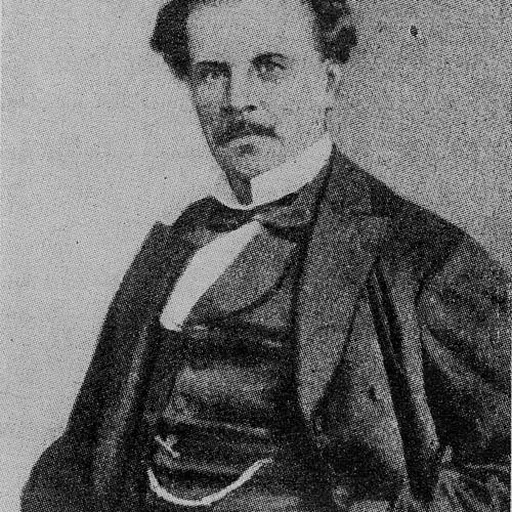
About Hilario Ascasubi
Lived 1807 – 1875 (aged 68). Hilario Ascasubi was an Argentine poet and writer.
Hilario Ascasubi (1807 – November 17, 1875) was an Argentine poet, politician and diplomat. He played an active role in the resistance to the dictatorship of Juan Manuel de Rosas. Ascasubi was also a prominent figure in gaucho literature.
In 1821, he boarded a ship heading to France. The ship was hijacked and diverted to Lisbon. He escaped, went to France, and lived there for two years. In the 1820s, he joined the military and fought Brazil. He then fought in the Argentine Civil War. When he started writing against Juan Manuel de Rosas, he was exiled in Montevideo, Uruguay. Together with his patrician wife, he hosted expatriates including the Varelas, a family of intellectuals.
Upon his return to Buenos Aires, in 1868 he was assigned a diplomatic mission to Paris, France, by President Bartolomé Mitre. During his posting, he was assigned to head the newly created immigration office responsible for the recruitment of new immigrants and workers for the agriculture fields, unfortunately among this contingent of workers arrived in Argentina a large number of French revolutionaries.
He died in Buenos Aires in 1875, shortly after arriving from his diplomatic posting to France of an intestinal problem; there is a conspiracy theory that he was poisoned by his political enemies.
Poetry Ascasubi is noted for introducing the use of vernacular language in his poetry. During his time, the local gaucho language was not considered "literary". The long form poem Paulino Lucero set in the post-independence Argentina included a criticism of Rosas for his failure to carry out his promise of extermination.
Ascasubi wrote in the name of Santo Vega, earning him acclaim from 1850 to 1872. This gaucho character, a payador, was first introduced by Bartolomé Mitre in his 1838 poem "A Santos Vega". Ascasubi used this character in his work Santos Vega o Los mellizos de La Flor.
Publications Each year links to its corresponding "[year] in poetry" article: 1843: El gaucho Jacinto Cielo con doce números 1846: Paulino Lucero 1851: Santos Vega o los mellizos de la Flor 1853: Aniceto el Gallo 1872: Obras completas'' ("Complete Works"), three volumes compiled by the author
Don’t just read it —
keep it.
Full-length biographies made to live with: read them, listen on the way to work, watch them tonight.
- E-book
- Audio
- Video
Instant download · yours to keep · every purchase keeps this site free
Important facts
People in Hilario Ascasubi's life
Named in this biography and alive at the same time

Related people
Same field, nearest in time

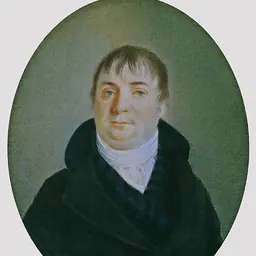
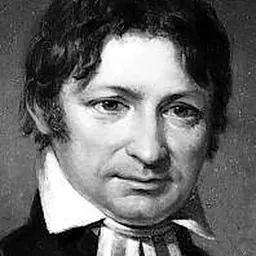
Contemporaries
People whose lives overlapped Hilario Ascasubi's





Frequently asked questions
Who was Hilario Ascasubi?
Argentine poet (1807–1875)
When was Hilario Ascasubi born?
Hilario Ascasubi was born on 14 January 1807 in Bell Ville, Argentina.
When did Hilario Ascasubi die?
Hilario Ascasubi died on 17 November 1875 in Buenos Aires.
What was Hilario Ascasubi's occupation?
Hilario Ascasubi was a poet and writer.
What nationality was Hilario Ascasubi?
Hilario Ascasubi was Argentine.
Sources & further reading
Cite this page
APA: Biography.guide. (2026). Hilario Ascasubi. https://biography.guide/hilario-ascasubi/
MLA: "Hilario Ascasubi." Biography.guide, https://biography.guide/hilario-ascasubi/.
Chicago: "Hilario Ascasubi." Biography.guide. https://biography.guide/hilario-ascasubi/.
Data last updated: 2026-09-23 · Spot an error? Report a correction.
Portrait: Wikimedia Commons · author & licence
Page generated 2026-09-27 05:05 UTC