
Bartolomé Mitre
President of Argentina (1821-1906), writer, politician
About Bartolomé Mitre
Lived 1821 – 1906 (aged 84). Bartolomé Mitre was an Argentine military personnel, linguist, journalist, historian, politician and translator.
Bartolomé Mitre (26 June 1821 – 19 January 1906) was an Argentine general, statesman and author. He was President of Argentina from 1862 to 1868 and the first president of unified Argentina.
Mitre is known as a versatile statesman, military man, politician, journalist, historian, writer and poet.
He was the figure that best characterized liberalism in Argentina, but he was a moderate and flexible liberal, not dogmatic.
In 1831, his family settled in Uruguay. He became a soldier and graduated in 1839 from the Military School of Montevideo, with the rank of second lieutenant of artillery. Also, a journalist, his writings supported Fructuoso Rivera, who, in 1846, made him a lieutenant colonel in the Uruguayan Army.
Later, he joined the Colorado Party in the civil wars against the Blancos, in the Banda Oriental (Uruguay). This closeness with the Colorados led him to support the unitario faction of Argentina, which simultaneously fought against the Rosista regime in Buenos Aires, ally of the Uruguayan Blancos. In October 1862, Mitre was elected president of the republic, and national political unity was finally achieved; a period of internal progress and reform then commenced. During the Paraguayan War, Mitre was initially named the head of the allied forces.
Mitre was also the founder of La Nación, one of South America's leading newspapers, in 1870. His opposition to Autonomist Party nominee Adolfo Alsina, whom he viewed as a veiled Buenos Aires separatist, led Mitre to run for the presidency again, though the seasoned Alsina outmaneuvered him by fielding Nicolás Avellaneda, a moderate lawyer from remote Tucuman Province where the independence of Argentina had been declared in 1816. The electoral college met on 12 April 1874, and awarded Mitre only three provinces, including Buenos Aires.
Mitre took up arms again. Hoping to prevent Avellaneda's 12 October inauguration, he hijacked a gunboat; he was defeated, however, and only President Avellaneda's commutation spared his life. Following the 1890 Revolution of the Park, he broke with the conservative National Autonomist Party (PAN) and co-founded the Civic Union with reformist Leandro Alem. Mitre's desire to maintain an understanding with the ruling PAN led to the Civic Union's schism in 1891, upon which Mitre founded the National Civic Union, and Alem, the Radical Civic Union (the oldest existing party in Argentina).
He dedicated much of his time in later years to writing. According to some of his critics, as a historian Mitre made questionable judgments, often ignoring key documents and events on purpose in his writings. This caused his student Adolfo Saldías to distance himself from him, and for future revisionist historians such as José María Rosa to question the validity of his work altogether. He also wrote poetry and fiction (Soledad: novela original), and translated Dante's La divina commedia (The Divine Comedy) into Spanish. He was the grandfather of the poet Margarita Abella Caprile. Like many other nineteenth century Argentines prominent in public life, he was a freemason.
Election and inauguration In August, the elections of presidential electors were held and on 5 October the Electoral College met, unanimously electing Mitre as constitutional president of the Nation. Marcos Paz was elected vice president.
Mitre assumed the presidency on 12 October 1862. Three of the five ministers who accompanied him were from Buenos Aires; the other two were provincials who resided in Buenos Aires, one of them for five years and the other for forty years.
Organization of the State The issue of the customs house was resolved with a law of 1863—which favored trade with Europe and lowered taxes on foreign trade— and with the constitutional reform of 1866, which restored the power of the Nation to establish and collect import duties. Portrait of Mitre painted by Egidio Querciola, Museo Histórico Nacional. With Congress and the president installed, it remained to organize the Judiciary, which was governed by a law enacted the day after Mitre assumed office. The Supreme Court of Argentina began operating on 15 January 1863, and in the following months federal courts were organized in all the provinces. The Commercial Code of the State of Buenos Aires was also nationalized.
Educational policy Mitre's educational policy was oriented toward the expansion and unification of secondary education, with the idea of spreading liberal ideas among the young people who could access it; national colleges were founded in the provinces of Salta, Tucumán, Mendoza, San Juan and Catamarca, and the Colegio Nacional de Buenos Aires was nationalized.
Construction of railways During Mitre's presidency the construction of new railway lines began with the contribution of British capital, such as the Central Argentine Railway—from Rosario to Córdoba—the Buenos Aires Northern Railway, the Buenos Aires and Ensenada Port Railway and the Buenos Aires Great Southern Railway. In the opposite direction, the government of Buenos Aires Province assumed control of the Buenos Aires Western Railway on 1 January 1863, since the Bank of the Province of Buenos Aires was the main creditor.
Defeat and death of "Chacho"
At the beginning of 1863, "Chacho" Peñaloza retained in his possession the weapons he had used in his previous campaign. Confirming the caudillo's fears, liberal governments, supported by regiments sent from Buenos Aires, persecuted the federals through arrests, looting and executions.
After a series of federal revolts in San Luis and Catamarca, Chacho finally launched another revolution in May 1863:
The response of the Mitrist leaders was rapid and energetic: two armies attacked La Rioja from San Juan and Catamarca, commanded respectively by Sarmiento and Taboada. Mitre announced a new strategy by which his men were authorized to execute prisoners:
For several months the war was indecisive, but the federals received unexpected support when Simón Luengo overthrew the governor of Córdoba Province and welcomed Chacho in the provincial capital. On 20 June 1863, federal troops were defeated by Wenceslao Paunero in the Battle of Las Playas.
Peñaloza returned to La Rioja, from where he attacked Caucete, very close to the city of San Juan. There he was defeated by commander Pablo Irrazábal and had to flee again toward his province, where José Miguel Arredondo destroyed the last remnants of his army. Taking refuge in the town of Olta, on 12 November, he surrendered and was murdered by Irrazábal, who had his head cut off as a warning to the federals. Sarmiento commented:
In January of the following year, the montoneros of San Luis were defeated, and by mid-1865, the last minor caudillos in La Rioja had been defeated.
Foreign relations Regarding the United States, where the previous ambassador in Washington, D.C. had died, Mitre took months to appoint Sarmiento there, who arrived more than three years after Mitre had assumed power.
In relation to Spain, he rejected the treaty signed by Alberdi in 1859, obtaining modification of the article concerning the citizenship of children of Spaniards.
Mitre's position regarding Latin American countries was one of complete indifference: when his government was invited to participate in the Pan-American Congress of 1862, held in Lima in response to the Second French intervention in Mexico and the Spanish annexation of the Dominican Republic, Mitre refused to appoint an official representative. The reply of Foreign Minister Rufino de Elizalde to the invitation to defend themselves collectively against European advances was that:
Death and legacy Bartolomé Mitre died in 1906, affected by a gastrointestinal illness. The charismatic leader was mourned by a crowd rarely seen until then, who accompanied the funeral procession from his home to La Recoleta Cemetery.
As an intellectual, he wrote poetry, theater, countless newspaper articles, cemented historical science with his exemplary biographies, translated classic works, and authored fiery harangues. Mitre was a leading figure in politics and culture until his death in 1906.
Wrote Robert Avrett:
Don’t just read it —
keep it.
Full-length biographies made to live with: read them, listen on the way to work, watch them tonight.
- E-book
- Audio
- Video
Instant download · yours to keep · every purchase keeps this site free
Important facts
People in Bartolomé Mitre's life
Named in this biography and alive at the same time

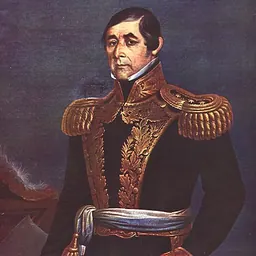

Related people
Same field, nearest in time

Contemporaries
People whose lives overlapped Bartolomé Mitre's




Frequently asked questions
Who was Bartolomé Mitre?
president of Argentina (1821-1906), writer, politician
When was Bartolomé Mitre born?
Bartolomé Mitre was born on 26 June 1821 in Buenos Aires, Argentina.
When did Bartolomé Mitre die?
Bartolomé Mitre died on 19 January 1906 in Buenos Aires.
What was Bartolomé Mitre's occupation?
Bartolomé Mitre was a military personnel, linguist, journalist, historian, politician and translator.
What nationality was Bartolomé Mitre?
Bartolomé Mitre was Argentine.
Sources & further reading
Cite this page
APA: Biography.guide. (2026). Bartolomé Mitre. https://biography.guide/bartolome-mitre/
MLA: "Bartolomé Mitre." Biography.guide, https://biography.guide/bartolome-mitre/.
Chicago: "Bartolomé Mitre." Biography.guide. https://biography.guide/bartolome-mitre/.
Data last updated: 2026-09-25 · Spot an error? Report a correction.
Page generated 2026-09-27 05:12 UTC