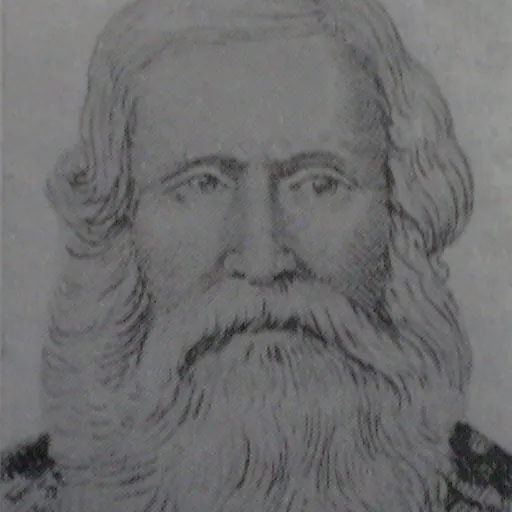
Wenceslao Paunero
Argentinian politician and diplomat
About Wenceslao Paunero
Lived 1805 – 1871 (aged 65–66). Wenceslao Paunero was an Argentine politician, diplomat and military personnel.
Wenceslao Paunero was a 19th-century Argentine General, politician and diplomat of Uruguayan origin. He was born within the Banda Oriental and would go on to be a major member of the Unitarian Party. He was also the Minister of War and Navy of Argentina and the provisional Governor of Córdoba.
Early years He was born in Colonia del Sacramento in modern-day Uruguay, then part of the Viceroyalty of the Río de la Plata, on September 28, 1805, as the son of Juan Paunero Caballero, who settled there at the end of the 18th century, and Manuela Delgado Martínez, both of Spanish origin.
For a short time, he attended the Royal College of San Carlos in Buenos Aires, but the lack of materials meant that his family had no fortune which forced him to dedicate himself to earning a living, postponing his studies.
He joined the Argentine Army in 1825, and the government put him in command of the contingent of the Corrientes Province for the Cisplatine War. Under the command of José María Paz he participated in the Battle of Ituzaingó. Returning from the northern front, he was assigned to the troops besieging Colonia, which had not yet been evacuated by the Brazilians, and was taken prisoner by the besieged. He was sent to a prison in Rio de Janeiro but he was exchanged for an imperial officer.
He returned in January 1829 to Buenos Aires, where he was appointed captain by Unitary General Juan Lavalle, who had just usurped the government of the province after assassinating the Buenos Aires Federalist governor Manuel Dorrego. He joined the forces with which Paz invaded Córdoba Province, and took part in the battles of San Roque, La Tablada and Oncativo, in which the federalist leaders Juan Bautista Bustos and Juan Facundo Quiroga were defeated. Between these last two battles, he was promoted to major and sent by Paz to start talks with Quiroga. He fought against the Federalists of Santiago del Estero under the command of Román Deheza and crossed the border with the Native Americans. Paunero took Paz prisoner and defeated his army at the Battle of La Ciudadela under the orders of General Gregorio Aráoz de Lamadrid, he had to flee to Bolivia. During his exile he met and forged a close friendship with the Buenos Aires Unitarian Bartolomé Mitre who was also exiled. When Ballivián was deposed, he moved to Peru and then to Chile where he made contact with Domingo Faustino Sarmiento and with Juan Bautista Alberdi, among others. He wanted to depose Urquiza so he embarked for Buenos Aires, with Sarmiento and Mitre.
At the end of 1851 he enlisted as a colonel in the Colorado troops campaigning against federal governor Juan Manuel de Rosas and fought in the Battle of Caseros. He was later appointed General Commander of Arms and Chief of Staff of the Army of the State of Buenos Aires. He served on the frontier against the Natives and made an unsuccessful expedition to Salinas Grandes and he was also a commander in San Nicolás de los Arroyos.
After Pavón He fought in the Battle of Cepeda and was incorporated into the Argentine Confederate Army. Urquiza named him comptroller together with Juan Saá in the San Juan Province, but he had serious disagreements with Saá, who, considering that he defended the revolutionary government, sent him back to Buenos Aires. Shortly thereafter, Saá invaded San Juan, and his bloody victory led to war again. At the head of the infantry, he had a notable performance in the Battle of Pavón in 1861 which was why General Bartolomé Mitre promoted him to colonel major, which was equivalent to a one-star general, on the same battle.
From Córdoba he sent a division under the command of Sarmiento, who changed the governments of San Luis and Mendoza and had himself elected governor of San Juan. In these actions against the populations of the interior he had as one of his main lieutenants the bloodthirsty Ambrosio Sandes. After a campaign of several months against the caudillo Ángel Vicente "El Chacho" Peñaloza, he signed a peace treaty, with pardon and amnesty for the defeated parties. But the peace offer wasn't respected and Peñaloza took up arms again. El Chacho came to occupy Córdoba, but Paunero defeated him at the Battle of Las Playas on the outskirts of the city. A few months later, Colonel Pablo Irrazábal assassinated him, when Peñaloza had already surrendered and was unarmed.
He remained a few more years in Córdoba, during which he actively participated in successive political conflicts and managed the installation or reinforcement of forts on the borders that existed at that time with the indigenous people.
Paraguayan War
In 1865 he joined the army that participated in the Paraguayan War. His first action was to attack the Paraguayans in the Battle of Corrientes, a city they had occupied. He managed to occupy the city, but had to evacuate it due to the enormous numerical superiority of the enemy. For that action he was decorated by the national government.
He moved his troops to the southeast of the province, in a heroic march, and under the command of Venancio Flores he fought in the battle of Yatay and participated in the Siege of Uruguaiana. On the Humaitá campaign, he fought at the battles of Paso de Patria, Estero Bellaco, Tuyutí, Yataytí Corá and Curuzú.
In 1867 he was again sent to war against the Federalist Montoneras, but the rapidity of General Juan Saá 's movements forced him to withdraw. The head of his vanguard, José Miguel Arredondo, attacked and defeated Saá at the Battle of San Ignacio, thus ending the civil war in Cuyo. In July 1867 he was promoted to brigadier general.
At the end of the Mitre government, he was appointed the Minister of War and Navy, and on the presidential elections of 1868 he was a vice-presidential candidate in the official formula headed by Rufino de Elizalde. They were defeated by Sarmiento, who appointed him-among other reasons of state to alleviate his dire financial situation-Minister Plenipotentiary to the Empire of Brazil but died at Rio de Janeiro on June 7, 1871, at the age of 65.
Don’t just read it —
keep it.
Full-length biographies made to live with: read them, listen on the way to work, watch them tonight.
- E-book
- Audio
- Video
Instant download · yours to keep · every purchase keeps this site free
Important facts
People in Wenceslao Paunero's life
Named in this biography and alive at the same time


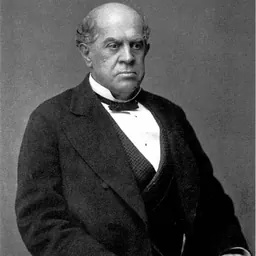
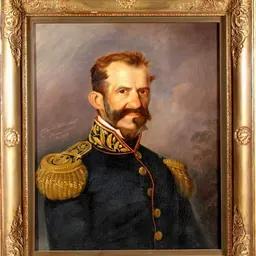
Related people
Same field, nearest in time



Contemporaries
People whose lives overlapped Wenceslao Paunero's






Frequently asked questions
Who was Wenceslao Paunero?
Argentinian politician and diplomat
When was Wenceslao Paunero born?
Wenceslao Paunero was born in 1805 in Colonia del Sacramento.
When did Wenceslao Paunero die?
Wenceslao Paunero died in 1871 in Rio de Janeiro.
What was Wenceslao Paunero's occupation?
Wenceslao Paunero was a politician, diplomat and military personnel.
What nationality was Wenceslao Paunero?
Wenceslao Paunero was Argentine.
Sources & further reading
· Wikipedia: Wenceslao Paunero
· DBpedia: Wenceslao Paunero (general)
Cite this page
APA: Biography.guide. (2026). Wenceslao Paunero. https://biography.guide/wenceslao-paunero/
MLA: "Wenceslao Paunero." Biography.guide, https://biography.guide/wenceslao-paunero/.
Chicago: "Wenceslao Paunero." Biography.guide. https://biography.guide/wenceslao-paunero/.
Data last updated: 2026-09-21 · Spot an error? Report a correction.
Portrait: Wikimedia Commons · author & licence
Page generated 2026-09-27 04:59 UTC