
About Hikmat Abu Zayd
Lived 1922 – 2011 (aged 88–89). Hikmat Abu Zayd was a politician.
Hikmat Abu Zayd (; pronounced Hekmat Abu Zeid in Egyptian Arabic; 1922 or 1923 – 30 July 2011) was an Egyptian politician and academic. She became the first female cabinet minister in Egypt in 1962. Her tenure as minister of social affairs set a precedent. Afterwards, it became common for women to head that ministry. Abu Zayd has had a major impact on Egyptian law and policy in the areas of social affairs and insurance.
Early life and education Born in the village of Shaykh Daud, located near the city of al-Qusiyya in Asyut Governorate, Abu Zayd grew up in a nationalist household. Her father's job at the Egyptian State Railways meant that he was assigned to many stations and was constantly on the move. Although her mother was illiterate, Abu Zayd was encouraged to read and was given access to her father's large library. On 29 September 1962, Abu Zayd was named minister of social affairs in Ali Sabri's first government. She retained her role when the cabinet was reshuffled in March 1964, and served until 1965.
Abu Zayd was part of a new female leadership that shared the same lower middle class background of Nasser and his fellow Free Officers. Her appointment by Nasser was made in the context of his new socialist program, which put emphasis on broadening access to education and employment for all people, regardless of gender or social class. The 1950s and especially the 1960s were a time of increased female emancipation in Egypt. Polygyny was on the decline, and women were increasingly holding key posts in government, industry and academia. The country's first two female parliamentarians, Rawya Ateya and Amina Shukri, were elected in 1957. Karimah al-Sa'id became the deputy minister of education in the 1960s. Such high-level appointments of a few well-qualified women were showcased by the government, while the majority of Egyptian women remained stuck in the lower echelons of society. Many of these associations were headed by women from prominent families and were protective of their independence, which Nasser found objectionable. His regime targeted women's organizations in the early 1960s and moved to take over most of their functions as state responsibilities, thereby depriving the associations of their momentum and autonomy. Abu Zayd implemented these policies, which were aimed at benefiting female workers and peasants. The Ministry of Social Affairs which she headed was increasingly specializing in women's issues. In order to combat mendicity, she imposed prison terms on recidivist beggars who returned to begging after they had received state-sponsored training in handicrafts. In addition to registering NGOs and expanding their development activities, she launched projects aimed at improving the status of rural women.
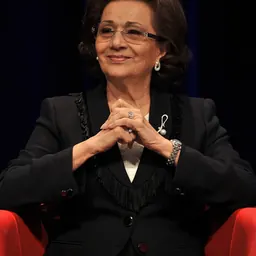
Exile in Libya Following Nasser's death in 1970 and Anwar Sadat's ascension to the presidency, Abu Zayd's career progression was blocked. She moved to Libya with her husband in 1974. Due to her opposition to Sadat's peace overture to Israel, Abu Zayd was accused of high treason, terrorism and spying, and was consequently deprived of her Egyptian nationality. Farkhonda Hassan visited her there on behalf of then First Lady Suzanne Mubarak. During her stay at the hospital, Abu Zayd granted an interview to Almasry Alyoum newspaper in which she defended Nasser's legacy and lamented the loss of tolerance in Egypt.
Don’t just read it —
keep it.
Full-length biographies made to live with: read them, listen on the way to work, watch them tonight.
- E-book
- Audio
- Video
Instant download · yours to keep · every purchase keeps this site free
Important facts
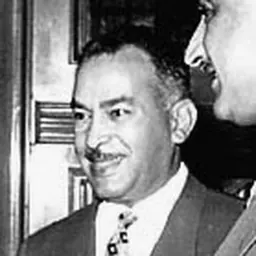
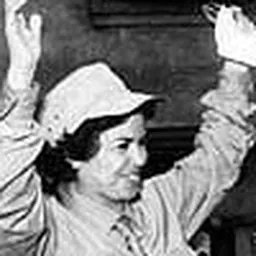
People in Hikmat Abu Zayd's life
Named in this biography and alive at the same time



Related people
Same field, nearest in time





Contemporaries
People whose lives overlapped Hikmat Abu Zayd's

Frequently asked questions
Who was Hikmat Abu Zayd?
Egyptian politician and academic
When was Hikmat Abu Zayd born?
Hikmat Abu Zayd was born in 1922 in Asyut Governorate, Egypt.
When did Hikmat Abu Zayd die?
Hikmat Abu Zayd died on 30 July 2011 in Zamalek.
What was Hikmat Abu Zayd's occupation?
Hikmat Abu Zayd was a politician.
What nationality was Hikmat Abu Zayd?
Hikmat Abu Zayd's recorded nationality: Kingdom of Egypt, Republic of Egypt, United Arab Republic.
Sources & further reading
Cite this page
APA: Biography.guide. (2026). Hikmat Abu Zayd. https://biography.guide/hikmat-abu-zayd/
MLA: "Hikmat Abu Zayd." Biography.guide, https://biography.guide/hikmat-abu-zayd/.
Chicago: "Hikmat Abu Zayd." Biography.guide. https://biography.guide/hikmat-abu-zayd/.
Data last updated: 2026-09-25 · Spot an error? Report a correction.
Page generated 2026-09-27 05:10 UTC