
Hermann Rorschach
Swiss Freudian psychiatrist and psychoanalyst
About Hermann Rorschach
Lived 1884 – 1922 (aged 37). Hermann Rorschach was a Swiss psychiatrist, psychoanalyst and ethnologist, known for Rorschach test.
Hermann Rorschach (; 8 November 1884 – 2 April 1922) was a Swiss psychiatrist and psychoanalyst. His education in art helped to spur the development of a set of inkblots that were used experimentally to measure various unconscious parts of the subject's personality. His method has come to be referred to as the Rorschach test, iterations of which have continued to be used over the years to help identify personality, psychotic, and neurological disorders. Rorschach continued to refine the test until his premature death at age 37.
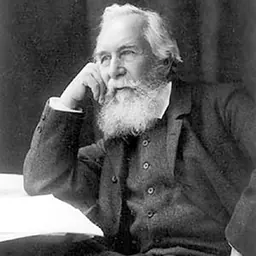
Early life Rorschach was born in Zurich, Switzerland, the eldest of three children born to Ulrich and Philippine Rorschach. He had one sister, Anna, and one brother, Paul. He spent his childhood and youth in Schaffhausen, in northern Switzerland. He was known to his school friends and in his fraternity as Klex, or "inkblot" since he enjoyed klecksography, the making of fanciful inkblot "pictures". By the time of Rorschach's youth, consideration of the projective significance of inkblots already had some historical context. For example, in 1857, German doctor Justinus Kerner had published a popular book of poems, each of which was inspired by an accidental inkblot. It has been speculated that the book was known to Rorschach. French psychologist Alfred Binet had also experimented with inkblots as a creativity test. through painting and drawing conventional pictures. As the time of Rorschach's high-school graduation approached, he could not decide between a career in art and one in science. He wrote a letter to the German biologist Ernst Haeckel asking his advice. A major factor that led Rorschach to differ from his father and not pursue art was that his father died while he was still trying to decide what to study. in Schaffhausen, Switzerland. Rorschach was a bright student from the beginning, and he often tutored other students at his school. After Ernst Haeckel suggested a career in science, Rorschach attended Académie de Neuchâtel in 1904 studying geology and botany. After just a single term, he transferred to the Université de Dijon to take French classes. The same year he enrolled in medical school at the University of Zurich. They had two children, a daughter Elizabeth (called "Lisa", 1917–2006) and a son, Ulrich Wadin (called "Wadim", 1919–2010). Neither Lisa nor Wadim had children.
One year after writing Psychodiagnostik, Rorschach died of peritonitis, probably resulting from a ruptured appendix. He was still associate director of the Herisau Hospital when he died, aged 37, on 2 April 1922.
Legacy In 2001 the inkblot test was criticised as pseudoscience and its use was declared controversial by Scientific American, as different psychologists drew different findings from the same data, suggesting their results were subjective rather than objective. In 2013 and 2015 two systemic reviews and meta-analyses were published that resulted in the criticism as pseudoscience being lifted. In November 2013, Google celebrated the 129th anniversary of Rorschach's birth with a Google Doodle showing an interpretation of his inkblot test. Aside from the MMPI, the Rorschach Inkblot Method has generated more published research than any other psychological personality measure.
The cover of The Essentials of Psycho-analysis by Sigmund Freud, published in the "Vintage Freud" series by Vintage Books in 2005, features artwork by Michael Salu based on a Rorschach Inkblot.
Publications Rorschach, H. (1924). Manual for Rorschach Ink-blot Test. Chicago, IL: Stoelting Rorschach, H., Oberholzer, E. (1924). The Application of the Interpretation of Form to Psychoanalysis. Chicago. Rorschach, H., Beck, S.J. (1932). The Rorschach Test as Applied to a Feeble-minded Group. New York. Rorschach, H., Klopfer, B. (1938). Rorschach Research Exchange. New York. Rorschach, H. (1942). Psychodiagnostics: A diagnostic test based on perception (P. Lemkau & B. Kronenberg, Trans.). Berne, Switzerland: Hans Huber. Rorschach, H. (1948). Psychodiagnostik (tafeln): Psychodiagnostics (plates). Bern: Hans Huber; distributors for the United States: Grune and Stratton, New York, N.Y.
Don’t just read it —
keep it.
Full-length biographies made to live with: read them, listen on the way to work, watch them tonight.
- E-book
- Audio
- Video
Instant download · yours to keep · every purchase keeps this site free
Important facts
People in Hermann Rorschach's life
Named in this biography and alive at the same time

Related people
Same field, nearest in time


Contemporaries
People whose lives overlapped Hermann Rorschach's

Frequently asked questions
Who was Hermann Rorschach?
Swiss Freudian psychiatrist and psychoanalyst (1885–1922)
When was Hermann Rorschach born?
Hermann Rorschach was born on 8 November 1884 in Zurich.
When did Hermann Rorschach die?
Hermann Rorschach died on 2 April 1922 in Herisau.
What was Hermann Rorschach's occupation?
Hermann Rorschach was a psychiatrist, psychoanalyst and ethnologist.
What was Hermann Rorschach known for?
Hermann Rorschach was known for Rorschach test.
What nationality was Hermann Rorschach?
Hermann Rorschach was Swiss.
Sources & further reading
· Wikipedia: Hermann Rorschach
Cite this page
APA: Biography.guide. (2026). Hermann Rorschach. https://biography.guide/hermann-rorschach/
MLA: "Hermann Rorschach." Biography.guide, https://biography.guide/hermann-rorschach/.
Chicago: "Hermann Rorschach." Biography.guide. https://biography.guide/hermann-rorschach/.
Data last updated: 2026-09-26 · Spot an error? Report a correction.
Page generated 2026-09-27 05:13 UTC