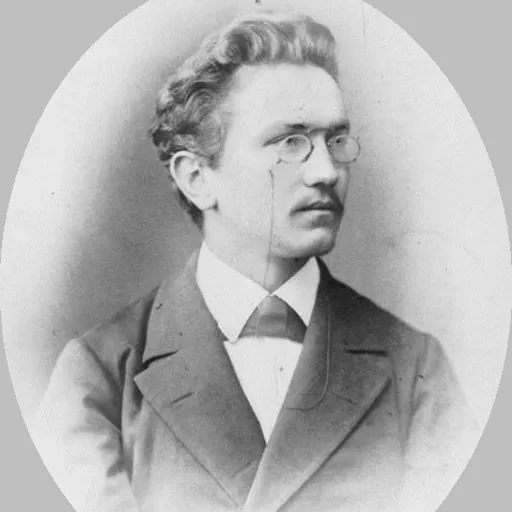
About Hans Huber
Lived 1852 – 1921 (aged 69). Hans Huber was a Swiss composer, pianist and music teacher.
Hans Huber (28 June 185225 December 1921) was a Swiss composer. Between 1894 and 1918, he composed five operas. He also wrote a set of 24 Preludes and Fugues, Op. 100, for piano four-hands in all major and minor keys.
Biography He was born in Eppenberg-Wöschnau (Canton of Solothurn). The son of an amateur musician, Huber became a chorister and showed an early talent for the piano. In 1870, he entered Leipzig Conservatory, where his teachers included Oscar Paul. In 1877, he returned to Basel to teach, but did not obtain a post in the Conservatory there until 1889; seven years later, he became director. Among his notable students were Hans Münch and Hermann Suter.
In 1889, Huber wrote an A major symphony, which was conducted in December 1889 by Friedrich Hegar, and whose full score survives. He wrote in all nine symphonies, eight acknowledged, and several concertos, two for violin and four for piano. During his last years, he lived in Minusio in Villa Ginia. He died at Locarno.
Works Huber's first symphony, in D minor, subtitled "Tellsinfonie" has a slight programmatic element, derived from the story of the Swiss national hero William Tell. The symphony is somewhat similar in style and formal restraint to Brahms, although there is perhaps a foreshadowing of Sibelius in some of the orchestral textures.
Huber's piano concertos are slightly unusual for the form in that they have (with the exception of the 2nd concerto), like Brahms' second piano concerto in B-flat major, four movements (scherzos are included in addition to the usual fast, slow, and fast tempo movements).
Symphonies Symphony No. 1 in D minor "Tellsinfonie", Op. 63 (1880-1) Symphony in A major, without Opus (premiered 1889, conducted by Friedrich Hegar), then withdrawn) Symphony No. 2 in E minor, "Böcklin Symphony" "Sieh es lacht die Au'", Op. 115 (1897, premiered June 2, 1900, published 1901) Symphony No. 3 in C major "Heroic" for Soprano and orchestra, Op. 118. (1901, premièred 9 February 1902 in Basel, conducted by the composer, published c. 1908) Symphony No. 4 in A "Academic" in the manner of a Concerto Grosso (for 2 string orchestras, piano and organ) (c. 1907, premièred 15 December 1907 in Basel; dedicated to Felix Weingartner) Symphony No. 5 in F major "The Fiddler of Gmund" (also "Romantische". Dedicated to Henri Marteau.) (Premiered February 1906.) Symphony No. 6 in A major Op. 134 (dedicated to Fritz Steinbach) (premiered November 1911) Symphony No. 7 in D minor "Swiss" (1917, premièred 1917 in Basel, conducted by Hermann Suter, published 1922) Symphony No. 8 in F "Spring-symphony" (1920, premiered October 29, 1921 in Basel conducted by Hermann Suter)
Concertos Piano Concerto No. 1 in C minor, Op. 36 (1878; 4 movements) Violin Concerto No. 1 in G minor, Op. 40 (1879; 3 movements) Violin Concerto No. 2 in D minor, WoO (1886; 1 movement) Piano Concerto No. 2 in G major, Op. 107 (1891; 3 movements) Piano Concerto No. 3 in D major, Op. 113 (1899; 4 movements) Piano Concerto No. 4 in B major (1911; 4 movements)
Other orchestral works Roman Carnival, WoO (1879) Eine Lustspiel-Ouvertüre, Op. 50 (1878) Symphonic Introduction to the opera Der Simplicius An das Vaterland (Symphonic Ode) Serenade No. 1, Op. 86, Summer Nights (1885) Serenade No. 2, WoO, Winter Nights (1895)
Operas Weltfrühling (Libretto by , 1894) Kudrun (Opera in 3 acts, Libretto by Stephan Born, premiered January 29, 1896) Der Simplicius (Libretto by , 1899, 1912, 1915) Frutta di mare (Libretto by Fritz Karmin, 1913) Der gläserne Berg (unfinished, Libretto by , 1915) Die schöne Belinda (Libretto by Gian Bundi, 1916)
Stage music Musik zu einem Festspiele (Text by Rudolf Wackernagel, 1892) Der Basler Bund 1501 (Text by Rudolf Wackernagel, 1901) Der Weihnachtsstern (Text by Meinrad Lienert, 1916)
Oratorios Der heilige Hain (1910) Weissagung und Erfüllung (1913)
Masses Missa festiva in E flat (Kleine Einsiedler-Messe) Missa festiva in honorem Beatae Mariae Virginis D major (Grosse Einsiedler-Messe) Missa festiva in honorem Beatae Mariae Virginis F major (Male choir and organ) Missa in honorem Sancti Ursi Eine Fest-Messe
Cantatas Aussöhnung (Male choir, soloists and orchestra, 1879) Pandora (Mixed choir, soprano and orchestra, 1883) Caenis (Male choir, alto and orchestra, 1890) Heldenehren (Male choir, boys' or female choir, soprano, baritone and orchestra, 1909-1913) Kantate zum Jubiläum der Universität Basel (mixed choir, male choir, boys' choir, soloists, orchestra and organ, 1910) Meerfahrt (Ode for male choir, soloist and orchestra)
Other choral works 25 Male choirs a cappella Serbian and Romanian Folk Songs for mixed choir a capella
Chamber music Quintet for Piano and Winds, Op. 136 (1920) Sextet for Piano and Winds 9 violin sonatas 4 cello sonatas 4 piano trios 2 piano quartets 2 piano quintets Trio-Fantasia for Piano, Violin and Cello
Recordings The Swedish label Sterling has released all of Huber's symphonies (except for the 1889 A major symphony noted above), some tone poems, and two of the piano concertos (nos. 1 & 3). There have also been several recent recordings from Huber's substantial output of chamber works, including at least one of his cello sonatas and three CDs (as of 2012) with violin sonatas of his; one of the early recordings of Huber's music was an LP of his first piano quartet "Waldlieder", with Hans-Heinz Schneeberger playing the violin.
Don’t just read it —
keep it.
Full-length biographies made to live with: read them, listen on the way to work, watch them tonight.
- E-book
- Audio
- Video
Instant download · yours to keep · every purchase keeps this site free
Important facts
more
Leid, Twirl, Dicabor, Atlon Inc., Acid Warrior, ColonePeople in Hans Huber's life
Named in this biography and alive at the same time




Related people
Same field, nearest in time

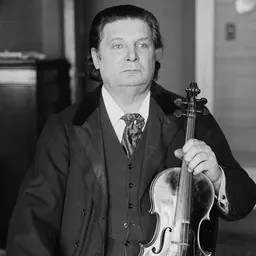

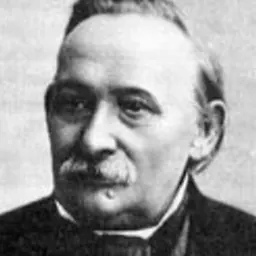
Contemporaries
People whose lives overlapped Hans Huber's
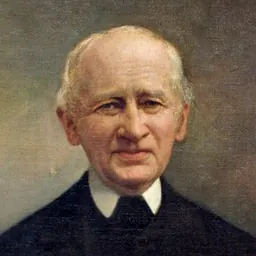
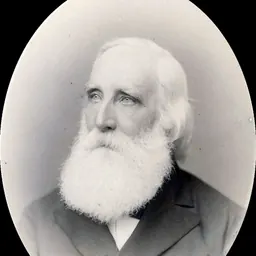

Frequently asked questions
Who was Hans Huber?
Swiss composer (1852-1921)
When was Hans Huber born?
Hans Huber was born on 28 June 1852 in Eppenberg-Wöschnau.
When did Hans Huber die?
Hans Huber died on 25 December 1921 in Locarno.
What was Hans Huber's occupation?
Hans Huber was a composer, pianist and music teacher.
What nationality was Hans Huber?
Hans Huber was Swiss.
Sources & further reading
· DBpedia: Hans Huber (composer)
Cite this page
APA: Biography.guide. (2026). Hans Huber. https://biography.guide/hans-huber/
MLA: "Hans Huber." Biography.guide, https://biography.guide/hans-huber/.
Chicago: "Hans Huber." Biography.guide. https://biography.guide/hans-huber/.
Data last updated: 2026-09-22 · Spot an error? Report a correction.
Portrait: Wikimedia Commons · author & licence
Page generated 2026-09-27 05:04 UTC