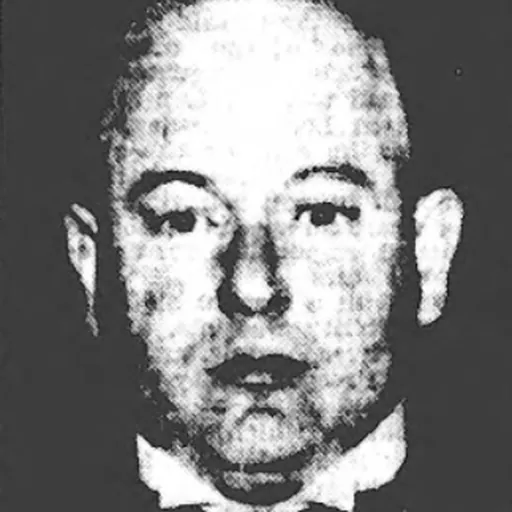
About Alexander Cannon
Lived 1896 – 1963 (aged 66). Alexander Cannon was a psychiatrist, known for Edward VIII of the United Kingdom.
James Alexander Cannon (4 August 1896 – 18 March 1963) was a British psychiatrist, occultist, hypnotist and author. He became well known in the 1930s for his occult writings and claims, and more recently for his alleged influence on King Edward VIII shortly before his abdication.
Early life and career He was born in Leeds, England, and educated at Leeds, London, Vienna, Hong Kong, and several other universities, eventually receiving both an MD and PhD. Later he trained in various Eastern spiritual disciplines, acquiring or claiming such titles as "Kushog Yogi of Northern Thibet" and "Master-The-Fifth of the Great White Lodge of the Himalayas."
In Hong Kong in the late 1920s and early 1930s, he became vice-president of the Hong Kong Medical Society, medical officer in charge of prisons, head of the Department of Morbid Anatomy at the University of Hong Kong, and psychiatrist and medical jurist to the High Court of Justice.
He also served as British Consul and Port Medical Officer in Canton (Guangzhou). He studied occultism and yoga and travelled in India, China and Tibet. In his book The Invisible Influence (1933), he claimed that during his travels he was levitated over a chasm in Tibet, together with his porters and luggage. The book ran to at least 26 impressions by 1948.
After his return to England, he was awarded a Diploma in Psychological Medicine (DPM) from the Royal College of Physicians of London and Royal College of Surgeons of England in 1931. Cannon served as psychiatrist and research scientist at Colney Hatch Mental Hospital. After learning of his book, London County Council dismissed him on the grounds that he was unfit to practice in charge of a mental hospital, but he was reinstated after bringing action for wrongful dismissal. He then set up in private practice as a consultant in Harley Street, London, where he used hypnotherapy and psychic mediums in diagnosis. He became well known for prescribing exotic remedies such as electrotherapy and Tibetan hypnosis techniques as treatments for stress, alcoholism, sex and confidence problems.
In 1939, he was a vice-president of the British Phrenological Society .
Influence on King Edward VIII According to recent research, during this period King Edward VIII consulted Cannon, and received hypnotic treatment from him for a drink problem. However, Edward's biographer Philip Ziegler considered it more likely that the treatment may have been for a sexual problem.
Later life By the late 1930s, Cannon's London clinic, where he billed himself fraudulently as "His Excellency Sir Dr Alexander Cannon", had become highly lucrative.
In October 1938, he falsely predicted that 1939 would see "the rapid wane of Hitler" and Mussolini. By 1941, he was being evicted from his Douglas mansion and was in trouble once again with medical authorities. He was brought up on disciplinary charges that in July 1941 he mailed a prison warden certificates attesting to his serious illness and that the man required immediate rest, even though Cannon had not seen him since March 1940. His solicitor claimed Cannon had diagnosed the man "hypnotically through a third person." The General Medical Council declined to revoke his licence, finding that although the charges were proven, Cannon's actions were not done with the intention to commit fraud but owing to his mistaken belief in his own abilities.
When the war ended, Cannon began to produce live magic shows using two assistants, Joyce and Rhonda Deronda (born Joyce and Eleanor Robson), who helped with performances. One act involved putting Rhonda into a hypnotic trance to diagnose physical and psychological problems, as she glared at the patient. Some of his apparently magical techniques were exposed in 1952 by David Norris.
Cannon was a member of the International Brotherhood of Magicians and The Magic Circle, and was Chairman of the Magicians of Mann. He created 'The Enchanted Hall', a small theatre at his home, Laureston Mansion House in Douglas. A number of tape recordings made by Cannon are on loan to the Manx Museum and National Trust.
He also claimed to have invented the lie detector and black light. He died in March 1963, in the Isle of Man.
Don’t just read it —
keep it.
Full-length biographies made to live with: read them, listen on the way to work, watch them tonight.
- E-book
- Audio
- Video
Instant download · yours to keep · every purchase keeps this site free
Important facts
People in Alexander Cannon's life
Named in this biography and alive at the same time



Related people
Same field, nearest in time



Contemporaries
People whose lives overlapped Alexander Cannon's




Frequently asked questions
Who was Alexander Cannon?
British psychiatrist, occultist, hypnotist
When was Alexander Cannon born?
Alexander Cannon was born on 4 August 1896 in Leeds.
When did Alexander Cannon die?
Alexander Cannon died on 18 March 1963 in Douglas.
What was Alexander Cannon's occupation?
Alexander Cannon was a psychiatrist.
What was Alexander Cannon known for?
Alexander Cannon was known for Edward VIII of the United Kingdom.
Sources & further reading
· DBpedia: Alexander Cannon (psychiatrist)
Cite this page
APA: Biography.guide. (2026). Alexander Cannon. https://biography.guide/alexander-cannon/
MLA: "Alexander Cannon." Biography.guide, https://biography.guide/alexander-cannon/.
Chicago: "Alexander Cannon." Biography.guide. https://biography.guide/alexander-cannon/.
Data last updated: 2026-09-22 · Spot an error? Report a correction.
Portrait: Wikimedia Commons · author & licence
Page generated 2026-09-27 05:03 UTC