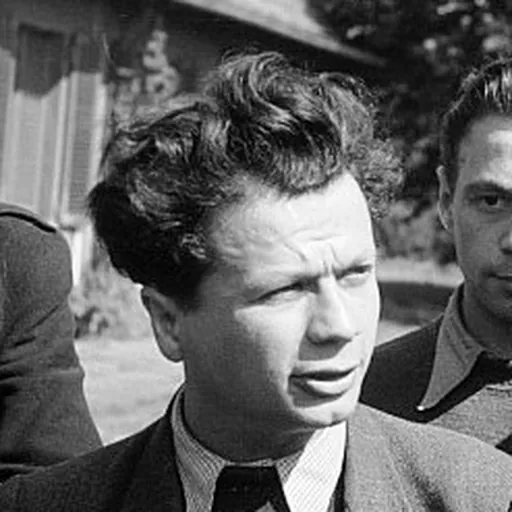
About Hermann Axen
Lived 1916 – 1992 (aged 75). Hermann Axen was a German politician, resistance fighter, editing staff and neues Deutschland.
Hermann Axen (6 March 1916 – 15 February 1992) was a German communist politician who held several high-ranking positions in the Socialist Unity Party between 1949 and 1989. He became involved in the German resistance to Nazi rule, spending much of that time in state detention, including Auschwitz. After the war he became a prominent politician in the Soviet occupation zone, reorganized in 1949 as the German Democratic Republic (East Germany). He served as a relatively high-profile member of the powerful Politburo of the Central Committee between 1970 and 1989.
In November 1989, Axen visited Moscow for eye surgery. While he was away, the entire Politburo (of which he was a member) resigned on 8 November 1989, and he too was excluded from it. On his return in January 1990 he was arrested, suspected of corruption and abuse of public office. This dramatic reversal of fortune came during a period of rapid political change. At the time of his death the arrest warrant had been rescinded and the case against him remained unproven, the necessary investigations having been delayed or suspended in response to his declining health.
Life Provenance and early years Hermann Axen was born in Leipzig. His father worked as a sales representative. His schooling took him to the which in the eyes of British historian David Childs made him a "grammar school boy". His family background was evidently an intellectual one: a source mentions his father's large private library. The family adhered to the liberal branch of Judaism and he received a Bar Mitzvah. A year later he horrified his parents by renouncing religion. Two years after that (and less than a year before the Nazi take-over), influenced by his brother , he joined the Young Communists. Rudolf's body was promptly handed over to his parents following the killing. According to a personal "curriculum vitae" compiled by Axen in 1949 and later found in his "party file", his parents were killed by the Nazis after 1939/40 in "the ghetto" or concentration camp near Lviv/Lemberg. The coming to power of the Nazis at the start of 1933 had been followed by a rapid transition to one-party dictatorship which meant that any political activity outside the Nazi Party, and in particular political activity on behalf of the banned Communist Party, became illegal. Rudolf Axen, until his killing, was leader of the underground Communist group in East Saxony. Axen undertook a course at the Marxist Workers' Academy ("Marxistische Arbeiterschule" / "MASch") in Leipzig during 1932/33 after which he took on a leadership role in the youth section in the party's Leipzig subdistrict ("Unterbezirk Leipzig").
Axen was arrested, along with fourteen comrades, on 3 November 1934. He now presented himself as a Polish citizen and a disciple of the "Mosaic religious community". His papers were sufficiently convincing for the arrest to prompt an intervention by the Polish consulate in Leipzig.
Concentration camps Over the next couple of years the Vichy government was increasingly marginalised, and by 1942 Gestapo officers were a regular sight on the streets of the cities in southern France. Security at Vernet no longer relied simply on its extremely remote location, and the camp was being described as a holding centre for Jewish families awaiting deportation to Nazi labour and extermination camps. In August 1942 Axen and various other internees picked out as Jewish communists, including Kurt Goldstein were handed over to the Gestapo, sent to the Paris area and placed on "Convoy 18 (12 August 1942)", one of the trains which, since March of that year, As the war neared its end, in April 1945 it was US troops that liberated Axen from the Buchenwald camp.
Soviet occupation zone
Although the region of central southern Germany that included both Buchenwald and Axen's home city of Leipzig was liberated by US forces, the victorious allies had already agreed a postwar territorial division of Germany whereby the entire central portion of the country would be administered as the Soviet occupation zone. The Americans pulled their troops back to the agreed lines on their maps in July 1945, and by August 1945 Axen had been installed as Head of the Youth Committee with the appointed city council of Soviet-administered Leipzig and as a member of the regional leadership team ("Kreisleitung") of the local Communist Party.
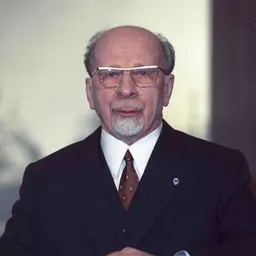
The June 1953 uprising alarmed the East German leadership more than was apparent at the time. East German news broadcasts played down the wave of violently suppressed strikes and street protests, but many listeners in and close to Berlin were also able to listen to radio reports transmitted from West Berlin and received a different set of reports. The Central Committee's "Agitprop" secretary felt unable to pretend that nothing was happening, but his public response concentrated on the western broadcasts: he was able to deliver a suitably reassuring statement that the Soviet government would intervene with the western powers, and with its agents "roll up the whole West Berlin problem". Within days a major exercise in blame allocation followed, accompanied by sackings and demotions within the government. Those whom Walter Ulbricht mistrusted least tended to be those who, like him, had spent the Nazi years exiled in Moscow. That Axen had chosen to flee not to Moscow but to Paris back in 1938 had avoided the risk of being caught up in Stalin's purges, but fifteen years later it meant that while the country was led by Walter Ulbricht, Axen would never be a complete political insider. It was also self-evident that the events of June 1953 had represented a major "Agitprop" failure. Axen shared the responsibility for failing to curb the effectiveness of the ideological counter-offensive and the popularisation of the vernacular of the "Fascist Putsch".
In July 1956 he left his position with the party administration in Berlin as his career moved on. He was now appointed managing editor of Neues Deutschland, the party newspaper, and by far the most widely available daily newspaper in East Germany. He succeeded Georg Stibi in the editorial position. Stibli had been in post only since the previous year, but Axen remained managing editor till 1966. His ten years tenure in charge at the newspaper was the longest of any Neues Deutschland managing editor in the twentieth century. In September 1956 he was awarded the Patriotic Order of Merit, indicating unambiguously that he was back in favour with the party. His mandate also included matters involving the international communist and labour movements.
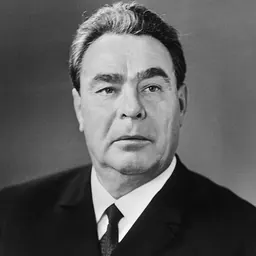
Honecker years Axen (directly behind Honecker) applauds Erich Honecker at the 8th Party Congress of the Socialist Unity Party in East Berlin, 15 June 1971. Also present is Leonid Brezhnev (third from left). The relationship with West Germany was particularly important for the East German leadership, partly for reasons of shared history, language and culture, but also on account of shared interests between the two states. There was, in addition, a growing economic interdependency during the later 1980s. Axen was responsible for talks on disarmament that took place between East Germany's ruling SED (party) and West Germany's SPD (party) (which headed up that country's governing coalition between 1969 and 1982). He served between 1981 and 1989 as a member of the politburo's "Commission for coordinating economic, cultural and technical-scientific relations with the countries of Asia, Africa and the Arabic region. He served on the presidium of the between 1982 and 1989.
Holiday home In 1986 Axen had a holiday home built. In 1993 a determined that the house had been built on land that he did not own and partly paid for from public funds. The subsequent upkeep of the property was paid for out of public funds. Axen had indeed paid rent, but the amount of the rent paid had been nominal.
During the run-up to reunification, which formally took place in October 1990, holders of East German money were able to exchange their money for West German money at unrealistically favourable exchange rates. The arrangement was unpopular with West German central bankers, but was felt by the West German chancellor to be politically necessary. The first 4,000 Marks worth of an individual's savings could be converted at a rate of 1 for 1. Company debts and house loans were converted at the rate of 2 "East Marks" for each (western) Mark, while so-called "speculative money" was converted at a rate of 3:1. It therefore became important to be able to identify where money came from before converting it. During the "conversion period" Axen applied to convert a quarter of a million East Marks. The provenance of the money was declared to be as "regular income". The year of her birth is given as 1925 and she worked, during the East German period, as a contributing editor with Bummi, a monthly publication intended for small children, launched in 1957 and named after its leading character, a teddy bear. There are references to her having been a victim of Nazi persecution, like her husband, but further details are not provided.
Their two daughters were born in 1950 and 1953. 1985 Jubilee Medal "Forty Years of Victory in the Great Patriotic War 1941–1945" (Soviet award) 1986 Order of Friendship of Peoples (Soviet award)
Don’t just read it —
keep it.
Full-length biographies made to live with: read them, listen on the way to work, watch them tonight.
- E-book
- Audio
- Video
Instant download · yours to keep · every purchase keeps this site free
Important facts
People in Hermann Axen's life
Named in this biography and alive at the same time



Related people
Same field, nearest in time






Contemporaries
People whose lives overlapped Hermann Axen's



Frequently asked questions
Who was Hermann Axen?
German politician (1916-1992)
When was Hermann Axen born?
Hermann Axen was born on 6 March 1916 in Leipzig.
When did Hermann Axen die?
Hermann Axen died on 15 February 1992 in Berlin.
What was Hermann Axen's occupation?
Hermann Axen was a politician, resistance fighter, editing staff and neues Deutschland.
What nationality was Hermann Axen?
Hermann Axen was German.
Sources & further reading
Cite this page
APA: Biography.guide. (2026). Hermann Axen. https://biography.guide/hermann-axen/
MLA: "Hermann Axen." Biography.guide, https://biography.guide/hermann-axen/.
Chicago: "Hermann Axen." Biography.guide. https://biography.guide/hermann-axen/.
Data last updated: 2026-09-22 · Spot an error? Report a correction.
Portrait: Wikimedia Commons · author & licence
Page generated 2026-09-27 05:01 UTC