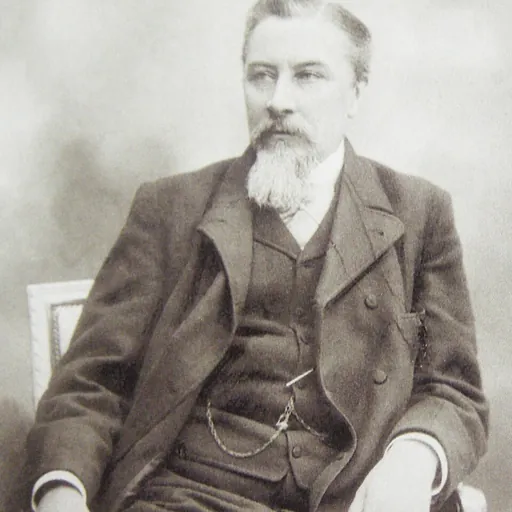
About Henryk Siemiradzki
Lived 1843 – 1902 (aged 58). Henryk Siemiradzki was a Russian and Polish painter and artist.
Henryk Hektor Siemiradzki (24 October 1843 – 23 August 1902) was a Polish painter. He spent most of his active creative life in Rome. Best remembered for his large history paintings in the academic style, he is particularly known for his depictions of scenes from the ancient Greco-Roman world and the New Testament, owned by many national galleries of Europe.
Early life and education Siemiradzki was born to Hipolit Siemiradzki, a Polish noble and an officer of the Imperial Russian Army (made general in 1871) and Michalina (née Prószyńska) in Novo-Belgorod (now Pechenihy, Chuhuiv Raion, Kharkiv oblast, Ukraine), near the city of Kharkiv, where his father's regiment was stationed. The family had origins in Radom land and derived its name from the village of Siemiradz. One of the branches settled near Navahrudak (Nowogródek) in the late 17th century.
Adult Life
In 1873 he married his 18-year-old cousin, Maria Pruszyńska, who was from the village of Koroleszczewicze, now Koraliszczewicze, by the Svislach river, in modern day Belarus. They had four children. In 1876, the Siemiradzki family moved into their own villa. In 1884 he bought a manor house in village of Strzałków situated in the Radomsko district, where he and his family spent summer holidays for many years.
In 1901, he fell ill and lost his speech. In that autumn he met with Henryk Sienkiewicz in Łódź. Shortly before his death, with the consent of his doctors, he traveled back to his manor house in Strzałkowo where he died in 1902. He was initially buried in the Powązki Cemetery (plot 67-6-1/2), Warsaw. His remains were moved in 1903 to the national Pantheon on Skałka in Kraków.
Artistic career
After graduating from university with a Kandidat degree he abandoned his scientific career and moved to Saint Petersburg to study painting at the Imperial Academy of Arts from 1864 to 1870. Upon his graduation he was awarded a gold medal. In 1870–1871 he studied under Karl von Piloty in Munich on a grant from the Academy. In 1872 he moved to Rome and later built a studio there on Via Gaeta, while spending summers at his estate in Strzałków near Częstochowa.
In 1873 he received the title of Academician of the Imperial Academy of Arts for his painting Christ and a Sinner, based on a verse Sinner written by Aleksey Tolstoy. In 1878 he received the French National Order of the Legion of Honour and a gold medal at the Paris World's Fair for the painting Flower Vase. In 1876–1879 Siemiradzki worked on frescoes for the Cathedral of Christ the Saviour (Moscow) among his other large-scale projects.
In 1879, he offered one of his best-known works, the enormous Pochodnie Nerona (Nero's torches), painted around 1876, to the newly formed Polish National Museum. The artwork is on display at the Siemiradzki Room of the Sukiennice Museum in the Kraków Old Town, the most popular branch of the museum. Around 1893 Siemiradzki worked on two large paintings for the State Historical Museum (Moscow). In 1894, he produced his monumental curtain for the Juliusz Słowacki Theatre in Kraków. In January 2025, on the occasion of the 220th anniversary of the V. N. Karazin Kharkiv National University, a monument to Henryk Siemiradsky was unveiled at the entrance to the gallery in the northern building of the university. The monument was created back in 2021, but its installation and opening were postponed due to quarantine restrictions and a Russian invasion of Ukraine.
in 1910, a street in Lviv connecting the modern streets of Gipsova and Konovalets was named after Henryk Siemiradsky.
Monumental paintings Siemiradzki's large-scale canvasses, including The Sword Dance influenced by the French Académie des Beaux-Arts, are on display at the national museums of Poland, Russia, and Ukraine; notably, at the Sukiennice Museum, the National Museum, Poznań, Lviv National Art Gallery, Tretyakov Gallery, and others.
Other paintings
Don’t just read it —
keep it.
Full-length biographies made to live with: read them, listen on the way to work, watch them tonight.
- E-book
- Audio
- Video
Instant download · yours to keep · every purchase keeps this site free
Important facts
more
henryk siemiradsky, Henryk Hektor Siemiradzki, Hendrik Seymiradski, Hendrik SiemiradskiPeople in Henryk Siemiradzki's life
Named in this biography and alive at the same time




Related people
Same field, nearest in time

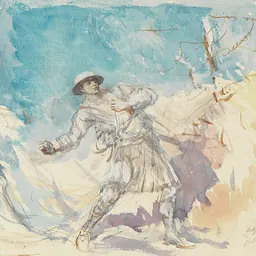
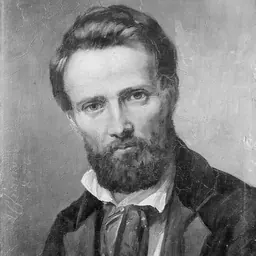
Contemporaries
People whose lives overlapped Henryk Siemiradzki's

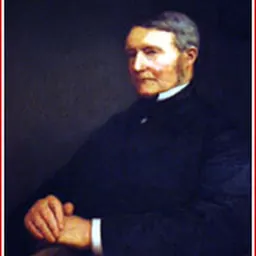
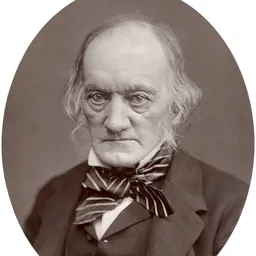
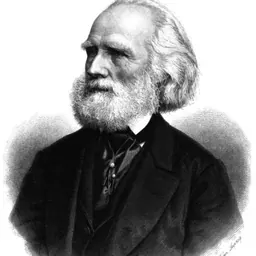
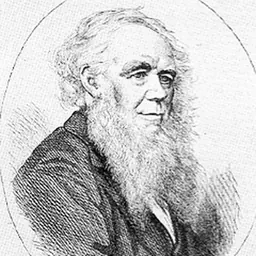
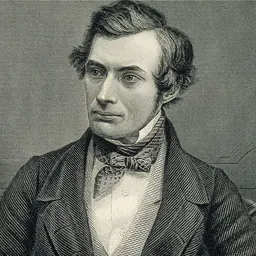
Frequently asked questions
Who was Henryk Siemiradzki?
Polish painter (1843–1902)
When was Henryk Siemiradzki born?
Henryk Siemiradzki was born on 12 October 1843 in Pechenihy, Kharkiv.
When did Henryk Siemiradzki die?
Henryk Siemiradzki died on 23 August 1902 in Strzałków, Łódź Voivodeship.
What was Henryk Siemiradzki's occupation?
Henryk Siemiradzki was a painter and artist.
What nationality was Henryk Siemiradzki?
Henryk Siemiradzki was Russian and Polish.
Sources & further reading
· Wikipedia: Henryk Siemiradzki
Cite this page
APA: Biography.guide. (2026). Henryk Siemiradzki. https://biography.guide/henryk-siemiradzki/
MLA: "Henryk Siemiradzki." Biography.guide, https://biography.guide/henryk-siemiradzki/.
Chicago: "Henryk Siemiradzki." Biography.guide. https://biography.guide/henryk-siemiradzki/.
Data last updated: 2026-09-24 · Spot an error? Report a correction.
Portrait: Wikimedia Commons · author & licence
Page generated 2026-09-27 05:09 UTC