
About Henry Ware Lawton
Lived 1843 – 1899 (aged 56). Henry Ware Lawton was an American military personnel.
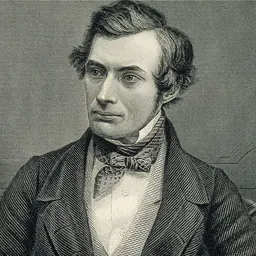
Henry Ware Lawton (March 17, 1843 – December 19, 1899) was a U.S. Army officer who served with distinction in the Civil War, the Apache Wars, and the Spanish–American War. He received the Medal of Honor for heroism during the American Civil War. He was the only U.S. general officer to be killed during the Philippine–American War and the first general officer of the United States killed in overseas action. The city of Lawton, Oklahoma, takes its name from General Lawton, as does a borough in the city of Havana, Cuba. Liwasang Bonifacio (Bonifacio Square) in downtown Manila was formerly named Plaza Lawton in his honor.
Early life Lawton was born on March 17, 1843, in Maumee, Ohio. He was the son of millwright George W. Lawton and Catherine (née Daley) who had been married in December 1836. Henry had two brothers, George S. and Manley Chapin.
In 1843, Lawton's father moved to Fort Wayne, Indiana, to work on a mill. The family followed him the same year. George went to California in 1850 to build shakers for the gold miners. He returned to Ft. Wayne later in 1853 and shortly after, on January 21, 1854, his wife Catherine died. She had been living with family members in or near Birmingham and Sandusky, Ohio, during George's absence. According to accounts given years later by Andrew J. Barney, a resident of the area and family friend, Henry attended public school in Florence Township, Ohio, from 1850 to 1854. Barney married the sister of Henry's mother in 1856 and for a time, Henry lived with the Barney family, and with his aunt, Marie Lawton, of Sandusky. He traveled with his father to Iowa and Missouri in 1857, returning to Fort Wayne in 1858. He enrolled at the Methodist Episcopal College in 1858 and was studying there when the American Civil War began.
Civil War Lawton was among the first to respond to President Abraham Lincoln's call for three-month volunteers. He enlisted in Company E of the 9th Indiana Infantry Regiment, and was mustered into service on April 24, 1861, as one of the four company sergeants. He saw action at Philippi, Laurel Hill, and Corrick's Ford, in what is now West Virginia. He was mustered out on July 29, 1861, and returned home. Colonel Sion S. Bass was then organizing the 30th Indiana Infantry, and Lawton re-enlisted.
The 30th Indiana Infantry mustered into service on August 20, 1861. Lawton was his company's first sergeant but was promoted to 1st lieutenant on August 20. The 30th joined the Army of the Ohio, under General Don Carlos Buell in Kentucky and remained there for a brief period. The army moved on to Tennessee early in 1862. Its first major engagement was at the Battle of Shiloh, where Lawton's regiment suffered heavy losses. Lawton had experienced one of the bloodiest battles of the Civil War. His unit moved on and fought at the Siege of Corinth in Mississippi.
Lawton's unit also fought at Iuka while attached to Buell's forces. At the age of nineteen, on May 7, 1862, outside of Corinth, he was promoted to the rank of captain.
He fought at the battles of Stones River and Chickamauga and saw action in over 22 major engagements. He received the Medal of Honor years later for his bravery at the Atlanta campaign. He was a brevet colonel at the end of the war.
After the war, Lawton became a companion of the Military Order of the Loyal Legion of the United States.
Indian Wars After the Civil War he studied at Harvard Law School, graduating in 1866, before returning to the army. Lawton wanted a Captain's commission in the Army but did not receive it. Generals William Tecumseh Sherman and Philip Sheridan wrote recommendations supporting Lawton's efforts to rejoin the Army.
Sheridan strongly urged Lawton to accept a 2nd lieutenant's commission, which he did, joining the 41st Infantry Regiment under the command of Colonel Ranald S. Mackenzie on July 28, 1866. Lawton served for many years under Mackenzie, mainly as quartermaster, and also as a close confidant. He developed a reputation as a fierce and determined fighter as well as one of the most organized quartermasters in the service. Lawton served with Mackenzie in most of the major Indian campaigns in the southwest, including the Fourth Cavalry's victory at the Battle of Palo Duro Canyon.
While earning a reputation as a fierce and tenacious fighter, Lawton was also regarded as having compassion for the Indians. Among those who respected Lawton was Wooden Leg, a Northern Cheyenne who was in a group of Cheyenne escorted by then Lieutenant Lawton to a southern reservation. Lawton also served as an advocate for the Indians on the reservation when he learned that the local Indian agency was short-changing the Indians on their food allotments.
On March 20, 1879, Lawton was promoted to the rank of captain in the regular army.
In 1883, Lawton and Major William F. Tucker claimed 800 acres overlapping a traditional farming village near the Zuni Indian Reservation. The area, now desired for cattle ranching, was omitted from reservation borders in 1877. Lawton and Tucker were opposed by anthropologist Frank Hamilton Cushing, Chicago Inter-Ocean editor William Eleroy Curtis, and Boston Herald reporter Sylvester Baxter. and arrived in the Philippines on 10 March 1899. There, he played a significant part in the military victories during the first part of the war, scoring victories at Santa Cruz and Zapote Bridge. He was able to inspire troops by his personal leadership and successfully incorporated tactics learned while fighting Indians in the American West.
His competency and military achievements made for bad relations between him and the Eighth Corps commander, Elwell Stephen Otis. Despite this, Lawton was very popular among his men and the general public and was so respected by the colonial Americans in the Philippines that his image appeared on Filipino currency issued during the American colonial period in the 1920s. A major plaza in downtown Manila was named Lawton Plaza, which was later renamed in 1963 to Liwasang Bonifacio. After the Battle of San Isidro, a letter arrived at the Eighth Corps headquarters with the message: "Otis. Manila: Convey to General Law[ton] and the gallant men of his command congratulations on the successful operations during the past month, resulting in the capture this morning of San Isidro." The letter was signed by President William McKinley.
Lawton continued to experience personal attacks on his reputation. General Charles King, upon returning to the U.S. had dinner with General Shafter. Shafter informed King that someone high in the chain of command in Manila was spreading rumors about Lawton being on drinking sprees in Manila which King emphatically denied. King wrote Lawton about his meeting with Shafter, who in turn wrote adjutant general Corbin. Apparently the rumors caused Otis to write to the Adjutant General on July 11, 1899. Corbin in turn wrote McKinley's personal secretary who had inquired about the rumors and labeled the whole affair as "mischievous gossip." (The letters are located in the McKinley Papers, Vol. 36, reel 7 of the Library of Congress.)
Illustration by George W. Peters for the Leslie's Weekly magazine depicting the death of Lawton during the Battle of San Mateo
General Emilio Aguinaldo, first President of the Philippines, referred to Lawton as "The General of the Night." When asked why he used that reference, Aguinaldo replied that Lawton was a night general and had attacked him (Aguinaldo) so often at night, he never knew when Lawton was coming.
During the Battle of San Mateo, Lawton was, as usual, in the midst of the fighting and was killed by Filipino sharpshooter Bonifacio Mariano, coincidentally under the command of a general named Licerio Gerónimo who possibly had Native American descent himself as Indians (Native Americans), Mestizos, and Criollos were once sent by Spain to serve as soldiers in the Philippines. He was the highest-ranking American officer to fall in battle in either the Spanish–American or Philippine–American Wars. A vacancy had existed for a brigadier general in the Regular Army, and rumors had circulated for months as to whom the President would promote. The final tribute of recognition from the President and army had already been paid in the form of the promotion for Lawton on the day of his death. The adjutant general's office was processing the promotion when word was received in the White House of Lawton's death.
Lawton laid in repose at the chapel in Paco Cemetery Manila. His body left the Philippines on board the U.S. Army Transport Thomas on December 30, 1899. The Thomas reached the shores of San Francisco on Tuesday, January 30, 1900. Lawton was laid to rest at Arlington National Cemetery on February 3, 1900.
Tributes Statue of Henry W. Lawton at its current site in Garfield Park in Indianapolis Theodore Roosevelt dedicates the Lawton Monument at its original site at the Marion County Courthouse in Indianapolis on May 30, 1907. Nine years after his death in the Philippines a statue was commissioned by Indianapolis city leaders and erected on the grounds of the Marion County Courthouse. The statue itself was created in 1906 and won a prize for heroic statuary at the Paris Salon competition in that year, a first for an American entry into that competition. The dedication ceremony for the statue was presided over by President Theodore Roosevelt and Vice President Charles W. Fairbanks, a fellow Hoosier. The Hoosier Poet, James Whitcomb Riley, composed a poem to commemorate the event, which was one of few appearances he made in the last years of his life as he suffered lingering complications from a stroke. In 1917 the monument was moved to Indianapolis's Garfield Park and rededicated.
In Fort Wayne, Indiana, where he was raised, Northside Park was renamed in his honor in 1900 and a bronze statue of him was erected in the town's Lakeside Park in 1921. In Lawton Park, a memorial featuring a cannon from his time in the Philippines is on display on a limestone base.
In Manila, the plaza fronting the Manila Central Post Office building was named "Plaza Lawton" before it was renamed in 1963 as Liwasang Bonifacio after the Philippine hero Andrés Bonifacio. Today, the name Lawton is used to refer to the area in between the post office building (including Liwasang Bonifacio and the Manila Metropolitan Theater) all the way up to the Park n' Ride in Padre Burgos. In addition, the main road leading to the Manila American Cemetery was named Lawton Avenue in his honor.
In 1899, the Army named a fort after Lawton. Fort Lawton was located just northwest of downtown Seattle, near the residential neighborhood of Lawton Wood. While Fort Lawton was a quiet outpost prior to World War II, it became the second-largest port of embarkation of soldiers and materials to the Pacific Theater during World War II. The fort was closed by the Army in 1971, and today the bulk of the land makes up the city of Seattle's Discovery Park.
In 1899, the Lawton Glacier in Alaska was named for him. For unknown reasons, the spelling was subsequently changed to Laughton Glacier. Lawton, Oklahoma is named after the general, as is San Francisco's Lawton Street.
He is portrayed in the 1997 miniseries Rough Riders by actor John S. Davies.
Awards Medal of Honor Civil War Campaign Medal Indian Campaign Medal Spanish Campaign Medal Army of Cuban Occupation Medal Philippine Campaign Medal
Note – with the exception of the Medal of Honor, all the awards listed above were established after General Lawton's death.
Medal of Honor citation Rank and organization: Captain, Company A, 30th Indiana Infantry. Place and date: At Atlanta, Ga., August 3, 1864. Entered service at: Ft. Wayne, Allen County, Ind. Birth: Ohio. Date of issue: May 22, 1893.
Citation:
Led a charge of skirmishers against the enemy's rifle pits and stubbornly and successfully resisted 2 determined attacks of the enemy to retake the works.
Don’t just read it —
keep it.
Full-length biographies made to live with: read them, listen on the way to work, watch them tonight.
- E-book
- Audio
- Video
Instant download · yours to keep · every purchase keeps this site free
Important facts
People in Henry Ware Lawton's life
Named in this biography and alive at the same time



Related people
Same field, nearest in time

Contemporaries
People whose lives overlapped Henry Ware Lawton's

Frequently asked questions
Who was Henry Ware Lawton?
United States Army Medal of Honor recipient (1843-1899)
When was Henry Ware Lawton born?
Henry Ware Lawton was born on 17 March 1843 in Maumee.
When did Henry Ware Lawton die?
Henry Ware Lawton died on 19 December 1899.
What was Henry Ware Lawton's occupation?
Henry Ware Lawton was a military personnel.
What nationality was Henry Ware Lawton?
Henry Ware Lawton was American.
Sources & further reading
· Wikipedia: Henry Ware Lawton
Cite this page
APA: Biography.guide. (2026). Henry Ware Lawton. https://biography.guide/henry-ware-lawton/
MLA: "Henry Ware Lawton." Biography.guide, https://biography.guide/henry-ware-lawton/.
Chicago: "Henry Ware Lawton." Biography.guide. https://biography.guide/henry-ware-lawton/.
Data last updated: 2026-09-25 · Spot an error? Report a correction.
Page generated 2026-09-27 05:11 UTC