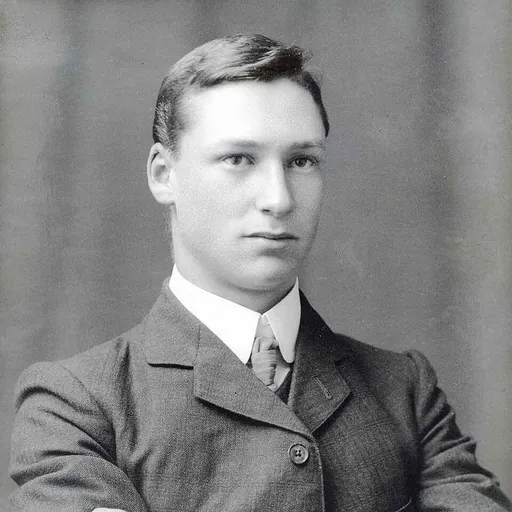
About Henry Fagan
Lived 1889 – 1963 (aged 74). Henry Fagan was a South African journalist and writer.
Henry Allan Fagan, QC (4 April 1889 – 6 December 1963) was the Chief Justice of South Africa from 1957 to 1959 and previously a Member of Parliament and the Minister of Native Affairs in J. B. M. Hertzog's government. Fagan had been an early supporter of the Afrikaans language movement and a noted Afrikaans playwright and novelist.
Early life and education
Fagan was born in Tulbagh, a historical town in the winelands of the Cape Colony, in 1889. He was the oldest of seven children. His father was a lawyer and amateur poet, and kept a vast collection of books at the family's Cape Dutch residence (now a National Monument) on Kerk Straat, including leading works of theology and English literature. He continued to be involved in the Afrikaner language movement, and helped ensure, along with his close friend C. J. Langenhoven, that Afrikaans was made an official language (replacing Dutch) in 1925. In 1936, he was instrumental in setting up the Cape Town-based newspaper Die Suiderstem, an Afrikaans-language mouthpiece for Hertzog (who had lost Die Burger 's support after splitting with Malan).
In 1938, Fagan was given a chance to withdraw from politics and become a judge, but he refused, preferring to stand as the United Party's candidate for the contested Stellenbosch seat in an attempt to wrest it away from the National Party. Malan himself came out to campaign on behalf of the Nationalist candidate, Bruckner de Villiers, who promised to strip coloured voters of the franchise. Yet, unlike many other judges with Afrikaner nationalist leanings, Fagan did not shun English law on principle. and that undue influence vitiates a contract. But he did find against the government in its attempt to enforce the Population Registration Act, 1950, raising the standard of proof required to classify a person as 'non-European' on the provocative basis that Parliament could not have intended something so unjust as foisting that status on a person without adequate proof. Fagan, too, had sat in this last case (but not in Harris), and concurred in Centlivres' judgment. The lone dissentient was Oliver Schreiner, a noted liberal judge of very high esteem. Schreiner was also the most senior judge on the Appellate Division after Centlivres' retirement, and was therefore first in line, according to long-standing convention, for appointment as Chief Justice. Yet he had plainly proven himself to be politically unsafe during this so-called coloured vote crisis, and was, presumably as a result, passed over by the Nationalist government. However, he became a senator for the NU, and also its leader. The NU contested the 1961 election in alliance with the United Party, now led by Sir De Villiers Graaff.
The NU soon fizzled out, and Fagan spent his final years as a Senator for the United Party, continuing to argue publicly for racial conciliation, now in the Johannesburg Star. His second treatise on racial politics, Co-existence, was published shortly before his death in 1963.
Legacy
One prominent journalist wrote in 1998, in light of the Fagan Commission's liberal report, which might have changed South African history had the Nats not suppressed it, that Fagan was one of the "unsung heroes" of Afrikaner history. According to Die Burger, however, the report, by documenting the extent to which the races had become integrated, had only helped show how imperative it was to forcibly separate them. That assessment was self-serving, but undoubtedly Fagan's views were more conservative than other critics of the government, like Alan Paton's Liberal Party, and did not question the fact that South Africa's white population ought to be preserved and indeed preferred. Throughout his time as an MP, his views were sufficiently close to Malan's that he could move seamlessly in and out of the National Party, with which he keenly reunified in 1940. Even after the antipathy sparked by the Fagan Commission, and his retirement from the judiciary, his recommendations on the racial question were, in essence, to re-institute Hertzog's racial policies. Yet in part it was precisely because he was no more than a "moderate", who retained significant ties to the Afrikaner establishment, and whose criticisms were so "measured", that his criticisms were able to have an impact.
Family life
Fagan married Jessie "Queeny" Theron, also from Tulbagh, in 1922. She was often the lead actress in performances of Fagan's plays. They had three sons, the last of whom, Johannes, became a judge of the Cape Provincial Division in 1977. The family lived in Bishopscourt, Cape Town, where Fagan died of a heart attack on 6 December 1963.
Don’t just read it —
keep it.
Full-length biographies made to live with: read them, listen on the way to work, watch them tonight.
- E-book
- Audio
- Video
Instant download · yours to keep · every purchase keeps this site free
Important facts
Family & relationships
People in Henry Fagan's life
Named in this biography and alive at the same time



Related people
Same field, nearest in time



Contemporaries
People whose lives overlapped Henry Fagan's



Frequently asked questions
Who was Henry Fagan?
South African journalist and writer
When was Henry Fagan born?
Henry Fagan was born on 4 April 1889 in Tulbagh.
When did Henry Fagan die?
Henry Fagan died on 6 December 1963 in Cape Town.
What was Henry Fagan's occupation?
Henry Fagan was a journalist and writer.
What nationality was Henry Fagan?
Henry Fagan was South African.
Sources & further reading
Cite this page
APA: Biography.guide. (2026). Henry Fagan. https://biography.guide/henry-fagan/
MLA: "Henry Fagan." Biography.guide, https://biography.guide/henry-fagan/.
Chicago: "Henry Fagan." Biography.guide. https://biography.guide/henry-fagan/.
Data last updated: 2026-09-21 · Spot an error? Report a correction.
Portrait: Wikimedia Commons · author & licence
Page generated 2026-09-27 05:00 UTC