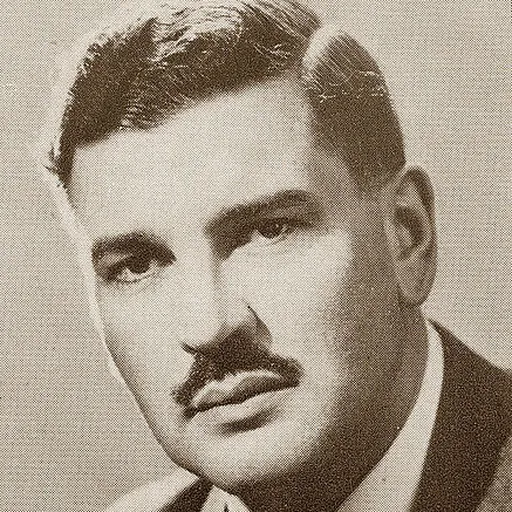
About De Villiers Graaff
Lived 1913 – 1999 (aged 85). De Villiers Graaff was a South African politician and cricketer.
Sir De Villiers Graaff, 2nd Baronet (8 December 1913 – 4 October 1999) was a South African politician who succeeded his father, Sir David Graaff, to his baronetcy in 1931. He died in 1999 and was succeeded by his son, Sir David de Villiers Graaff, 3rd Baronet. He was the leader of the centrist United Party which was the official opposition in the then all-white South African Parliament from 1956 to 1977.
Early life Graaff was born on 8 December 1913 in Cape Town, Cape Province. He attended Western Province Preparatory School and served as head boy during his final year at the school.
Graaff succeeded his father as baronet in 1931. This baronetcy is one of twelve conferred on South Africans between 1841 and 1924.
Graaff played two matches of first-class cricket for Western Province during the 1932–33 South African season. A right-handed opening batsman, he scored 99 runs at an average of 33.00, with a top score of 67 in the first innings of the second match.
He studied law at the Universities of Cape Town, Leiden, and Oxford. In 1937, he returned to South Africa and was admitted as an advocate in the South African Supreme Court.
At the outbreak of World War II, Graaff joined the Union Defence Force. He served in North Africa and was taken prisoner of war by Axis forces during the Axis capture of Tobruk. He spent the rest of the war transitioning between German and Italian prison camps and was later appointed an Officer of the Order of the British Empire (OBE) in 1946 for his relief efforts among prisoners. The declaration of the republic along with a new requirement for Commonwealth membership respecting racial equality resulted in South Africa's withdrawal from the Commonwealth in 1961.
In 1977, the United Party was dissolved and the New Republic Party was founded, of which Graaff briefly served as interim leader before retiring. During his time as leader of the United Party it had split four times and been defeated in five general elections.
Legacy The M1 highway, which was originally part of a ring road around the southern end of the Central Business District of Johannesburg to the affluent northern suburbs, was named the De Villiers Graaff Motorway in his honour.
Don’t just read it —
keep it.
Full-length biographies made to live with: read them, listen on the way to work, watch them tonight.
- E-book
- Audio
- Video
Instant download · yours to keep · every purchase keeps this site free
Important facts
People in De Villiers Graaff's life
Named in this biography and alive at the same time
Related people
Same field, nearest in time






Contemporaries
People whose lives overlapped De Villiers Graaff's



Frequently asked questions
Who was De Villiers Graaff?
South African politician (1913–1999)
When was De Villiers Graaff born?
De Villiers Graaff was born on 8 December 1913 in Cape Town.
When did De Villiers Graaff die?
De Villiers Graaff died on 4 October 1999 in Cape Town.
What was De Villiers Graaff's occupation?
De Villiers Graaff was a politician and cricketer.
What nationality was De Villiers Graaff?
De Villiers Graaff was South African.
Sources & further reading
· Wikipedia: De Villiers Graaff
Cite this page
APA: Biography.guide. (2026). De Villiers Graaff. https://biography.guide/de-villiers-graaff/
MLA: "De Villiers Graaff." Biography.guide, https://biography.guide/de-villiers-graaff/.
Chicago: "De Villiers Graaff." Biography.guide. https://biography.guide/de-villiers-graaff/.
Data last updated: 2026-09-20 · Spot an error? Report a correction.
Portrait: Wikimedia Commons · author & licence
Page generated 2026-09-27 04:58 UTC