
About Henry Allan
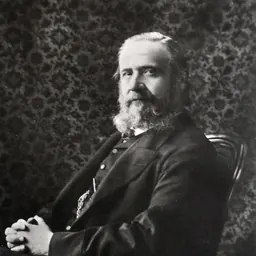
Lived 1865 – 1912 (aged 47). Henry Allan was a Belgian painter and draftsperson.
Henry Allan (18 June 1865 – 2 September 1912) was an Irish painter.
He was born at Retreat House, Dundalk, County Louth, Ireland, the youngest son of William and Anne Allan. He studied art in Belfast and Dublin, and continued his art education in Antwerp, alongside contemporary Richard Moynan. He won multiple prizes at the Antwerp Academy as well as the Taylor Prize at the Royal Dublin Society. The style of his work shows the influence of his training in Antwerp with influences from the Hague School. He was the youngest son of William and Anne Allan. William Allan was a distiller in Bachelor’s Walk in Dundalk, while Anne Allan was the daughter of Rev. Solomon Browne, who was a Presbyterian minister in Castledawson in County Londonderry. Allan began his training as an artist in Belfast and Dublin. Between 1882 and 1883, he studied at the Dublin Metropolitan School of Art alongside the artist Roderic O’Conor.
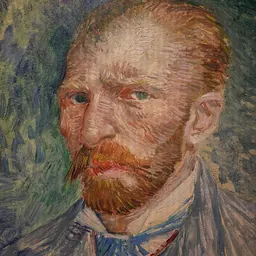
Years in Antwerp (1884–1888) At eighteen years of age, in May 1884, Allan enrolled in a summer course at the Académie Royale in Antwerp, Belgium. He was joined by O’Conor and Richard T. Moynan While in Antwerp, Allan shared lodgings with other Irish students such as Moynan and Edwin Hill near the college at no.15 Mutsaerstraat, later moving to no.19. There was a large presence of young Irish artists at the academy in the 1880s, which enabled Allan to work alongside other artists such as Dermod O’Brien. Vincent van Gogh was briefly a student at the Académie Royale between 1885 and early 1886. which may be due to much of his work being destroyed. One painting that is known is called A Dutch Interior (1888), which depicts an old man studying a silver goblet in an antique shop. This painting provides proof of Allan's training at the Académie Royale des Beaux Arts.
Other known paintings by Allan include:
Lagan brook, County Louth (1880) "Dawn", Dublin Hills (1904) Old Trees, Herbert Park (1907) Banna Villa, Ranelagh (n.d.) Chickens by a Cottage (n.d.) Martial Law - An Episode of the Irish Rebellion in 1798 (n.d.) The Holy Women and St John with the Body of our Lord (n.d.) Berchem-near Antwerp (n.d.) The Rue de Steen, Antwerp (n.d.) Mrs Kidney and Maureen (n.d.) The Yellow Blouse (n.d.) Dublin Ragpickers (n.d.)
A Dutch Interior was donated to the National Gallery of Ireland by Joseph Malachy Kavanagh in 1912 following Allan's death. A Dutch Interior is currently still on display in the National Gallery of Ireland while The Rag Pickers is part of a private collection. The whereabouts of other previously mentioned paintings remain unknown, however they have been likely auctioned off to private collectors or have been destroyed.
Don’t just read it —
keep it.
Full-length biographies made to live with: read them, listen on the way to work, watch them tonight.
- E-book
- Audio
- Video
Instant download · yours to keep · every purchase keeps this site free
Important facts
People in Henry Allan's life
Named in this biography and alive at the same time




Related people
Same field, nearest in time

Contemporaries
People whose lives overlapped Henry Allan's



Frequently asked questions
Who was Henry Allan?
Irish painter (1865-1912)
When was Henry Allan born?
Henry Allan was born on 18 June 1865 in Dundalk.
When did Henry Allan die?
Henry Allan died on 2 September 1912 in Dublin.
What was Henry Allan's occupation?
Henry Allan was a painter and draftsperson.
What nationality was Henry Allan?
Henry Allan was Belgian.
Sources & further reading
· DBpedia: Henry Allan (painter)
Cite this page
APA: Biography.guide. (2026). Henry Allan. https://biography.guide/henry-allan-painter/
MLA: "Henry Allan." Biography.guide, https://biography.guide/henry-allan-painter/.
Chicago: "Henry Allan." Biography.guide. https://biography.guide/henry-allan-painter/.
Data last updated: 2026-09-20 · Spot an error? Report a correction.
Page generated 2026-09-27 05:02 UTC