
About Joseph Malachy Kavanagh
Lived 1856 – 1918 (aged 61–62). Joseph Malachy Kavanagh was an Irish painter.
Joseph Malachy Kavanagh (1856 – 17 April 1918) was an Irish painter. He is known for his painting landscapes, seascapes, rural scenes in Ireland, France and Belgium and occasional portraits. He particularly was inspired by the landscape in and around Dublin.
Life Kavanagh was born in Dublin. Despite being a prolific painter, his work is extremely rare. He was appointed as Keeper of the Royal Hibernian Academy in 1910 and was given a studio space on the upper floor of the building at Academy House on Abbey Street. However, this prestigious post was to bring him misfortune during the Easter Rising of 1916 when Academy House was destroyed by shelling and engulfed in a fire which destroyed his studio According to Aidan Dunne, the academy was likely hit by the Royal Navy warship HMY Helga (later in service of the new Irish Free State as the Irish patrol vessel Muirchu):
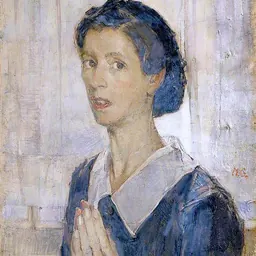
He was arrested by British troops as he left the building, and was held in the custom house for a week. After this his health declined. The fire at Academy House destroyed over 500 pieces of art, including from artists Jack Butler Yeats, Madeline Green and John Lavery. The upper floors of the main facade of the building were retained and included in the replacement building.
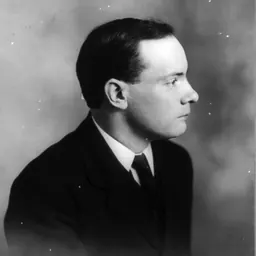
It is recorded in the Irish Times of 3 April 1918 that he died in Dublin on 2 April 1918. This address was also used previously by a sculptor, John Coates. Kavanagh lived next door to Patrick Pearse - who was one of the leaders of the Easter Rising in 1916 - and his brother Willie Pearse, both of whom were born at and resided at 27 Great Brunswick Street (now Pearse Street), home of the family business, until their execution on 3 May 1916 for their role in the Easter Rising.
Due to the rarity of his works, there have been forgeries sold as his paintings but his works are rarely unsigned.
On a trip to Brittany with Osborne in 1883, he met up with a host of other young artists including the Irishmen Stanhope Forbes, Nathaniel Hill and Norman Garstin - all of whom were influenced by the plein air naturalism of Jules Bastien-Lepage. Bastien-Lepage was a master of French realism. Kavanagh painted very similar subjects to those of Hill and Osborne in Quimperle, Dinan and Pont-Aven.
His style in this period is noted for the "strong sense of recession he creates, denoting his enduring fascination with perspectival effects...[and] his interest in architectural detail. All this is unified by a cool, restrained tone."
During the 1890s, he resided in Clontarf and it is stated that he "painted numerous views around Howth and its environs, many aspects of Dublin Bay and his famous views on the sands of Portrane, Sutton, Portmarnock, Merrion and the North Bull where, in 1893, he painted Cockle-Pickers on the North Bull Sands. In this same year he painted The Meadow Water at Swords. This introduces another popular theme for Kavanagh and many titles relate to this, for example, Portmarnock Marsh, Killester Ponds, Beside the Marsh, Portmarnock, A Salt Marsh and The Quarry Pond. Another related group entails views taken along Dublin’s riverbanks". He was a teacher at RHA schools from 1892 to 1911. (Belgium) On the Banks of the Laita, Finistere. Dated 1885. A Breton Byeway. Signed Exhibited: RHA Annual Exhibition 1886 catalogue no. 1 Peintres Irlandaise en Bretagne, Musee De Pont Aven. When "A Breton Byeway" was first exhibited in 1886 it was described as "a very charming and competent work". The critic of the Dublin University Review Art Supplement commented "This is an excellent example of Mr Kavanagh's work. The expectant attitude of the kid tells of someone coming along the path and adds a point of human interest to the landscape which renders the picture particularly pleasing". Pursuing his gentle calling’ (1887), a self-portrait Woodland Pastures (1902) Collection of the Crawford Municipal Gallery, Cork, exhibited at the RHA in 1902 The Stately Elm and In Rathfarnham Park, both exhibited at the RHA in 1903 A November Evening, 1904. Collection of the National Gallery of Ireland Between the Autumn and the Spring. Exhibited:Belfast Art Society, 1905, catalogue no. 171 (£30-0-0); RHA, Dublin, 1906, catalogue no. 14 (£30-0-0); ’Exhibition of 18th, 19th and 20th century Irish Paintings’, Gorry Gallery, Dublin, 16–19 October 1987, catalogue no. 30 Sheep in Pastures, Kilcock, Co. Dublin August Noon, Feltrim Hill, Co. Dublin. Dated 1906 In The Grey of The Morning. Exhibited: RHA, Dublin, 1907, catalogue no. 236 Dartry Pond, 1911 Looking for the Best Spot
Paintings: Listed as by Kavanagh but no date provided
The Drover with his Flock, Homeward Bound The Dice Throwers Looking Out to Sea Pope Pius XII Gipsy Encampment on the Curragh
Etchings All of the following etchings date from 1890 and are held in the British Museum:
A Metallurgist The King's Gate, Mont St. Michel On the ramparts, Mont St. Michel Port du Baudets, Bruges The setting sun
Don’t just read it —
keep it.
Full-length biographies made to live with: read them, listen on the way to work, watch them tonight.
- E-book
- Audio
- Video
Instant download · yours to keep · every purchase keeps this site free
Important facts
People in Joseph Malachy Kavanagh's life
Named in this biography and alive at the same time



Related people
Same field, nearest in time

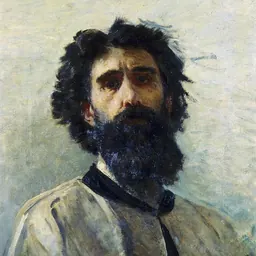
Contemporaries
People whose lives overlapped Joseph Malachy Kavanagh's
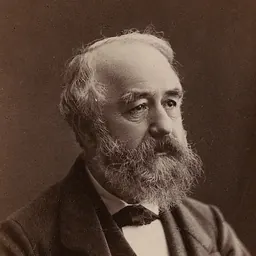
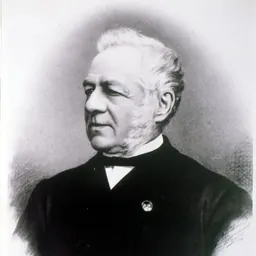
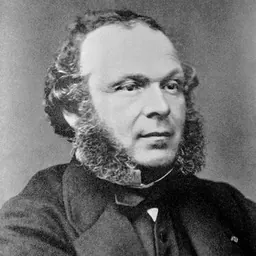

Frequently asked questions
Who was Joseph Malachy Kavanagh?
Irish artist (1856-1918)
When was Joseph Malachy Kavanagh born?
Joseph Malachy Kavanagh was born in 1856 in Dublin.
When did Joseph Malachy Kavanagh die?
Joseph Malachy Kavanagh died on 2 April 1918 in Dublin.
What was Joseph Malachy Kavanagh's occupation?
Joseph Malachy Kavanagh was a painter.
What nationality was Joseph Malachy Kavanagh?
Joseph Malachy Kavanagh was Irish.
Sources & further reading
· Wikipedia: Joseph Malachy Kavanagh
· DBpedia: Joseph Malachy Kavanagh
Cite this page
APA: Biography.guide. (2026). Joseph Malachy Kavanagh. https://biography.guide/joseph-malachy-kavanagh/
MLA: "Joseph Malachy Kavanagh." Biography.guide, https://biography.guide/joseph-malachy-kavanagh/.
Chicago: "Joseph Malachy Kavanagh." Biography.guide. https://biography.guide/joseph-malachy-kavanagh/.
Data last updated: 2026-09-20 · Spot an error? Report a correction.
Page generated 2026-09-27 04:58 UTC