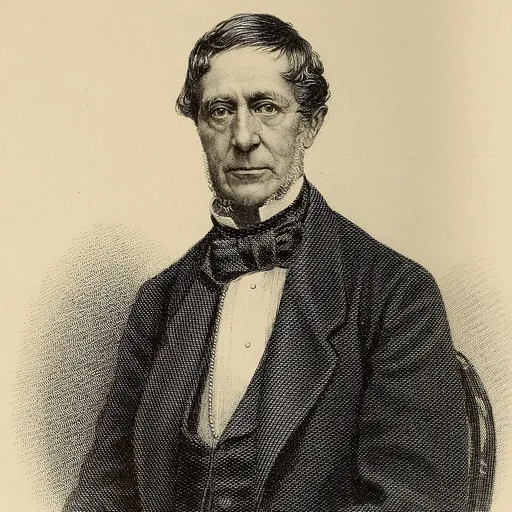
About Henry Dircks
Lived 1806 – 1873 (aged 67). Henry Dircks was a British engineer.
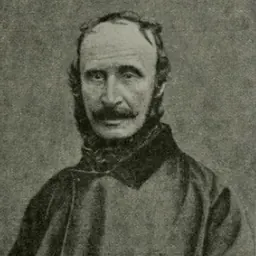
Henry Dircks FRSE FCS (26 August 1806– 17 September 1873) was an English engineer who is considered to have been the main designer of the projection technique known as Pepper's ghost in 1858. It is named after John Henry Pepper who implemented a working version of the device in 1862. Dircks also investigated attempts at the invention of a perpetual motion device, writing that those who sought to create such a thing were "half-learned" or "totally ignorant".
Life and career Dircks was born in Liverpool on 26 August 1806.
He was apprenticed to a mercantile firm and spent much of his free time studying practical mechanics, chemistry, and literature. Around the mid-1820s he began lecturing about chemistry and electricity while writing literary articles in the local press and scientific papers in the Mechanics' Magazine and other journals. In 1837 he became a life member of the British Association, and afterwards contributed papers to its proceedings. Two years later he wrote a pamphlet regarding a proposed union of mechanics' and literary institutions. He also wrote a short treatise entitled Popular Education, a series of Papers on the Nature, Objects, and Advantages of Mechanics' Institutions, first printed in Liverpool in 1840. In 1843, Dircks and Thomas Hoblyn wrote an overview of the smokeless argand furnace, which was created by Charles Wye Williams in an attempt to solve the issue of smoky air in London.
He became a practical engineer, conducting railway, canal, and mining works, before progressing to the role of consulting engineer. He continued to investigate technologies and invent new devices, taking out several patents between 1840 and 1857.
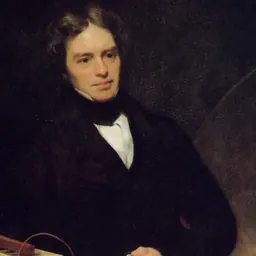
The dedications of Dircks' works help give a glimpse into some of his personal and professional acquaintances. Contribution Towards a History of Electro-Metallurgy (1863) includes a dedication to Michael Faraday.
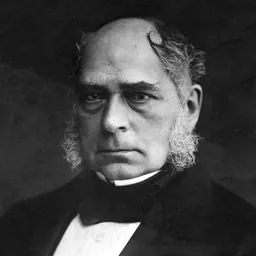
1840. Account of a Patent Improved Metallic Roadway Wheel With Wood-faced Tyre. Dircks read this before the Liverpool Polytechnic and the mechanical section of the British Association. 1861. Perpetuum Mobile. This book includes opinions from Dircks and other scientists on the likelihood of achieving perpetual motion. He also lists encyclopedic definitions of perpetual motion, as well as new scientific journals and recent patents. 1863. Joseph Anstey: or, The Patron and The Protégé. A Story of Chequered Experiences in Life. 1863. The Ghost! as Produced in the Spectre Drama. 1863. Contribution Towards a History of Electro-Metallurgy. 1865. The Life, Times, and Scientific Labours of the Second Marquis of Worcester. To Which Is Added, a Reprint of His Century of Inventions, 1663, With a Commentary Thereon. 1866. Worcesteriana: Affording Historical, Biographical, and Other Notices Relating to Edward Somerset, Sixth Earl and Second Marquis of Worcester, Inventor of the Steam Engine; and His Immediate Family Connections. 1867. Inventors and Inventions, In Three Parts: I. The Philosophy of Invention, II. The Rights and Wrongs of Inventors, III. Early Inventors' Inventories of Secret Inventions. This treatise was dedicated to Henry Bessemer, an inventor, engineer and long-time friend of Dircks. 1869. Nature-Study; or, The Art of Attaining Those Excellencies in Poetry and Eloquence which are Mainly Dependent On the Manifold Influences of Universal Nature. 1869. Statistics of Invention. Illustrating the Policy of a Patent Law. Part II of a Letter Addressed to the Right Hon. Lord Stanley, M.P. 1869. Scientific Studies or Practical in Contrast With Chimerical Pursuits Exemplified in Two Popular Lectures: I. The Life of Edward Somerset, Second Marquis of Worcester. II. Chimeras of Science: Astrology, Alchemy, Squaring the Circle, Perpetuum Mobile, etc. 1870: A History of the Search for Self-Motive Power from the 13th to The 19th Century. Dircks' second book on perpetual motion. 1872. Naturalistic Poetry, Selected From Psalms and Hymns of the Last Three Centuries. In Four Essays, Developing the Progress of Nature-Study, in Connection With Sacred Song.
Poetry
Dircks studied natural poetry, writing many critical essays on various hymns and religious poems in his books Nature-study, and Naturalistic Poetry in 1869 and 1872 respectively. Setup of Pepper's Ghost Illusion. Appears to the audience that there is a ghost on the stage. Dircks developed a way of projecting an actor onto a stage using a hidden room, a sheet of glass, and a clever use of lighting, calling the technique "Dircksian Phantasmagoria". The actor would then have an ethereal, ghost-like appearance while seemingly able to perform alongside other actors.
Some reports have suggested that, at the time, Pepper claimed to have developed the technique after reading the 1831 book Recreative Memoirs by famed showman Étienne-Gaspard Robert even after Dircks signed over all financial rights. Dirck's published his book The ghost as produced in the Spectra Drama describing how the idea came to him and how Pepper produced it. Either way, the effect became known as "Pepper's ghost" and this name was used by those who replicated the technique. Because of this Dircks became increasingly convinced that his invention had been stolen from him, believing that a conspiracy had been perpetrated against him at first by the Polytechnic and then latterly by the newspapers and advertisers who omitted his name. In one of his later books Pepper would insist that Dircks should have a share of the credit, and though the technique is still today named after the man who popularised it Dircks is hailed as the originator of the invention.
Perpetual motion Dircks had an interest in ongoing the search for a perpetual motion machine. Interestingly enough, Dircks interest in perpetual motion was not due to his enjoyment of the subject, but more due to his disdain for it. It has also been noted that Dircks felt "contemptuous pity" for anyone that was seriously interested in studying the topic of perpetual motion. In 1861, he commented on the subject in his book that "The subject of Perpetual Motion opposes paradox to paradox." His book Perpetuum mobile; or, Search for self-motive power, published in 1861, examined many attempts at creating such a device, and has since been cited by other science writers on the subject. Dircks summarised the ongoing efforts of inventors:A more self-willed, self-satisfied, or self-deluded class of the community, making at the same time pretension to superior knowledge, it would be impossible to imagine. They hope against hope, scorning all opposition with ridiculous vehemence, although centuries have not advanced them one step in the way of progress.and:There is something lamentable, degrading, and almost insane in pursuing the visionary schemes of past ages with dogged determination, in paths of learning which have been investigated by superior minds, and with which such adventurous persons are totally unacquainted. The history of Perpetual Motion is a history of the fool-hardiness of either half-learned, or totally ignorant persons.In 1870, Dircks had a second book published under the title "Perpetuum Mobile; or; a History of the Search for Self-Motive Power from the Thirteenth, to the Nineteenth Century."
Don’t just read it —
keep it.
Full-length biographies made to live with: read them, listen on the way to work, watch them tonight.
- E-book
- Audio
- Video
Instant download · yours to keep · every purchase keeps this site free
Important facts
People in Henry Dircks's life
Named in this biography and alive at the same time



Related people
Same field, nearest in time

Contemporaries
People whose lives overlapped Henry Dircks's






Frequently asked questions
Who was Henry Dircks?
English engineer (1806-1873)
When was Henry Dircks born?
Henry Dircks was born on 26 August 1806 in Liverpool.
When did Henry Dircks die?
Henry Dircks died on 17 September 1873 in Brighton.
What was Henry Dircks's occupation?
Henry Dircks was an engineer.
What nationality was Henry Dircks?
Henry Dircks was British.
Sources & further reading
Cite this page
APA: Biography.guide. (2026). Henry Dircks. https://biography.guide/henry-dircks/
MLA: "Henry Dircks." Biography.guide, https://biography.guide/henry-dircks/.
Chicago: "Henry Dircks." Biography.guide. https://biography.guide/henry-dircks/.
Data last updated: 2026-09-23 · Spot an error? Report a correction.
Portrait: Wikimedia Commons · author & licence
Page generated 2026-09-27 05:08 UTC