
Étienne-Gaspard Robert
Belgian stage magician and influential developer of phantasmagoria
About Étienne-Gaspard Robert
Lived 1763 – 1837 (aged 74). Étienne-Gaspard Robert was a Belgian physicist, balloonist, phantasmagoria, university teacher, magician and balloon (aircraft).
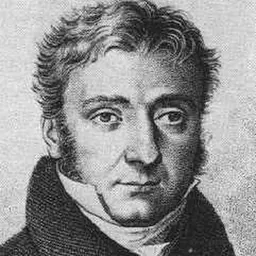
Étienne-Gaspard Robert (15 June 1763 – 2 July 1837), often known by the stage name of "Robertson", was a prominent physicist, stage magician and influential developer of phantasmagoria from the Prince-Bishopric of Liège. He was described by Charles Dickens as "an honourable and well-educated showman". Alongside his pioneering work on projection techniques for his shows Robert was also a physics lecturer and a keen balloonist at a time of great development in aviation.
Early work Born in Liège, Prince-Bishopric of Liège, Robert studied at Leuven and became a professor of physics specialising in optics. He was an avid painter and intended to move to France to pursue a career in art. He moved to Paris in 1791 and maintained a living as a painter and draughtsman. While there he attended lectures in natural science at the Collège de France as well as those by Jacques Charles, a fellow scientist and important figure in ballooning history.
Robert experimented with various areas of physics, giving public demonstrations about his research into galvanism and optics in the 1790s and early 19th century. In 1799, after further refining the system, he received a patent for his "magic lantern on wheels", naming it the Fantoscope.
Shows Étienne-Gaspard Robert Robert used several projection devices in a variety of ways, including rear projection and projection onto large pieces of wax-coated gauze (giving the image a more translucent appearance).
Robert's two hydrogen-balloon flights in Hamburg, a third in St. Petersburg and a fourth in Riga were claimed to be "scientific" by himself. In fact, he did numerous observations: Observations of barometer and thermometer, on shapes and altitudes of cloud formations, the behaviour of parachutes at different altitudes, the evaporation of ether, the electrical properties of different materials and the air, behavior of a magnetic needle, the boiling point of water at great altitudes, sound propagation, influence of the high altitudes on animals (pigeons and butterflies), strength of solar radiation, the solar spectrum, gravity properties, chemical composition of the air and pressure of the air.
Nevertheless, close examination of the results shows, that many of them contradict with laws of physics, which were already known at the time of the flights. Prof. L.W. Gilbert discussed the results published by Robert in his Annalen der Physik. and showed why Robert was wrong. For example, Robert claimed, that a spring scale with attached weights showed a lower weight at altitude as compared to the ground. Such an effect exists, but only becomes apparent at altitudes in excess of 70,000 feet (20,000 metres).
In 1806 an audience of 50,000, including the royal family, gathered at Rosenborg Castle in Copenhagen to see Robert and his balloon. Robert flew all the way to Roskilde – a remarkable feat for the time. The event made a lasting impression on Hans Christian Ørsted, an influential Danish physicist who went on to write a series of poems about the flight.
Other details Robert officially opened the third Jardin de Tivoli, Paris on 14 May 1826.
He died in Paris in 1837 and is buried at Père Lachaise Cemetery. The huge monument bears bas relief sculptures depicting audiences being startled by ghoulish shows.
Don’t just read it —
keep it.
Full-length biographies made to live with: read them, listen on the way to work, watch them tonight.
- E-book
- Audio
- Video
Instant download · yours to keep · every purchase keeps this site free
Important facts
more
Étienne Gaspard Robertson, EG Robert, E.G. Robert, E. G. Robert, E.G. Robertson, EG Robertson, E. G. Robertson, FantoscopePeople in Étienne-Gaspard Robert's life
Named in this biography and alive at the same time

Related people
Same field, nearest in time


Contemporaries
People whose lives overlapped Étienne-Gaspard Robert's





Frequently asked questions
Who was Étienne-Gaspard Robert?
Belgian stage magician and influential developer of phantasmagoria (1763-1837)
When was Étienne-Gaspard Robert born?
Étienne-Gaspard Robert was born on 15 June 1763 in Liège.
When did Étienne-Gaspard Robert die?
Étienne-Gaspard Robert died on 2 July 1837 in Quartier des Batignolles.
What was Étienne-Gaspard Robert's occupation?
Étienne-Gaspard Robert was a physicist, balloonist, phantasmagoria, university teacher, magician and balloon (aircraft).
What nationality was Étienne-Gaspard Robert?
Étienne-Gaspard Robert was Belgian.
Sources & further reading
· Wikipedia: Étienne-Gaspard Robert
· DBpedia: Étienne-Gaspard Robert
Cite this page
APA: Biography.guide. (2026). Étienne-Gaspard Robert. https://biography.guide/etienne-gaspard-robert/
MLA: "Étienne-Gaspard Robert." Biography.guide, https://biography.guide/etienne-gaspard-robert/.
Chicago: "Étienne-Gaspard Robert." Biography.guide. https://biography.guide/etienne-gaspard-robert/.
Data last updated: 2026-09-20 · Spot an error? Report a correction.
Page generated 2026-09-27 05:28 UTC