
Helen Herron Taft
First Lady of the United States from 1909 to 1913
About Helen Herron Taft
Lived 1861 – 1943 (aged 81). Helen Herron Taft was an American politician and university teacher.
Helen Louise Taft (née Herron; June 2, 1861 – May 22, 1943) was First Lady of the United States from 1909 to 1913 as the wife of President William Howard Taft. Born to a politically well-connected Ohio family, she took an early interest in political life, deciding at the age of 17 that she wished to become first lady. Herron married Taft in 1886, and she guided him throughout his political career, encouraging him to take actions that would bring him closer to the presidency. Accompanying her husband to the Philippines in 1900, she became a prominent socialite in Manila, contributing to US-Philippines relations. After her husband was appointed Secretary of War, she played a significant role in convincing him to run for president in the 1908 presidential election and making the necessary connections to ensure his success.
As first lady, Taft was closely involved in the political aspects of the presidency, regularly sitting in on meetings and serving as her husband's closest advisor. She held a strong influence over the president's decisions, expressing her concerns when she disagreed with him and providing her input on presidential appointments. She also carried out a reorganization of the White House staff and decor. Inspired by her experience in the Philippines, she converted the White House lawn and the West Potomac Park into social hubs with regular live shows and events. Her decision to plant cherry trees in the park proved to be a success, creating a popular tourist attraction. Taft's influence as first lady was cut short by a stroke two months into her tenure, permanently limiting her mobility and leaving her absent for a year while she partially recovered.
Though President Taft was relieved that his term had ended, Helen Taft was upset by his defeat for reelection. She remained active after leaving the White House, supporting the Red Cross during World War I and participating in activities for the Colonial Dames of America. She was widowed in 1930, and was buried beside her husband in Arlington National Cemetery after her death in 1943.
Early life
Childhood Helen Herron was born on June 2, 1861, in Cincinnati as the fourth of eleven children, the daughter of Harriet Collins Herron and lawyer John Williamson Herron. Throughout her life, she went by "Nellie". Her father was an associate of two future presidents: he was a college classmate of Benjamin Harrison and a law partner of Rutherford B. Hayes, Growing up around politics, Herron developed a love for campaigning. eventually becoming proficient in the piano. Seeking a channel for her ambition and independence, she enrolled in Cincinnati's prestigious Miss Nourse School for Girls where she was educated in many subjects, including several languages. In 1877, she accompanied her parents when they visited President Hayes and stayed for several weeks at the White House. This visit instilled in Herron a strong desire to return to the White House as first lady, one that she would often present to her eventual husband. and they lived with his parents until it was complete. Taft's treatment of the Filipino people contributed to improved relations with the country, including her work to end the system of racial segregation that had previously been in place. The couple traveled together to Panama and Japan, and she also took their children on a vacation to England while her husband stayed behind. She left Washington to recover, causing newspapers to report that she had suffered a nervous breakdown. Over the following year, Taft was forced to relearn how to speak.
Hostess and socialite
Taft had grown accustomed to the royal style of treatment that she had experienced in the Philippines, and she wished to establish a similar regal environment as White House hostess. The presence of the cow was poorly received. one of the Smithsonian’s most popular exhibits.
Political influence
Taft took an interest in everything relating to her husband's presidency, and she maintained her own opinions on important matters. Though she did not believe that women should be "meddling" in politics, she spoke publicly on her beliefs, even when they contradicted the positions of her husband. She managed his appearance and scheduling to ensure he maintained proper presentation, and she would provide him with political information such as names and statistics as he needed them. She also asked to observe the inauguration of new Supreme Court justices, becoming the first woman to ever sit in the bar of the court. Though her husband disliked the presidency, Taft was saddened when her husband lost reelection to Woodrow Wilson in the 1912 presidential election, and she left the White House reluctantly.
Later life and death
After leaving the White House, the Tafts moved to New Haven, Connecticut, where Taft's husband held a chair at Yale University. Taft was unhappy with life outside of the White House, and she was often alone when her husband was traveling and her children were away at school. She was, however, happy to be out of the public eye. In 1914, Taft became the first first lady to publish a memoir with the publication of Recollections of Full Years, which had been written with her daughter Helen and journalist Eleanor Egan. She took an interest in the events of World War I, and during the war she provided support for the American Red Cross.
The Tafts continued to travel after retiring from the White House, visiting Bermuda, Panama, England, and Italy, being greeted in the latter two countries by King George V and the Pope, respectively. Continuing in her interest in politics, Taft joined the Colonial Dames of America in 1923 and became its honorary vice president in 1925. She also served as the honorary leader of the Girl Scouts of the USA.
After her husband's death in March 1930, she lived with her housekeeper in Washington, D.C., occasionally traveling to other countries. She continued to follow politics later in life, opposing the New Deal policies that were implemented in the 1930s. Taft died in Washington on May 22, 1943, and was buried next to her husband at Arlington National Cemetery.
Legacy Taft was one of the earliest first ladies to become directly involved in the political career of her husband. Her influence in presidential politics was not given significant attention by historians after her death in 1943, and like other first ladies, her influence was not closely examined by historians until the 1980s. Before this, she was most well known for her introduction of cherry trees in the West Potomac Park. The first biography about Taft was written in 2005 by Carl Sferrazza Anthony, who argued that she was her husband's closest advisor and that she saw herself as responsible for the presidency as her husband. Her role as a mentor and guide to her husband was recognized by contemporary journalists and has since become a defining aspect of her legacy. She is recognized for her role in developing her husband's political career and bringing about the presidency of William Howard Taft.
Don’t just read it —
keep it.
Full-length biographies made to live with: read them, listen on the way to work, watch them tonight.
- E-book
- Audio
- Video
Instant download · yours to keep · every purchase keeps this site free
Important facts
Family & relationships
People in Helen Herron Taft's life
Named in this biography and alive at the same time


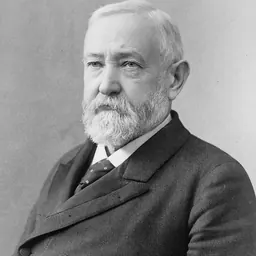


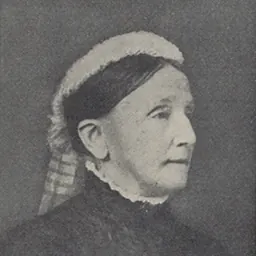
Related people
Same field, nearest in time



Contemporaries
People whose lives overlapped Helen Herron Taft's



Frequently asked questions
Who was Helen Herron Taft?
First Lady of the United States from 1909 to 1913
When was Helen Herron Taft born?
Helen Herron Taft was born on 2 June 1861 in Cincinnati.
When did Helen Herron Taft die?
Helen Herron Taft died on 22 May 1943 in Washington, D.C..
What was Helen Herron Taft's occupation?
Helen Herron Taft was a politician and university teacher.
What nationality was Helen Herron Taft?
Helen Herron Taft was American.
Sources & further reading
· Wikipedia: Helen Herron Taft
Cite this page
APA: Biography.guide. (2026). Helen Herron Taft. https://biography.guide/helen-herron-taft/
MLA: "Helen Herron Taft." Biography.guide, https://biography.guide/helen-herron-taft/.
Chicago: "Helen Herron Taft." Biography.guide. https://biography.guide/helen-herron-taft/.
Data last updated: 2026-09-20 · Spot an error? Report a correction.
Page generated 2026-09-27 05:25 UTC