
Helen Damrosch Tee-Van
American artist and scientific illustrator
About Helen Damrosch Tee-Van
Lived 1893 – 1976 (aged 83). Helen Damrosch Tee-Van was an American illustrator, painter, animal painter, scientific illustrator and writer.
Helen Damrosch Tee-Van (May 26, 1893 – July 29, 1976) was a German-American illustrator best known for her precise scientific illustrations. Between 1922 and 1963, she participated in 13 international expeditions with the New York Zoological Society (Wildlife Conservation Society) to document new species. Most notably, the illustrator was part of the Arcturus expedition, the organization's first oceanographic expedition, led by William Beebe.
Biography Helen Therese Damrosch was born in Manhattan to Frank Damrosch and Henrietta Mosenthal Damrosch on May 26, 1893. Many close family members on her father's side of the family were already well-known for their music and educational talents at the time of her birth. She was the granddaughter of Leopold Damrosch, a medical doctor turned music conductor and violinist of high esteem who had immigrated to the United States from Germany with his children in 1871. She was also the niece of both Walter Damrosch, director of the New York Symphony Orchestra, and Clara Mannes, founder of the Mannes School of Music. Her father was a music educator who founded the Institute of Musical Art – the predecessor of the Juilliard School.
Helen grew up in New York City with one sibling, an older brother named Frank Damrosch, Jr. Frank Jr. eventually became a Reverend, author, and noted figure in the American Anglo-Catholic movement.
Education As a young girl, Helen attended the Veltin School for Girls, where her father and aunt Clara Mannes taught music classes. For many years she was a member of Jonas Lie's Memory Sketch Club, and she regularly studied under painter George de Forest Brush. Helen returned to school again much later in life, graduating from the New York School of Display Design in 1937.
Marriage Soon after beginning work with the New York Zoological Society, Helen met apprentice zookeeper and ichthyologist John Tee-Van. The couple was married the following year on July 17, 1923, and regularly traveled on scientific expeditions as a pair.
In the acknowledgments of her first book written in 1926, Helen cheekily wrote of her ichthyologist husband: "To John Tee-Van, my husband, who has helped in many ways, and has even kept me from such grievous mistakes as putting a forest dragonfly into a picture of an open jungle clearing."
Later life At various points throughout her life, Helen was an active member of numerous social groups including the Cosmopolitan Club of New York City, the Society of Animal Artists, the New York Zoological Society, the American Ornithologists' Union, and the China Institute. She was especially involved in the Society of Women Geographers, serving as Vice President and Chair of the New York chapter from 1945 to 1948. She was an official member of the organization from 1934 until 1976.
Helen Damrosch Tee-Van died on July 29, 1976, in a hospital in Danbury, Connecticut when she was 83. She is buried where she spent her retirement, in the town of Sherman, Connecticut.
Career Helen (right) with her parents Henrietta and Frank Damrosch, c. 1920–25. For 41 years between 1922 and 1963, Helen Damrosch Tee-Van worked as an illustrator for the New York Zoological Society, now known as the Wildlife Conservation Society. In addition to extensive scientific and zoological illustrations, Helen also designed fabrics and textiles.
Expeditions Helen began working with the Department of Tropical Research of the Wildlife Conservation Society in 1922. Unique for the time, the Department was noted for employing numerous women illustrators and scientists to work on their expeditions. Others employed by the Society at the time included Jocelyn Crane, Gloria Hollister, Harriet Bennett Strandberg, Else Bostelmann, Dwight Franklin, Laura Schlageter, Isabel Cooper Mahaffie, and Ezra Winter. Ruth Rose and Mabel Satterlee also joined them, working as a household manager and a general assistant respectively. Her team of colleagues was unconventional and known for enjoying costume parties and music nights. During two world wars and the Great Depression, Theodore Roosevelt commented that they were fortunate to enjoy their jobs. In a February 20, 1927 article from The Literary Digest detailing the "many odd jobs" held by women, the following was written about Helen.
As a scientific illustrator who specialized in animal illustration, Helen accompanied the Department of Tropical Research on thirteen international expeditions under the authority of biologist William Beebe. In 1925, she was one of four women on the Arcturus expedition, along with Ruth Rose, Isabel Cooper, Lillian Segal, and Marie Poland Fish. While on a trip to Haiti in 1927 she became one of the first women to deep-sea dive, wearing a 60-pound diving helmet to make underwater sketches of oceanic organisms on zinc plates. The University of Oregon's archives contains her sketchbooks from British Guiana and Bermuda. Helen Damrosch Tee-Van's expedition résumé included trips to the following locations:
1922, 1924: British Guiana 1925: Arcturus Oceanographic Expedition (Sargasso Sea to the Galapagos) 1927: Haiti 1929 – 1933: Bermuda Oceanographic Expeditions 1946: Henri Pittier National Park, Venezuela 1956, 1960, 1963: Trinidad
Displays Helen returned to school as an adult, graduating from the New York School of Display Design in 1937. Both the following year as well as in 1939, she was commissioned to create background murals for exhibits at the Berkshire Museum in Pittsfield, Massachusetts. The Berkshire Museum celebrated its 50th anniversary in 1953 with a lengthy article in the Berkshire Eagle that detailed what were considered the highlights of the museum, including the series of murals completed by Tee-Van, titled The Story of Life. An article written by a curator at the Berkshire Museum and published several years later in the same newspaper echoed a similar sentiment, encouraging visitors to the museum to view Helen's murals on the walls of the Biology room. The mural series was conceived by the director of the museum, Laura M. Bragg, who worked closely with Helen for weeks to fulfill her educational vision. Between 1943 and 1947, Helen Damrosch Tee-Van created sixteen educational dioramas for the United Service to China, a group of eight American organizations that sought to fundraise for China and foster relationships between individuals of the two nations.
Posthumous controversy For several months in 2017, the Drawing Center in Manhattan mounted an exhibition titled Exploratory Works: Drawings from the Department of Tropical Research Field Expeditions that included works by Helen Damrosch Tee-Van. The exhibit was the first time many of the original illustrations had ever been shown to the public, but it also presented a complex legacy of scientific research, racism, and colonialism.
Decades after she initially drew them, many of Tee-Van's illustrations are now scrutinized for her handling of race. For example, a large map she illustrated of Bermuda's Nonsuch Island while on expedition was featured in the aforementioned 2017 exhibition due to her casual inclusion of several racist, stereotypical caricatures.
Books In addition to her realistic, scientific illustrations meant for research and natural history purposes, Helen Damrosch Tee-Van also found time to contribute artistically to nearly twenty different books, four of which were her original manuscripts. Books that contain illustrations that are credited to Helen Damrosch Tee-Van:
A Birthday Greeting and Other Songs, From Emily Niles Heck, Frank Damrosch, 1918. Creative Music in the Home, Satis Coleman, 1927. Reluctant Farmer, Elswyth Thane, 1950. Mosquitoes in the Big Ditch, Roger Burlingame, 1952. Reptiles Round the World, Clifford Pope, 1957. Sea Monsters, William Knowlton, 1959. The Story of the Platypus, Alfred G. Milotte, 1959. Imported Insects, Naomi Talley, 1961. The Story of the Hippopotamus, Alfred G. Milotte, 1964. The final three of Helen's four children's books, those written and illustrated in the 1960s, were storybooks that doubled as flora and fauna guides for young explorers. Helen died while working on her final book, leaving her manuscript for Nature's Protection of the Animal Kingdom permanently unpublished. Small Animals Are Where You Find Them, 1966. Nature's Protection of the Animal Kingdom, unpublished.
Collections The University of Oregon holds the Helen Damrosch Tee-Van papers, a large collection of her letters and sketches. The collection also includes the original art from thirteen of the books she illustrated, including Red Howling Monkey, The Story of an Alaskan Grizzly, and the unpublished book she was working on at the time of her death – Nature's Protection of the Animal Kingdom. In addition to these original illustrations, the University also holds twenty-six of Tee-Van's sketchbooks dated from 1900 to 1929. As of 2022, over eight hundred images credited to Helen Damrosch Tee-Van have been uploaded to the online archive.
Textile sample, silk, ca. 1927, Metropolitan Museum of Art. Helen Damrosch Tee-Van papers, 1900–1969, University of Oregon. Mannes-Damrosch collection, 1848–1986, Library of Congress. Digital Collection of Tropical Research Illustrations, Wildlife Conservation Society.
Don’t just read it —
keep it.
Full-length biographies made to live with: read them, listen on the way to work, watch them tonight.
- E-book
- Audio
- Video
Instant download · yours to keep · every purchase keeps this site free
Important facts
Family & relationships
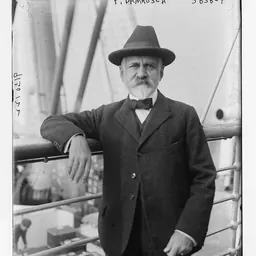
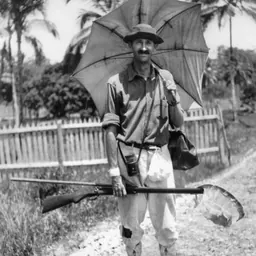
People in Helen Damrosch Tee-Van's life
Named in this biography and alive at the same time





Related people
Same field, nearest in time






Contemporaries
People whose lives overlapped Helen Damrosch Tee-Van's



Frequently asked questions
Who was Helen Damrosch Tee-Van?
American artist and scientific illustrator (1893-1976)
When was Helen Damrosch Tee-Van born?
Helen Damrosch Tee-Van was born on 26 May 1893 in Manhattan.
When did Helen Damrosch Tee-Van die?
Helen Damrosch Tee-Van died on 29 July 1976 in Danbury.
What was Helen Damrosch Tee-Van's occupation?
Helen Damrosch Tee-Van was an illustrator, painter, animal painter, scientific illustrator and writer.
What nationality was Helen Damrosch Tee-Van?
Helen Damrosch Tee-Van was American.
Sources & further reading
· Wikipedia: Helen Damrosch Tee-Van
· DBpedia: Helen Damrosch Tee-Van
Cite this page
APA: Biography.guide. (2026). Helen Damrosch Tee-Van. https://biography.guide/helen-damrosch-tee-van/
MLA: "Helen Damrosch Tee-Van." Biography.guide, https://biography.guide/helen-damrosch-tee-van/.
Chicago: "Helen Damrosch Tee-Van." Biography.guide. https://biography.guide/helen-damrosch-tee-van/.
Data last updated: 2026-09-20 · Spot an error? Report a correction.
Page generated 2026-09-27 05:18 UTC