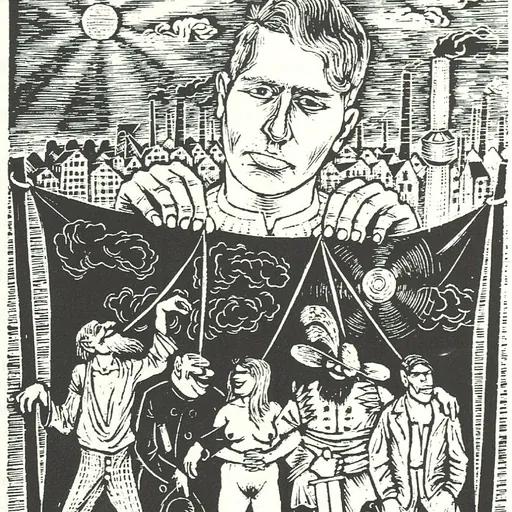
About Heinz Kiwitz
Lived 1910 – 1938 (aged 27–28). Heinz Kiwitz was an artist, illustrator and xylographer.
Heinz Kiwitz (September 4, 1910 – 1938) was a German artist. His woodcuts were in the German Expressionist style. An anti-fascist, he was arrested following the Nazis' seizure of power. He survived imprisonment in Kemna and Börgermoor concentration camps and was released in 1934. He went into exile in 1937, first living in Denmark, then in France, where he again began to fight Nazism. In 1938, he went to Spain to fight in the Spanish Civil War, where he apparently perished.
Early years Kiwitz was born the son of a book printer and was exposed to the graphic arts from an early age. He had an older sister, Änne, and a younger sister, Gertrude, called Trudel. From early on, he loved to draw, but was not good in math. At the age of 10, he drew his older sister's art assignments and she received top grades. When he was 17 and stood , he joined a boxing club and trained at home, causing the furniture to shake when he jumped rope inside. and was a student of Rössing's. He was a member of the Association of Revolutionary Visual Artists during this period.
Work and anti-fascist resistance In art school, he preferred to create wood engravings, but after finishing, Kiwitz began working more with woodcuts, which entailed a process more suited to his temperament. He and Strupp went to Cologne for a few months and later, he went to Berlin to pursue work and further study. In April 1932, his woodcut illustrations for a satirical poem by Erich Weinert were published along with the poem in Magazin für Alle. He also made a woodcut decrying the Nazi book burnings and one that features caricatures of Hitler, Goebbels and Göring (see illustration). In early 1933, after the Nazis seized power, Kiwitz' studio was ransacked by the Sturmabteilung (SA) and he left Berlin, returning to his parents' home.
As a socialist, Kiwitz saw little future and only danger for himself in Germany. In 1937, with help from Rowohlt, he managed to flee to Copenhagen, Denmark, where he met Bertolt Brecht. where he again began to fight fascism. An organization of exiled German artists, the Union des Artistes Allemands Libres, was founded in autumn 1937 and Kiwitz became an early member.#tag:ref|Other members of the Union, called Freier Künstlerbund in German, included Max Ernst, Otto Freundlich, Hans Hartung, Anton Räderscheid, Heinz Lohmar and Gert Wollheim. and contributed to the exhibition brochure, Cinq Ans de Dictateure Hitlerienne, cutting out a piece of linoleum flooring from under his bed and making linocuts depicting torture, courtroom trials and forced labor in the Third Reich. Also while in Paris, he made a woodcut about the Bombing of Guernica and other alleged war crimes.
Open letter to Hitler The text of Kiwitz' 1937 open letter of renunciation to Hitler printed below was printed in a German-language exile newspaper in Paris. #tag:ref|His letter mistakenly identifies the Haus der Kunst as being in Berlin. The exhibit was in Munich. From April 1983 to April 1984, there was a traveling exhibit of Kiwitz' work. Called "Heinz Kiwitz : Holzschnitte, Linolschnitte und Zeichnungen", the exhibit started in Lüdenscheid, then moved to Telgte, then to the Städtisches Museum in Gelsenkirchen and then finished at the Galerie im Theater in Gütersloh. There is a street in Duisburg named Heinz-Kiwitz-Strasse in his honor in 2005. In 2010, in honor of the 100th anniversary of his birth, the Brennender Dornbusch Foundation organized an exhibit of Kiwitz' work at the Liebfrauenkirche in Duisburg. His younger sister, Trudel Siepmann, attended the opening.
Works (selected) Cover for German edition: William Faulkner, Light in August, Rowohlt Verlag Berlin (1935) Cover and illustrations: Hans Fallada, Märchen vom Stadtschreiber, der aufs Land flog, Rowohlt Verlag Berlin (1935) Enaks Geschichten, a story in woodcuts, foreword by Hans Fallada, Rowohlt Verlag Berlin (1936) Cover illustration for German edition: William Faulkner, Pylon (German: Wendemarke), Verlag Berlin (1936)
Don’t just read it —
keep it.
Full-length biographies made to live with: read them, listen on the way to work, watch them tonight.
- E-book
- Audio
- Video
Instant download · yours to keep · every purchase keeps this site free
Important facts
People in Heinz Kiwitz's life
Named in this biography and alive at the same time

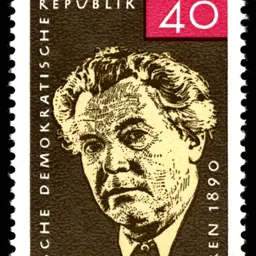
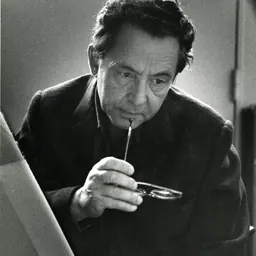

Related people
Same field, nearest in time


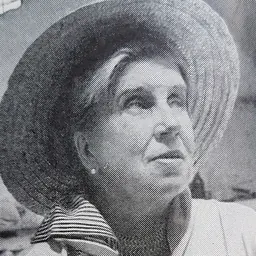

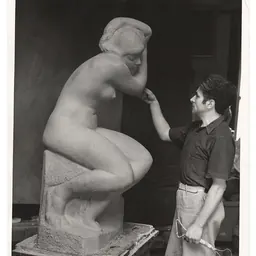

Contemporaries
People whose lives overlapped Heinz Kiwitz's





Frequently asked questions
Who was Heinz Kiwitz?
German artist (1910–1938)
When was Heinz Kiwitz born?
Heinz Kiwitz was born on 4 September 1910 in Duisburg.
When did Heinz Kiwitz die?
Heinz Kiwitz died in 1938 in Spain.
What was Heinz Kiwitz's occupation?
Heinz Kiwitz was an artist, illustrator and xylographer.
What nationality was Heinz Kiwitz?
Heinz Kiwitz's recorded nationality: German Reich.
Sources & further reading
Cite this page
APA: Biography.guide. (2026). Heinz Kiwitz. https://biography.guide/heinz-kiwitz/
MLA: "Heinz Kiwitz." Biography.guide, https://biography.guide/heinz-kiwitz/.
Chicago: "Heinz Kiwitz." Biography.guide. https://biography.guide/heinz-kiwitz/.
Data last updated: 2026-09-22 · Spot an error? Report a correction.
Portrait: Wikimedia Commons · author & licence
Page generated 2026-09-27 05:01 UTC