
About Heinrich Hörlein
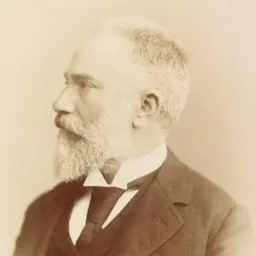
Lived 1882 – 1954 (aged 71). Heinrich Hörlein was a German chemist and university teacher.
Philipp Heinrich Hörlein (5 June 1882 – 23 May 1954), was a German entrepreneur, scientist, lecturer, and Nazi Wehrwirtschaftsführer. He was tried for war crimes for his involvement in the Holocaust and his knowledge of medical experimentation on concentration camp prisoners, but he was ultimately acquitted and released.
Bayer Hörlein was the son of Heinrich Hörlein, a farmer, and his wife, Philippina (née Dürk). He studied chemistry at Technische Universität Darmstadt in 1900, moving on to the University of Jena in 1902 and graduating with his doctorate the following year. In this role he developed the soporific Luminal in 1912, an important drug in the treatment of epilepsy. The previous year he had almost fallen foul of the Nazis when he campaigned against Hermann Göring's law banning testing on animals, something Hörlein considered essential to his research. He was eventually able to secure a partial lifting of the ban.
Although he was not responsible for developing the powerful nerve agent tabun (it had been developed by Gerhard Schrader), Hörlein was the one who recognised its potential value as a weapon of war and passed on information about the discovery to the Wehrmacht. Hörlein sat on the vorstand of the Deutsche Gesellschaft für Schädlingsbekämpfung, an IG Farben subsidiary company largely concerned with the production of Zyklon B. He was regularly privy to the sales figures for the gas and was fully aware of the company's close relationship to the extermination camps. He regularly received detailed reports of the human experimentation carried out by Helmuth Vetter, who purchased most of his subjects from the concentration camps.
Towards the end of the war Hörlein, sensing that a German defeat was imminent, moved his operations to Leverkusen and began to maintain a much lower profile.
Post-war
As a member of the managing board of the company he was one of those to face charges at the IG Farben trial. Ultimately he was acquitted and released. He returned to Leverkusen, where he took up a place on the board at Bayer. His wife Marie Hörlein donated 5,000 Euro for and designed the Hörlein Prize, which is for large scientific papers in the field of human medicine. In 1952, he received an honorary doctorate from Technische Universität Darmstadt. In 1955, the city of Leverkusen named a street after him.
Don’t just read it —
keep it.
Full-length biographies made to live with: read them, listen on the way to work, watch them tonight.
- E-book
- Audio
- Video
Instant download · yours to keep · every purchase keeps this site free
Important facts
People in Heinrich Hörlein's life
Named in this biography and alive at the same time

Related people
Same field, nearest in time




Contemporaries
People whose lives overlapped Heinrich Hörlein's



Frequently asked questions
Who was Heinrich Hörlein?
German chemist (1882–1954)
When was Heinrich Hörlein born?
Heinrich Hörlein was born on 5 June 1882 in Wendelsheim.
When did Heinrich Hörlein die?
Heinrich Hörlein died on 23 May 1954 in Wuppertal.
What was Heinrich Hörlein's occupation?
Heinrich Hörlein was a chemist and university teacher.
What nationality was Heinrich Hörlein?
Heinrich Hörlein was German.
Sources & further reading
Cite this page
APA: Biography.guide. (2026). Heinrich Hörlein. https://biography.guide/heinrich-horlein/
MLA: "Heinrich Hörlein." Biography.guide, https://biography.guide/heinrich-horlein/.
Chicago: "Heinrich Hörlein." Biography.guide. https://biography.guide/heinrich-horlein/.
Data last updated: 2026-09-20 · Spot an error? Report a correction.
Page generated 2026-09-27 05:32 UTC