
About Heinrich Blücher
Lived 1899 – 1970 (aged 71). Heinrich Blücher was a German and American poet, philosopher and university teacher.
Heinrich Friedrich Ernst Blücher (29 January 1899 – 31 October 1970) was a German philosopher. He was the second husband of Hannah Arendt, whom he had first met in Paris in 1936. During his life in America, Blücher traveled in popular academic circles and appeared prominently in the lives of various New York intellectuals.
Biography Blücher was born in Berlin among the poor working class of the city. Later in the same lecture he insisted, that if "what the government says must be right, it must be spread, and no dissent shall be possible. If they call that consensus, then to hell with it." His wife Hannah Arendt was later buried alongside him at Bard College Cemetery.
Marriage to Hannah Arendt
Arendt and Blücher met in 1936, in a café along the rue Soufflot frequented by their friend Walter Benjamin and other German émigrés. Arendt was twenty-nine, Blücher thirty-seven. Both were fugitives from the Nazis. Blücher was considered a communist militant, thus he lacked the requisite permis de séjour to work and had to move frequently from hotel to hotel. Both were still formally married, but separated from their spouses. Due to the pressures of lacking citizenship and their marital status, Blücher would not marry Arendt until 1940, despite accounts reporting that they fell in love immediately.
Political thought Blücher encouraged his wife to become involved with Marxism and political theory, though ultimately her use of Karl Marx was in no way orthodox, as shown in such works as The Origins of Totalitarianism (1951) and The Human Condition (1958). Blücher also coined the term "the anti-political principle" to describe totalitarianism's destruction of a space of resistance — a term taken up both by Arendt and Karl Jaspers.
Blücher believed, alongside Arendt and Martin Heidegger, that science held a corresponding mindset which threatened first religion, and now philosophy. He argued that this belief, which he saw best displayed in Alfred North Whitehead's Science and the Modern World, was the same belief as the pre-socratic thinker Heraclitus. Namely, he saw science and Heraclitus agreeing on the claim that "there is a rational order of things that is also a natural order of things". He saw Heisenberg's uncertainty principle as indicative of a need for the development of an explicit and rigorous philosophy of science. He is also shown to be active in the social circles Arendt and he travel in, posed in frequent heated debate with Hans Jonas. He is described in the movie as having followed Rosa Luxemburg "to the end". In the movie he is seen deeply in love with Arendt, despite the indication of mutual infidelities that imply a marriage based in some form of polyamory. He is also shown as emotionally supportive of Arendt during the fallout from the aforementioned publication, consoling her on the loss of her friend Kurt Blumenfeld. Blücher, Heinrich, Rösener, Ringo , ed. (2020). Versuche über den Nationalsozialismus, Göttingen, Wallstein
Don’t just read it —
keep it.
Full-length biographies made to live with: read them, listen on the way to work, watch them tonight.
- E-book
- Audio
- Video
Instant download · yours to keep · every purchase keeps this site free
Important facts
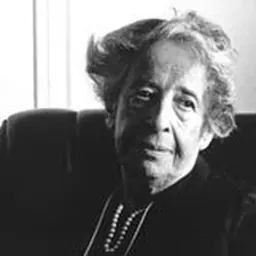
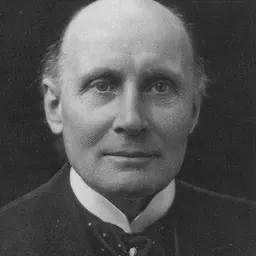
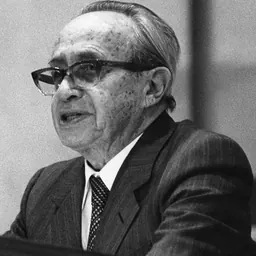
People in Heinrich Blücher's life
Named in this biography and alive at the same time

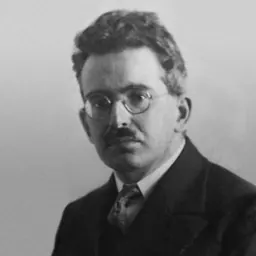
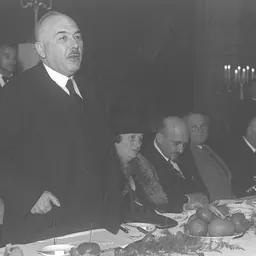
Related people
Same field, nearest in time

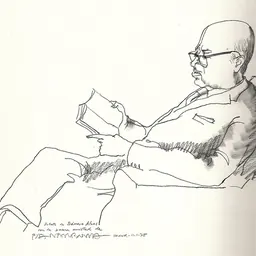
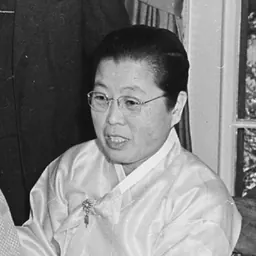
Contemporaries
People whose lives overlapped Heinrich Blücher's


Frequently asked questions
Who was Heinrich Blücher?
German poet and philosopher (1899-1970)
When was Heinrich Blücher born?
Heinrich Blücher was born on 29 January 1899 in Berlin.
When did Heinrich Blücher die?
Heinrich Blücher died on 30 October 1970 in Upper West Side.
What was Heinrich Blücher's occupation?
Heinrich Blücher was a poet, philosopher and university teacher.
What nationality was Heinrich Blücher?
Heinrich Blücher was German and American.
Sources & further reading
Cite this page
APA: Biography.guide. (2026). Heinrich Blücher. https://biography.guide/heinrich-blucher/
MLA: "Heinrich Blücher." Biography.guide, https://biography.guide/heinrich-blucher/.
Chicago: "Heinrich Blücher." Biography.guide. https://biography.guide/heinrich-blucher/.
Data last updated: 2026-09-26 · Spot an error? Report a correction.
Page generated 2026-09-27 05:15 UTC