
About Hans Jonas
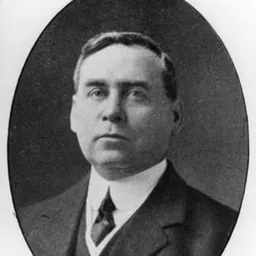
Lived 1903 – 1993 (aged 89). Hans Jonas was a German philosopher, university teacher, environmentalist, religious studies scholar and historian.
Hans Jonas (; ; 10 May 1903 – 5 February 1993) was a German and American philosopher. From 1955 to 1976 he was the Alvin Johnson Professor of Philosophy at the New School for Social Research in New York City.
Biography
In front of the house, two Stolpersteine were installed in 2008. The left one commemorates the philosopher's mother Rosa Jonas, murdered in Auschwitz in 1942.
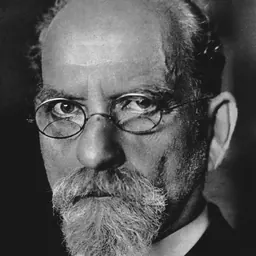
Jonas was born in Mönchengladbach, on 10 May 1903 to a Jewish family. He studied philosophy and theology at the University of Freiburg, the Friedrich Wilhelm University of Berlin and Heidelberg University, and finally earned his Doctorate of Philosophy in 1928 from Marburg University with a thesis on Gnosticism entitled Der Begriff der Gnosis (The Concept of Gnosis) and directed by Martin Heidegger. During his study years his academic advisors included Edmund Husserl and Rudolf Bultmann.
He left Germany for England in 1933, and from England he moved to Palestine in 1934. There he met Lore Weiner, to whom he became betrothed. In 1940 he enlisted in the British Army. He served in the Jewish Brigade and was sent to Italy, and in the last phase of the war moved into Germany. Thus, he kept his promise that he would return only as a soldier in the victorious army. In this time he wrote several letters to Lore about philosophy, in particular philosophy of biology, that would form the basis of his later publications on the subject. They finally married in 1943.
Immediately after the war he returned to Mönchengladbach to search for his mother but found that she had been sent to the gas chambers in the Auschwitz concentration camp. Having heard this, he refused to live in Germany again. He returned to Palestine and took part in the 1948 Arab–Israeli War. Jonas taught briefly at the Hebrew University of Jerusalem before moving to North America. In 1950 he left for Canada, teaching at Carleton University. From there he moved in 1955 to New York City, where he was to live for the rest of his life. He was a fellow of the Hastings Center and Professor of Philosophy at New School for Social Research from 1955 to 1976 (where he was Alvin Johnson Professor). From 1982 to 1983, Jonas held the Eric Voegelin Visiting Professorship at LMU Munich. He died at his home in New Rochelle, New York, on 5 February 1993, aged 89.
Philosophical work
Jonas's writings were very influential in different spheres. For example, The Gnostic Religion, based on his early research on the gnosis and first published in 1958, was for many years the standard work in English on the subject of Gnosticism. The Imperative of Responsibility (German 1979; English 1984) centers on social and ethical problems created by technology. Jonas insists that human survival depends on our efforts to care for our planet and its future. He formulated a new and distinctive supreme moral imperative: "Act so that the effects of your action are compatible with the permanence of genuine human life".
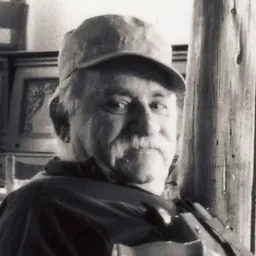
While The Imperative of Responsibility has been credited with catalyzing the environmental movement in Germany, his work The Phenomenon of Life (1966) forms the philosophical undergirding of one major school of bioethics in America. Murray Bookchin and Leon Kass both referred to Hans Jonas's work as major, or primary, inspiration. Heavily influenced by Martin Heidegger but also one of Heidegger's most outspoken philosophical critics, The Phenomenon of Life attempts to synthesize the philosophy of matter with the philosophy of mind, producing a rich existential understanding of biology, which ultimately argues for a simultaneously material and moral human nature. On the question of abortion, Jonas was against it, saying, "a mother-to-be is more than her individual self. She carries a human trust, and we should not make abortion merely a matter of her own private wish", society had a "social responsibility" to pregnant mothers, and "To give this mission [motherhood] over completely to individual choice oversteps the order of nature."
His writing on the history of Gnosticism revisits terrain covered by earlier standard works on the subject such as Ernesto Buonaiuti's Lo gnosticismo: storia di antiche lotte religiose (1907), interpreting the religion from a unique version of existentialist philosophical viewpoint that also informed his later contributions. Jonas's career is generally divided into three periods defined by his three primary works, but in reverse order: studies of gnosticism, studies of philosophical biology, and ethical studies. "Immortality and the Modern Temper: The Ingersoll Lecture, 1961" The Harvard Theological Review, volume 55, number 1 (January 1962), pp. 1–20. (also in The Phenomenon of Life) "The Secret Books of the Egyptian Gnostics," The Journal of Religion, Vol. 42, No. 4 (Oct., 1962), pp. 262–273. "Myth and Mysticism: A Study of Objectification and Interiorization in Religious Thought," The Journal of Religion, Vol. 49, No. 4 (October 1969), pp. 315–329 "Freedom of Scientific Inquiry and the Public Interest," The Hastings Center Report, volume 6, number 4 (August 1976), pp. 15–17.
Don’t just read it —
keep it.
Full-length biographies made to live with: read them, listen on the way to work, watch them tonight.
- E-book
- Audio
- Video
Instant download · yours to keep · every purchase keeps this site free
Important facts
People in Hans Jonas's life
Named in this biography and alive at the same time





Related people
Same field, nearest in time




Contemporaries
People whose lives overlapped Hans Jonas's


Frequently asked questions
Who was Hans Jonas?
German philosopher (1903–1993)
When was Hans Jonas born?
Hans Jonas was born on 10 May 1903 in Mönchengladbach.
When did Hans Jonas die?
Hans Jonas died on 5 February 1993 in New York City.
What was Hans Jonas's occupation?
Hans Jonas was a philosopher, university teacher, environmentalist, religious studies scholar and historian.
What nationality was Hans Jonas?
Hans Jonas was German.
Sources & further reading
Cite this page
APA: Biography.guide. (2026). Hans Jonas. https://biography.guide/hans-jonas/
MLA: "Hans Jonas." Biography.guide, https://biography.guide/hans-jonas/.
Chicago: "Hans Jonas." Biography.guide. https://biography.guide/hans-jonas/.
Data last updated: 2026-09-21 · Spot an error? Report a correction.
Portrait: Wikimedia Commons · author & licence
Page generated 2026-09-27 05:00 UTC