
Karl Jaspers
German-Swiss psychiatrist and philosopher
About Karl Jaspers
Lived 1883 – 1969 (aged 86). Karl Jaspers was a German and Swiss philosopher, psychiatrist, physician, theologian, university teacher and writer.
Life
Jaspers was born in Oldenburg in 1883 to a mother from a local farming community and a jurist father. He showed an early interest in philosophy, but his father's experience with the legal system influenced his decision to study law at Heidelberg University. Jaspers first studied law at Heidelberg University and later at the Ludwig-Maximilians-Universität München for three semesters. It soon became clear that Jaspers did not particularly enjoy law, and he switched to studying medicine in 1902 with a thesis about criminology. In 1910, he married Gertrud Mayer (1879–1974), the sister of his close friends Gustav Mayer and Ernst Mayer.
Jaspers earned his medical doctorate from the Heidelberg University medical school in 1908 and began work at a psychiatric hospital in Heidelberg under Franz Nissl, the successor of Emil Kraepelin and Karl Bonhoeffer, and Karl Wilmans. Jaspers became dissatisfied with the way the medical community of the time approached the study of mental illness and gave himself the task of improving the psychiatric approach. In 1913 Jaspers habilitated at the philosophical faculty of Heidelberg University and gained a post there in 1914 as a psychology teacher. The post later became a permanent philosophical one, and Jaspers never returned to clinical practice. During this time, Jaspers was a close friend of the Weber family (Max Weber also having held a professorship at Heidelberg).
In 1921, at the age of 38, Jaspers turned from psychology to philosophy, expanding on themes he had developed in his psychiatric works. He became a well-known philosopher across Germany and Europe.
After the Nazi seizure of power in 1933, Jaspers was considered to have a "Jewish taint" (jüdische Versippung, in the jargon of the time) due to his Jewish wife, Gertrude Mayer, and was forced to retire from teaching in 1937. In 1938, he fell under a publication ban as well. Many of his long-time friends stood by him, however, and he was able to continue his studies and research without being totally isolated. But he and his wife were under constant threat of removal to a concentration camp until 30 March 1945, when Heidelberg was occupied by American troops.
In 1948, Jaspers moved to the University of Basel in Switzerland. He remained prominent in the philosophical community and became a naturalized citizen of Switzerland, living in Basel until his death on his wife's 90th birthday in 1969.
Contributions to psychiatry Jaspers's dissatisfaction with the popular understanding of mental illness led him to question both the diagnostic criteria and the methods of clinical psychiatry. He published a paper in 1910 in which he addressed the problem of whether paranoia was an aspect of personality or the result of biological changes. Although it did not broach new ideas, this article introduced a rather unusual method of study, at least according to the norms then prevalent. Not unlike Freud, Jaspers studied patients in detail, giving biographical information about the patients as well as notes on how the patients themselves felt about their symptoms. This has become known as the biographical method and now forms a mainstay of psychiatric and, above all, psychotherapeutic practice.
Jaspers set down his views on mental illness in a book which he published in 1913, General Psychopathology.
Jaspers wrote extensively on the threat to human freedom posed by modern science and modern economic and political institutions. During World War II, he had to abandon his teaching post because his wife was Jewish. After the war, he resumed his teaching position, and in his work The Question of German Guilt he unabashedly examined the culpability of Germany as a whole in the atrocities of Hitler's Third Reich. In that work, Jaspers defines metaphysical guilt as each German's citizen's innate responsibility for the acts of Nazi Germany, contrasting this idea of metaphysical guilt with the concepts of legal, political, and moral guilt.
The following quote about the Second World War and its atrocities was used at the end of the sixth episode of the BBC documentary series The Nazis: A Warning from History: "That which has happened is a warning. To forget it is guilt. It must be continually remembered. It was possible for this to happen, and it remains possible for it to happen again at any minute. Only in knowledge can it be prevented."
Jaspers's major works, lengthy and detailed, can seem daunting in their complexity. His last great attempt at a systematic philosophy of Existenz – Von der Wahrheit (On Truth) – has not yet appeared in English. However, he also wrote shorter works, most notably Philosophy Is for Everyman. The two major proponents of phenomenological hermeneutics, namely Paul Ricœur (a student of Jaspers) and Hans-Georg Gadamer (Jaspers's successor at Heidelberg), both display Jaspers's influence in their works. He valued humanism and cosmopolitanism and, influenced by Immanuel Kant, advocated an international federation of states with shared constitutions, laws, and international courts. He strongly opposed totalitarian despotism and warned about the increasing tendency towards technocracy, or a regime that regards humans as mere instruments of science or of ideological goals. He was also sceptical of majoritarian democracy. Thus, he supported a form of governance that guaranteed individual freedom and limited government, and shared Weber's belief that democracy needed to be guided by an intellectual elite. His views were seen as anti-communist.
Influences Jaspers held Kierkegaard and Nietzsche to be two of the most important figures in post-Kantian philosophy. In his compilation, The Great Philosophers (Die großen Philosophen), he wrote: "I approach the presentation of Kierkegaard with some trepidation. Next to Nietzsche, or rather, prior to Nietzsche, I consider him to be the most important thinker of our post-Kantian age. With Goethe and Hegel, an epoch had reached its conclusion, and our prevalent way of thinking – that is, the positivistic, natural-scientific one – cannot really be considered as philosophy." Jaspers also questions whether the two philosophers could be taught. For Kierkegaard, at least, Jaspers felt that Kierkegaard's whole method of indirect communication precludes any attempts to properly expound his thought into any sort of systematic teaching.
Though Jaspers was certainly indebted to Kierkegaard and Nietzsche, he also owes much to Kant and Plato. Walter Kaufmann argues in From Shakespeare to Existentialism that, though Jaspers was certainly indebted to Kierkegaard and Nietzsche, he was closest to Kant's philosophy:
Jaspers is too often seen as the heir of Nietzsche and Kierkegaard to whom he is in many ways less close than to Kant ... the Kantian antinomies and Kant's concern with the realm of decision, freedom, and faith have become exemplary for Jaspers. And even as Kant "had to do away with knowledge to make room for faith," Jaspers values Nietzsche in large measure because he thinks that Nietzsche did away with knowledge, thus making room for Jaspers' "philosophic faith". In his essay "On My Philosophy", Jaspers states: "While I was still at school Spinoza was the first. Kant then became the philosopher for me and has remained so ... Nietzsche gained importance for me only late as the magnificent revelation of nihilism and the task of overcoming it." Jaspers is also indebted to his contemporaries, such as Heinrich Blücher, from whom he borrowed the term, "the anti-political principle" to describe totalitarianism's destruction of a space of resistance.
Selected bibliography Original German Psychologie der Weltanschauungen, 1919. Nikolaus Cusanus, 1969.
Translations Man in the Modern Age, 1933. The Question of German Guilt – New York: Dial Press, 1947. Way to Wisdom, 1951 – .
Socrates, Buddha, Confucius, Jesus, 1966 – . Philosophy Is for Everyman, 1967. Philosophy of Existence – , University of Pennsylvania Press, 1971. Strindberg and Van Gogh: An Attempt of a Pathographic Analysis with Reference to Parallel Cases of Swedenborg and Holderlin, 1977 – .
Nietzsche: An Introduction to the Understanding of His Philosophical Activity – , Johns Hopkins University Press, 1997 (University of Arizona Press, 1965). Reason and Existenz, 1997 – .
Don’t just read it —
keep it.
Full-length biographies made to live with: read them, listen on the way to work, watch them tonight.
- E-book
- Audio
- Video
Instant download · yours to keep · every purchase keeps this site free
Important facts
People in Karl Jaspers's life
Named in this biography and alive at the same time

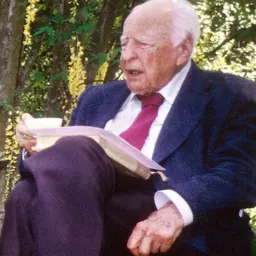
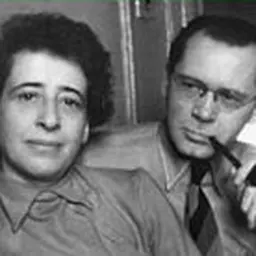
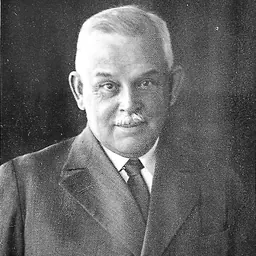


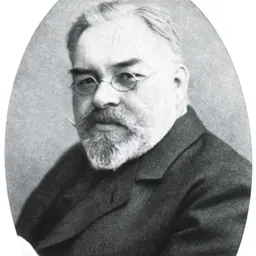

Related people
Same field, nearest in time

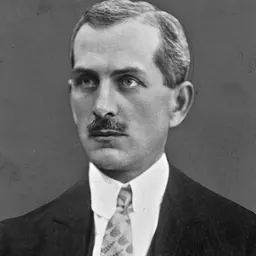
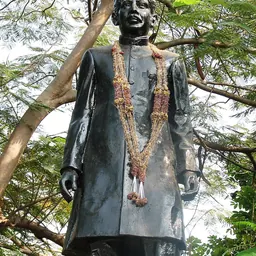

Contemporaries
People whose lives overlapped Karl Jaspers's


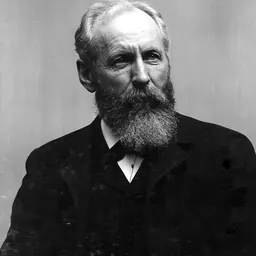

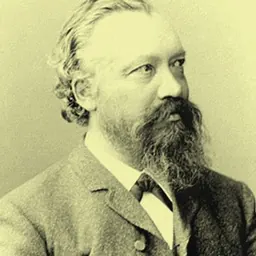
Frequently asked questions
Who was Karl Jaspers?
German-Swiss psychiatrist and philosopher (1883–1969)
When was Karl Jaspers born?
Karl Jaspers was born on 23 February 1883 in Oldenburg.
When did Karl Jaspers die?
Karl Jaspers died on 26 February 1969 in Basel.
What was Karl Jaspers's occupation?
Karl Jaspers was a philosopher, psychiatrist, physician, theologian, university teacher and writer.
What nationality was Karl Jaspers?
Karl Jaspers was German and Swiss.
Sources & further reading
Cite this page
APA: Biography.guide. (2026). Karl Jaspers. https://biography.guide/karl-jaspers/
MLA: "Karl Jaspers." Biography.guide, https://biography.guide/karl-jaspers/.
Chicago: "Karl Jaspers." Biography.guide. https://biography.guide/karl-jaspers/.
Data last updated: 2026-09-20 · Spot an error? Report a correction.
Page generated 2026-09-27 05:22 UTC