
About Hart Merriam Schultz
Lived 1882 – 1970 (aged 87). Hart Merriam Schultz was an American painter, illustrator and sculptor.
Hart Merriam Schultz, also known by his Blackfoot name, Lone Wolf (Nitoh Mahkwii or Ni-tah-mah-kwi-i), was an Indian artist of the twentieth century. Most of his work was done in either Arizona or Montana, after he completed his artistic studies in Los Angeles and Chicago. He would spend his summers in a tipi studio in Montana, and his winters in Arizona, either in Tucson, or at the studio his father created for him at Butterfly Lodge, near Eagar.
Early life
Lone Wolf was the only son of noted explorer, author, and guide, James Willard Schultz, and his Blackfoot wife, Natahki (meaning "Fine Shield Woman") near Birch Creek on the Blackfoot Reservation in Montana on February 18, 1882. He was born while his father was away on a trading trip to Carroll, Montana, and while it was the prerogative of the father to name a child in the Blackfoot culture, his mother's uncle, Red Eagle, named him Nitoh Mahkwii in the father's absence. However, upon his return the elder Schultz renamed the child Hart Merriam, after his good friend, Clinton Hart Merriam.
Lone Wolf grew up preferring his Indian name, continuing to use it throughout his life. His early years were spent on his parents' ranch in Montana on the Two Medicine River. With his father's frequent absences as a guide through Glacier National Park, it fell to Lone Wolf and his uncle, Last Rider, to run the family ranch.
His maternal grandfather, Yellow Wolf, taught him the rudiments of how to use natural colors and how to draw animals and people. While at the Canyon, he met Thomas Moran, who encouraged the young man to pursue his art. After his brief stint in film, due to the influence of Thomas Moran, he studied art at the Los Angeles Artist Student League. Following that, he continued his art studies in Chicago at the Chicago Art Institute in 1914–15. After leaving Chicago, he returned to Montana, where he worked on the Galbaith Ranch. While there, In 1916, he met the daughter of the ranch's foreman, Naoma Tracy (also known as Naomi). He courted her for a single day before taking her by horseback to Cut Bank, where they were married by a justice of the peace. The two remained married until his death in 1970. Russell also encouraged and instructed Lone Wolf in his early career. Lone Wolf had his first solo show in Los Angeles in 1917. The headline in the Los Angeles Times about the exhibition read, "Vance Thompson Discovers Wonderful Indian Artist, An Artist With a Vision." Schultz said in his dedication:
"I dedicate this book to my son, Hart Merriam Schultz, or Ni-tah'-mah-kwi-i (Lone Wolf), as his mother's people name him. Born near the close of the buffalo days he was, and ever since with his baby hands he began to model statuettes of horses and buffalo and deer with clay from the river-banks, his one object in life has been to make a name for himself in the world of art. And now, at last, he has furnished the drawings for one of my books, this book. His own grandfather, Black Eagle, was a mighty warrior against the Snakes. What would the old man say, I wonder, if he were alive and could see his grandson so sympathetically picturing incidents in the life of Bird Woman, a daughter of the Snakes."
He split his time between Arizona and Montana. His father had built a hunting lodge near Eagar, Arizona, named Butterfly Lodge (Apuni Oyis in the Blackfoot language), and he gave it to Lone Wolf and his wife in 1920. He added an artist's studio to the cabin during the 1920s. He would spend the winter, spring, and fall at Butterfly Lodge, while the summers he would spend in Montana, in a studio inside a tipi. Some time was also spent during the winters in Tucson, when Lone Wolf would occasionally participate in the La Fiesta de los Vaqueros festival by dressing in traditional Blackfoot regalia and riding horseback in the parade.
His career as an artist began by painting pictures for the Santa Fe Railroad, which he sold to them for $100 each. The photojournalist, William van der Weyde said that Lone Wolf was "young, courageous and loves both his art and his race." The success of his exhibition in New York in 1922 was considered a major breakthrough for Indian artists in America.
His art remains part of the permanent collections of several museums, including the Tucson Museum of Art.
Later life and death In 1956, he gave an interview which was captured on tape, wherein he discussed his growing up in Montana, and learning to paint at the hands of the elders of his mother's tribe. He actively continued painting through the early 1960s. He is still considered one of the most important artists of Glacier National Park. His body of work helps to understand "the significant contributions by marginalized artists who successfully negotiated the terrain of the mainstream art world." Lone Wolf died in St. Mary's hospital in Tucson, Arizona, on February 9, 1970. He was cremated, and his ashes were interred near the grave of his maternal uncle Last Rider in Montana. Two years after his death, his story was highlighted, along with pictures of his paintings and sculptures, in the first issue of the 1972 edition of Montana The Magazine of Western History. The article was written by Paul Dyck.
Don’t just read it —
keep it.
Full-length biographies made to live with: read them, listen on the way to work, watch them tonight.
- E-book
- Audio
- Video
Instant download · yours to keep · every purchase keeps this site free
Important facts
People in Hart Merriam Schultz's life
Named in this biography and alive at the same time




Related people
Same field, nearest in time
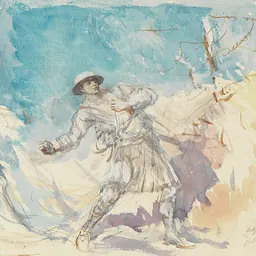
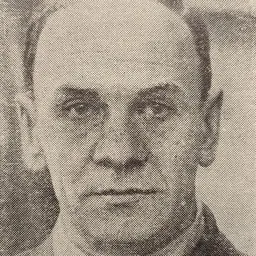
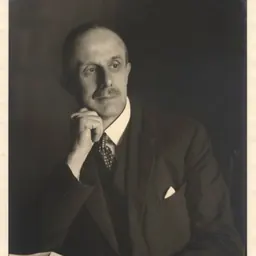
Contemporaries
People whose lives overlapped Hart Merriam Schultz's

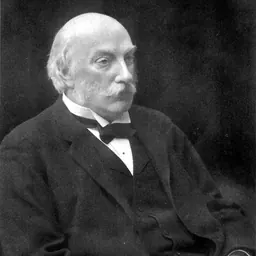



Frequently asked questions
Who was Hart Merriam Schultz?
Blackfoot artist
When was Hart Merriam Schultz born?
Hart Merriam Schultz was born on 18 February 1882 in Blackfeet Indian Reservation.
When did Hart Merriam Schultz die?
Hart Merriam Schultz died on 9 February 1970 in Tucson.
What was Hart Merriam Schultz's occupation?
Hart Merriam Schultz was a painter, illustrator and sculptor.
What nationality was Hart Merriam Schultz?
Hart Merriam Schultz was American.
Sources & further reading
· Wikipedia: Hart Merriam Schultz
· DBpedia: Hart Merriam Schultz
Cite this page
APA: Biography.guide. (2026). Hart Merriam Schultz. https://biography.guide/hart-merriam-schultz/
MLA: "Hart Merriam Schultz." Biography.guide, https://biography.guide/hart-merriam-schultz/.
Chicago: "Hart Merriam Schultz." Biography.guide. https://biography.guide/hart-merriam-schultz/.
Data last updated: 2026-09-20 · Spot an error? Report a correction.
Page generated 2026-09-27 05:31 UTC