
About James Willard Schultz
Lived 1859 – 1947 (aged 87). James Willard Schultz was an American writer and historian.
James Willard Schultz, or Apikuni, (August 26, 1859 – June 11, 1947) was an American writer, explorer, Glacier National Park guide, fur trader and historian of the Blackfeet Indians. He operated a fur trading post at Carroll, Montana and lived among the Pikuni tribe during the period 1880–82. He was given the name Apikuni by the Pikuni chief, Running Crane. and he established a trading post at Fort Conrad in 1880. During that time he traded with the Pikuni and the Bloods and established another trading post at Carroll, Montana, on the Missouri River, where he also traded with the Cree.
Glacier National Park In the mid-1880s, Schultz began to spend more time in the Two Medicine and Saint Mary Lakes region of what is now Glacier National Park guiding and outfitting local hunters. In late 1884 he sent an article entitled "To Chief Mountain" to Forest and Stream, one of his first literary efforts. The article was published in 1885. At the time George Bird Grinnell was the magazine's editor, and he became intrigued with Schultz and the Glacier region. Grinnell solicited Schultz to outfit and guide him on a hunting trip in Glacier in September 1885. Although the trip was not a great success for Grinnell, he did kill a Bighorn ram on a mountain near the Upper Saint Mary Lake with a single shot.
Schultz promptly named the mountain Singleshot Mountain to honor Grinnell's feat. Thus began decades of Schultz naming features in the Glacier regions for clients and friends, and to honor traditional Indian names.
Glacier features named by Schultz Divide Mountain Flattop Mountain - : Grinnell Glacier was named by Lt. John H. Beacom of the USGS in 1887. This fact is verifiable in both journals kept by George Bird Grinnell and John H. Beacom. Schultz was in the group that first heard the name. Grinnell Mountain was also named by Lt. John H. Beacom in 1887. Grinnell Lake Schultz was among a small group of men who named Grinnell Lake in 1887 or 1889. Going-to-the-Sun Mountain - : Singleshot Mountain White Fish Mountain, originally named Yellow Fish Mountain by Schultz
Glacier features named for Schultz
Source:
Apikuni Creek - , el. Apikuni Flat - , el. Apikuni Falls - , el. Apikuni Mountain - , el.
Arizona Schultz first visited Arizona in 1906–07, during which time he assisted J. Walter Fewkes in the excavation and restoration of the pueblo ruins at Casa Grande. Due to his success as a writer and explorer, in 1913 he became the first non-resident to build a cabin in the remote White Mountains, near Greer, Arizona. He would use the cabin as a seasonal retreat for decades. His son, Lone Wolf, provided the illustrations for the novel, and Schultz dedicated the book to him: "Born near the close of the buffalo days he was, and ever since with his baby hands he began to model statuettes of horses and buffalo and deer with clay from the river banks, his one object has been the world of art."
In all, Schultz wrote and published 37 fiction and non-fiction books dealing with the Blackfeet, Kootenai, and Flathead Indians. His works received critical literary acclaim from the general media as well as academia for his story telling and contributions to ethnology. Sometime after 1902, while living in Southern California, Schultz worked for a while as the literary editor of the Los Angeles Times. They had a son named Hart Merriam Schultz, or Lone Wolf (1882–1970). He was named after Schultz's boyhood friend Clinton Hart Merriam. Natahki died in 1903.
In 1907 while Schultz was living in Los Angeles as the literary editor for the Los Angeles Times, he married Celia Hawkins of Highland Park, IL (b. 1865, d. 1960) . It is believed that she went to Los Angeles in response to his advertisement for a wife. Some time thereafter, they resumed his life with the Indians. They lived in Butterfly Lodge in Greer, occupying the cabin starting in 1914 . The dedication of his book With the Indians in the Rockies (published in 1912) reads: "This book is affectionately dedicated to my wife Celia Hawkins Schultz whose good comradeship and sympathy have been my greatest help in writing this tale". The Blackfoot gave her the name "No-Coward Woman" after she had an encounter with a grizzly bear.
She lived with Schultz from their marriage in 1907 until she left him in 1928. This period marks the time of his most extensive literary output as he wrote the majority of his books during this time. Their divorce was made final in 1930, and in 1932 a settlement was finalized in which she received half of the royalties from his works published before 1930. Celia Hawkins Schultz died in 1960 in Highland Park, IL, one month shy of her 95th birthday.
Schultz married again, to Jessica 'Jessie' Schultz. (Jessica Louise Donaldson had been a teacher in a one-room schoolhouse in Grayling, Montana, and later earned an MA in anthropology from the University of CA. In 1926–7, as a professor of English at Montana State College, now Montana State University-Bozeman, she helped write and produce a play/pageant entitled 'The Masque of the Absaroka'. It focused on Absaroka (Crow) culture, featuring numerous Native Americans from the Crow Nation. She was a lifelong advocate for Northern Plains Indian culture, and particularly for the welfare of women, assisting with the development of markets for the sale of bead and leather goods.) Jessie made arrangements to publish some of Schultz's works posthumously, such as Bear Chief's War Shirt. She married again after his death, to Henry Graham.
Death
James Schultz suffered from ill health for most of his last 30 years. Guiding in the rugged Glacier area took its toll physically. He suffered from incapacitating lung and heart infections. In 1931 he injured his spine. In 1942 he fell, breaking his left leg and right arm. In September 1944, a fall at his home in Denver broke his hip and required major surgery to repair. His deteriorating health severely reduced his ability to write and concentrate. After moving to the Wind River Reservation in Wyoming to be close to the Native American tribes he grew up with, he suffered a fatal heart attack and died on June 11, 1947. He wanted to be buried in Montana and was laid to rest on the Blackfeet Reservation near Browning, Montana, in the old burial ground of the family of Natahki, his first wife.
(published posthumously) (published posthumously)
Don’t just read it —
keep it.
Full-length biographies made to live with: read them, listen on the way to work, watch them tonight.
- E-book
- Audio
- Video
Instant download · yours to keep · every purchase keeps this site free
Important facts
People in James Willard Schultz's life
Named in this biography and alive at the same time

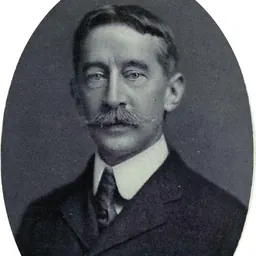





Related people
Same field, nearest in time
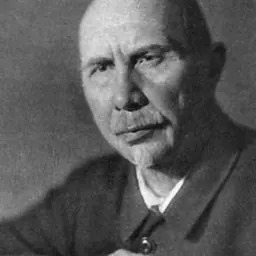
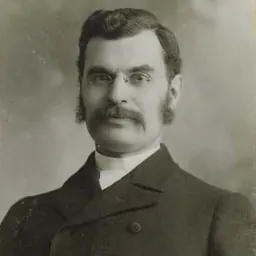

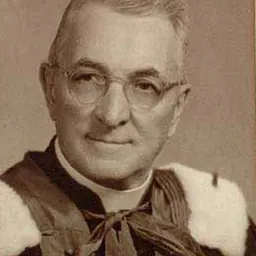

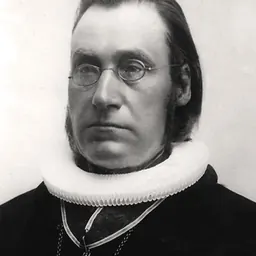
Contemporaries
People whose lives overlapped James Willard Schultz's

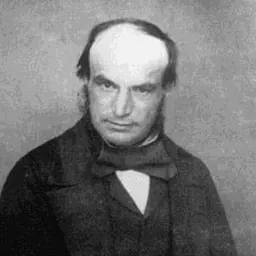
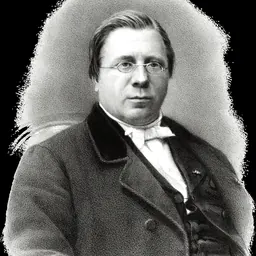
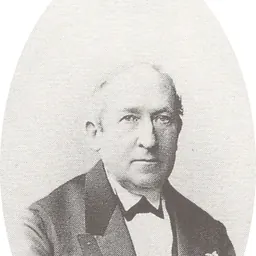
Frequently asked questions
Who was James Willard Schultz?
(1859-1947) American historian
When was James Willard Schultz born?
James Willard Schultz was born on 26 August 1859 in Boonville.
When did James Willard Schultz die?
James Willard Schultz died on 11 June 1947 in Wind River Indian Reservation.
What was James Willard Schultz's occupation?
James Willard Schultz was a writer and historian.
What nationality was James Willard Schultz?
James Willard Schultz was American.
Sources & further reading
· Wikipedia: James Willard Schultz
· DBpedia: James Willard Schultz
Cite this page
APA: Biography.guide. (2026). James Willard Schultz. https://biography.guide/james-willard-schultz/
MLA: "James Willard Schultz." Biography.guide, https://biography.guide/james-willard-schultz/.
Chicago: "James Willard Schultz." Biography.guide. https://biography.guide/james-willard-schultz/.
Data last updated: 2026-09-20 · Spot an error? Report a correction.
Page generated 2026-09-27 05:21 UTC