
Harry Elmer Barnes
American historian and holocaust denier
About Harry Elmer Barnes
Lived 1889 – 1968 (aged 79). Harry Elmer Barnes was an American sociologist, historian of Modern Age, historian, university teacher and author.
Harry Elmer Barnes (June 15, 1889 – August 25, 1968) was an American historian who, in his later years, was known for his historical revisionism and Holocaust denial.
After receiving a PhD at Columbia University in 1918 Barnes became a professor of history at Clark University before moving to Smith College as a professor of historical sociology in 1923. In 1929 he left teaching to work as a journalist, freelance writer and occasional adjunct professor at smaller schools. In 1919–20 and between 1923 and 1937 he lectured regularly at the New School for Social Research. Through his prodigious scholarly output, Barnes was once highly regarded as a historian. By the 1950s, however, he had lost credibility and became a "professional pariah".
Barnes published more than 30 books, 100 essays, and 600 articles and book reviews, many for the Council on Foreign Relations journal Foreign Affairs, where he served as Bibliographical Editor.
Early career right|frame|Front cover of Harry Elmer Barnes, Learned Crusader, by Arthur Goddard, ed. Barnes took a PhD at Columbia in 1918 in history with a study in the history of penology. He was among the graduate students of William Archibald Dunning, who was influential in the history of the Reconstruction era in the United States. In 1917 Barnes published the first edition of An Introduction to the History of Sociology, a collaborative work intended to be a comprehensive summary of sociological development. Barnes lectured widely between 1918 and 1941 on current events and recent history.
During World War I, Barnes had been a strong supporter of the war effort; his anti-German propaganda was rejected by the National Board for Historical Service, which described it as "too violent to be acceptable". After the war, Barnes' views towards Germany reversed: he became as much of a Germanophile as he previously had been Germanophobic. Barnes took the view that the United States had fought on the wrong side in World War I.
Barnes' research on the origins of World War I was generously funded in the 1920s by the German Foreign Ministry, which intended to prove that Germany had not started World War I, as a way of trying to undermine the Treaty of Versailles. In Barnes' articles on the causes of World War I in The Nation, Current History, The Christian Century, and above all in his 1926 book The Genesis of the World War, he portrayed France and Russia as the aggressors of the July Crisis of 1914, and Germany and Austria-Hungary as the victims of a Franco-Russian plot. After 1924, Barnes had a close relationship with the Centre for the Study of the Causes of the War, a pseudo-historical think-tank based in Berlin secretly funded by the German government and founded by Major Alfred von Wegerer, the former völkisch activist. The centre's sole purpose was to prove Germany was the victim of aggression in 1914, and that the Versailles treaty was morally invalid. The Centre provided Barnes with research material, made funds available to him, translated his writings into other languages, and funded his trip to Germany in 1926.
During his European trip, Barnes met with the former German Emperor, Wilhelm II, at his estate in the Netherlands. According to Barnes, the ex-ruler said that he "was happy to know that I did not blame him for starting the war in 1914." To assist Barnes with his writings against the so-called Kriegschuldlüge ("war guilt lie"), the Germans put Barnes into contact with Milos Boghitschewitsch, a former Serbian diplomat living in Berlin. He was considered disreputable as, in exchange for German gold, he provided false testimony about the actions of the Serbian government in 1914.
In 1926, Barnes published The Genesis of the World War, the first American book written about 1914 that was based upon the available primary sources. He argued that World War I was the result of a Franco-Russian plot to destroy Germany.
Barnes was opposed to the idea of World War I as "just war", which he believed to have been caused by the economic imperialism of France and Russia.
The German government so liked Barnes's writings on the causes of World War I that it provided free copies of his articles to hand out at German embassies around the world. The German-Canadian historian Holger Herwig has commented that Barnes's work on the origins of World War I, together with others of a similar bent, did immense scholarly damage, as generations of university students accepted Barnes' "apologias" for Germany as the truth.
In 1926, the American historian Bernadotte Schmitt wrote about The Genesis of the World War that: "It must be said that Mr. Barnes' book falls short of being the objective and scientific analysis of the great problems which is so urgently needed. As a protest against the old notion of unique German responsibility for the war, it will be welcomed by all honest men, but as an attempt to set up a new doctrine of unique Franco-Russian responsibility, it must be unhesitatingly rejected. The war was a consequence, perhaps inevitable, of the whole system of alliances and armaments, and in the origin, development, and working of that system, the Central Powers, more particularly Germany, played a conspicuous part. Indeed, it was Germany that put the system to the test in July 1914. Because the test failed, she is not entitled to claim that no responsibility attaches to her."
In 1980, the American historian Lucy Dawidowicz wrote that the work of so-called World War I revisionists like Barnes has been discredited since 1961 when the German historian Fritz Fischer published his book Griff nach der Weltmacht (Grasping at World Power).
Barnes's very public attacks on the idea of World War I as a just war, and his thesis that the United States should not have fought in the war, won him the admiration and friendship in the 1920s of many people in the United States such as Oswald Garrison Villard, the Socialist leader Norman Thomas, the critic H. L. Mencken, and the historian Charles A. Beard. He also contested many aspects of the Holocaust, claiming death figures were far lower and arguing that all sides were guilty of equally awful atrocities.
World War II In the late 1930s, Barnes emerged as a leading isolationist and German apologist who defended German foreign policy as a legitimate effort to overthrow the Treaty of Versailles, which Barnes regarded as monstrously unfair to Germany. As a result, Vansittart sued Barnes for libel. The American historian Deborah Lipstadt has documented that the Anti-Defamation League had nothing to do with Vansittart or his libel suit against Barnes. She says that Barnes' claims otherwise were a sign of his anti-Semitism.
In 1940, the New York World-Telegram newspaper dropped Barnes' weekly column. The writer responded by complaining the action was due to a conspiracy against him, involving MI6 intelligence service, the House of Morgan, and all of the Jewish department store owners in New York City. Barnes alleged that the latter had threatened the publisher of the World-Telegram with the "loss of all advertising if he kept me on any longer". In the same pamphlet, Barnes claimed that, as part of the alleged smear campaign that had been committed against Germany, Allied governments had falsely charged Germany with responsibility for crimes that it did not commit.
In 1948, Barnes wrote to Villard, saying that Winston Churchill and Roosevelt, "backed by certain pressure groups", caused the outbreak of war in 1939. Later in 1948, Barnes wrote a statement saying that France had repeatedly committed aggression against Germany, and that, "Offhand I cannot recall a really unprovoked German invasion of France in modern times". In 1963, Barnes self-published a pamphlet, "Blasting the Historical Black-out", in which he offered some praise for A. J. P. Taylor's 1961 book, The Origins of the Second World War. Barnes said that he thought Hoggan's book was better than Taylor's. In a 1964 article entitled "Zionist Fraud", published in The American Mercury, Barnes wrote: "The courageous author [Rassinier] lays the chief blame for misrepresentation on those whom we must call the swindlers of the crematoria, the Israeli politicians who derive billions of marks from nonexistent, mythical and imaginary cadavers, whose numbers have been reckoned in an unusually distorted and dishonest manner." Barnes claimed that, in order to justify the "horrors and evils of the Second World War", the Allies made the Nazis the "scapegoat" for their own misdeeds.
In his 1967 pamphlet, "The Public Stake in Revisionism", Barnes wrote that the trial of Adolf Eichmann in 1961 showed "an almost adolescent gullibility and excitability on the part of Americans relative to German wartime crimes, real or alleged" (emphasis in original). Barnes said that when "court historians" were forced by "revisionists" to admit there were no death camps, the evidence for gas chambers at the death camps was manufactured. In his letter to the Die Zeit newspaper, Broszat wrote that he wanted to "hammer home, once more, the persistently ignored or denied difference between concentration and extermination camps".
Barnes often attacked West Germany for apologizing to the Jews for the Holocaust. Barnes called the speech "almost incredible grovelling" and "subserviency" to the Jews. Barnes claimed that those who questioned this view were unjustly labeled antisemitic.
Lipstadt's 1993 book Denying the Holocaust devotes chapter 4, "The First Stirrings of Denial in America", to Barnes as the main link between revisionism in the 1920s (re-evaluation of German responsibility for World War I) and the emergence in the 1950s of Holocaust denial (arguing that the Jewish Holocaust either did not happen or was exaggerated by wartime Allied propaganda and postwar Jewish politics). She notes that the German government of the 1920s enthusiastically supported and promoted Barnes' views as exonerating their country, but the postwar West German government accepted national responsibility for the Holocaust, solicited forgiveness, and paid reparations to Jewish survivors. This difference meant that Barnes in his later years had allied himself with American and European antisemites and cranks, rather than with respectable or official opinion. Historian Lucy Dawidowicz concurs.
Publications Books A History of the Penal, Reformatory and Correctional Institutions of the State of New Jersey. MacCrellish & Quigley Company (1918). 654 pages. The League of Nations: The Principle and the Practice. Edited by Stephen Pierce Duggan. Boston: The Atlantic Monthly Press (1919). The Social History of the Western World, an Outline Syllabus. New York: D. Appleton (1921). Sociology and Political Theory: A Consideration of the Sociological Basis of Politics. New York: A. A. Knopf (1924). 260 pages. The History and Prospects of the Social Sciences. New York: A. A. Knopf (1925). 534 pages. Co-written with Karl Worth Bigelow and Jean Brunhes. Psychology and History. New York: The Century Company (1925). 192 pages. The New History and the Social Studies. New York: The Century Company (1925). 605 pages. Ploetz's Epitome of History. New York: Blue Ribbon (1925). The Repression of Crime: Studies in Historical Penology. Patterson Smith (1926). 382 pages. History and Social Intelligence, New York: A. A. Knopf, 1926. 597 pages. The Evolution of Penology in Pennsylvania: A Study in American Social History, Montclair, N.J.: Patterson Smith, 1968, 1927. 414 pages. Economic History of Europe, Boston, New York: Houghton Mifflin, 1928. Co-written with Melvin M. Knight and Felix Fluegel. Living in the Twentieth Century: A Consideration of How We Go This Way, Indianapolis: Bobbs-Merrill, 1928. 392 pages. In Quest of Truth and Justice: Debunking the War Guilt Myth, Chicago: National Historical Society, 1928. The Twilight of Christianity, New York: Vanguard Press, 1929. The Genesis of the World War: An Introduction to the Problem of War Guilt, New York: A. A. Knopf, 1926. 750 pages. The Evolution of Penology in Pennsylvania: A Study in American Social History. Bobbs-Merrill, 1927. The Making of a Nation. New York: A. A. Knopf (1929). With Elisabeth A. Dexter and Mabel Walker. World Politics in Modern Civilization: The Contributions of Nationalism, Capitalism, Imperialism and Militarism to Human Culture and International Anarchy. New York: A. A. Knopf (1930). . 608 p. The Story of Punishment: A Record of Man's Inhumanity to Man. Stratford, C. (c.1930); 2nd ed. (1972). Battling the Crime Wave: Applying Sense and Science to the Repression of Crime. Boston: Stratford (1931). Can Man Be Civilized? New York: Brentano's (1932). Prohibition Versus Civilization: Analyzing the Dry Psychosis. Viking Press (1932). Money Changers vs. the New Deal; a Candid Analysis of the Inflation Controversy. New York: R. Long & R. R. Smith (1934). The History of Western Civilization. New York: Harcourt, Brace and Company (1935). Famous New Deals of History. New York: W.H. Wise & Co. (1935). An Economic History of the Western World. New York: Harcourt Brace (1937). An Intellectual and Cultural History of the Western World. New York: Random House (1937, 1941, 1965). Co-authored with Bernard Myers, Walter B. Scott, Edward Hubler and Martin Bernstein. A History of Historical Writing. Norman: University of Oklahoma Press (1938); revised ed. New York: Dover Publications (1963). Social Thought From Lore to Science (two volumes). Heath (c.1938). 3rd ed.: (three volumes) Dover (1961), with Howard P. Becker et al. Social Institutions In an Era of World Upheaval. New York: Prentice-Hall (1942). 927 p. New Horizons in Criminology; the American Crime Problem. Co-written with Negley K. Teeters. New York: Prentice-Hall (1943); revised eds. (1959), (1961). Pennsylvania Penology: 1944. Pennsylvania Municipal Publications Service (1944). A Survey of Western Civilization. Crowell (1947). Historical Sociology: Its Origins and Development: Theories of Social Evolution From Cave Life to Atomic Bombing. New York: Philosophical Library (1948). Contemporary Social Theory. Co-Edited with Howard Becker and Frances Bennett Becker. New York: Russell & Russell (1971); (1948). The American Way of Life: An Introduction to the Study of Contemporary Society, co-authored with Oreen M. Ruedi. New York: Prentice-Hall (1950). The Struggle Against the Historical Blackout (1949); 9th ed. (1952). Author of booklets in his field. An Introduction to the History of Sociology. Chicago: University of Chicago Press (1917). Society in Transition. New York: Greenwood Press (1968). Blasting the Historical Blackout in Britain: Professor A. J. P. Taylor's "The Origins of the Second World War": Its Nature, Reliability, Shortcomings and Implications (1963). The Future of Imprisonment in a Free Society, co-authored with Nathan F. Leopold Jr., et al. St. Leonard's House (1965). Perpetual War for Perpetual Peace: A Critical Examination of the Foreign Policy of Franklin Delano Roosevelt and its Aftermath. New York: Greenwood Press (1969). Pearl Harbor after a Quarter of a Century. New York: Arno Press (1972). . Selected Revisionist Pamphlets. New York: Arno Press (1972). . The Chickens of the Interventionist Liberals Have Come Home to Roost: The Bitter Fruits of Globaloney. New York: Revisionist Press (1973). . Barnes Against the Blackout: Essays Against Interventionism. Institute for Historical Review (1991). Anthology of Barnes' previous self-published essays on World War II. Who Started World War One?, with a preface by Willis A. Carto. Washington, D.C.: The Barnes Review (2009).
Articles "Some Recent Books on International Affairs." Foreign Affairs, vol. 1, no. 1 (Sep. 15, 1922), pp. 168–174. . "The Place of Albion Woodbury Small in Modern Sociology." American Journal of Sociology, vol. 32, no. 1 (Jul. 1926) pp. 15–44. . "The Public Significance of the War-Guilt Question." Annals of the American Academy of Political and Social Science, vol. 175: The Shadow of War (Sep. 1934) pp. 11–18. . "Pearl Harbor After a Quarter of a Century." Left and Right: A Journal of Libertarian Thought, vol. 4, no. 1 (Aug. 8, 2014), pp. 9–132.
Contributions "History, Its Rise and Development: A Survey of the Progress of Historical Writing From its Origins to the Present Day." In: Encyclopedia Americana: The Social History of the Western World (1919).
Don’t just read it —
keep it.
Full-length biographies made to live with: read them, listen on the way to work, watch them tonight.
- E-book
- Audio
- Video
Instant download · yours to keep · every purchase keeps this site free
Important facts
People in Harry Elmer Barnes's life
Named in this biography and alive at the same time




Related people
Same field, nearest in time
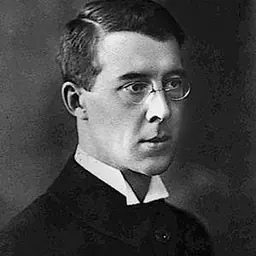
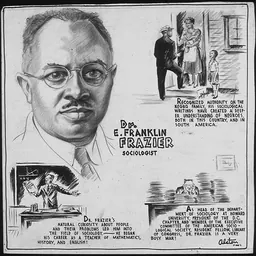
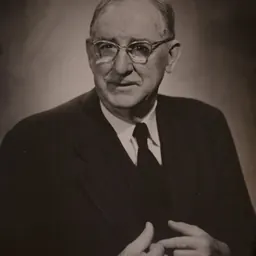
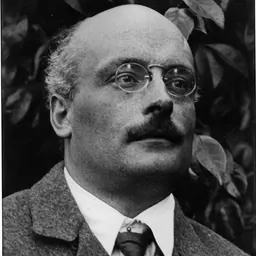

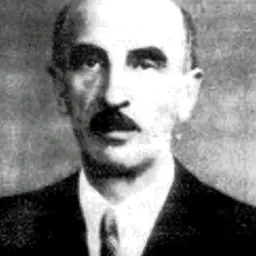
Contemporaries
People whose lives overlapped Harry Elmer Barnes's
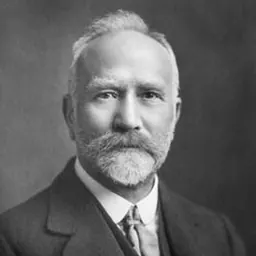


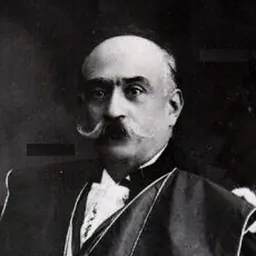
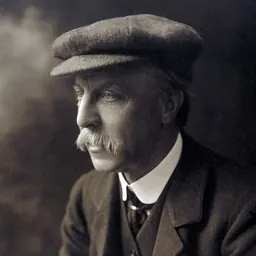
Frequently asked questions
Who was Harry Elmer Barnes?
American historian and holocaust denier (1889–1968)
When was Harry Elmer Barnes born?
Harry Elmer Barnes was born on 15 June 1889 in Auburn.
When did Harry Elmer Barnes die?
Harry Elmer Barnes died on 26 August 1968 in Malibu.
What was Harry Elmer Barnes's occupation?
Harry Elmer Barnes was a sociologist, historian of Modern Age, historian, university teacher and author.
What nationality was Harry Elmer Barnes?
Harry Elmer Barnes was American.
Sources & further reading
· Wikipedia: Harry Elmer Barnes
Cite this page
APA: Biography.guide. (2026). Harry Elmer Barnes. https://biography.guide/harry-elmer-barnes/
MLA: "Harry Elmer Barnes." Biography.guide, https://biography.guide/harry-elmer-barnes/.
Chicago: "Harry Elmer Barnes." Biography.guide. https://biography.guide/harry-elmer-barnes/.
Data last updated: 2026-09-25 · Spot an error? Report a correction.
Page generated 2026-09-27 05:12 UTC